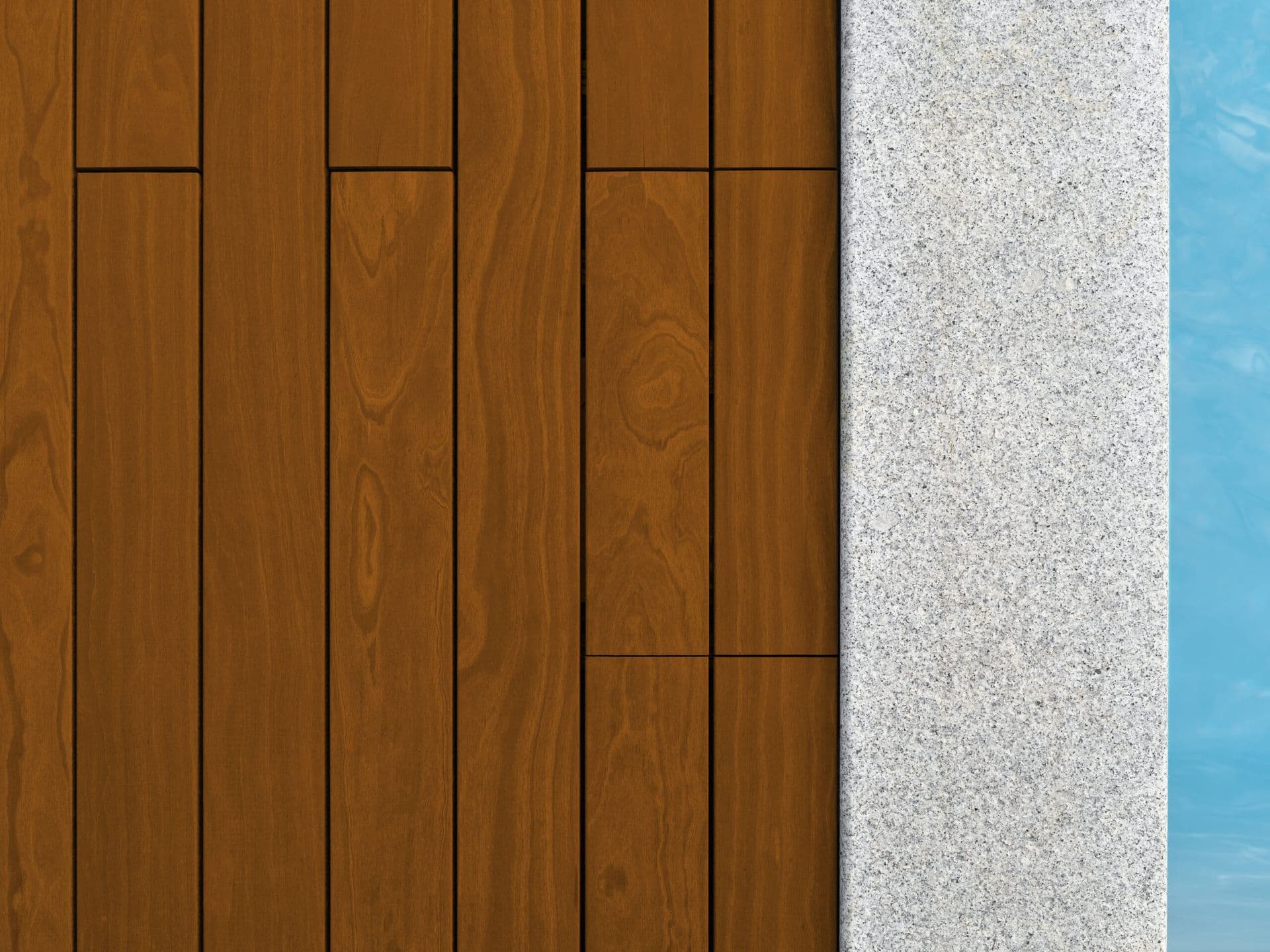
Understanding Maximo Accoya for Commercial Applications
Maximo Accoya is a modified wood product engineered for demanding applications, including commercial exteriors. Its modification process enhances stability, which is a key factor for areas like entrances where consistent appearance and performance are important.
The product is designed to resist warping, twisting, and cupping, which can be critical for maintaining precise lines and preventing issues in high-visibility areas. This stability contributes to its suitability for cladding, trim, and other architectural details around commercial entryways.
Available in Maximo Accoya Grey, Ipe Brown, and Natural finishes, it offers design flexibility to complement various commercial aesthetics. The 'Natural' option provides a clean base, while 'Grey' and 'Ipe Brown' offer distinct contemporary or warm wood looks. Always review a physical sample to confirm the exact appearance.
Maximo Accoya is a performance-focused wood choice that simplifies ownership without abandoning real material. It is a long-term modified-wood option backed according to the selected application and product terms.
Detailing for High-Traffic Commercial Entrances
Commercial entrances experience significant wear and tear from daily foot traffic, carts, and equipment. When planning Maximo Accoya cladding or trim, consider how these elements will interact with the wood.
Protecting corners and lower sections from impact is paramount. This may involve incorporating durable corner guards, kick plates, or designing the Maximo Accoya to be recessed or elevated above potential impact zones. Ensure that any adjacent materials, such as stone or metal, are compatible and allow for appropriate movement.
The substructure supporting Maximo Accoya in a commercial setting should be robust and designed to withstand the loads associated with a public entrance, including potential for temporary signage or decorations. Proper ventilation behind cladding is also important for long-term performance.
Coordinating with Access Systems and Hardware
Commercial entrances often feature complex access control systems, automatic doors, and heavy-duty hardware. The design must seamlessly integrate Maximo Accoya with these functional components without compromising their operation or security.
Careful planning is needed for penetrations, such as those for door frames, push/pull bars, card readers, and security cameras. Ensure that cutouts for these elements are precisely measured and executed to prevent moisture intrusion and maintain the aesthetic integrity of the Maximo Accoya.
Consider the thickness of Maximo Accoya profiles when detailing around door frames and jambs. Adequate clearance is necessary for door swing and hardware function. Collaborate with door and hardware suppliers early in the design process to avoid conflicts.

Selecting and Documenting Finishes
The finish of Maximo Accoya at a commercial entrance contributes significantly to the building's overall impression. Maximo Accoya is available in Grey, Ipe Brown, and Natural. Each offers a distinct aesthetic that can be tailored to the project's design intent.
For commercial projects, documenting the selected finish and any specific maintenance protocols is crucial. This ensures consistency during installation and informs future upkeep. While Maximo Accoya is described as low maintenance, the specific finish chosen may have its own care recommendations.
Always confirm the final selection with a physical sample before ordering, as digital colors are for reference only. This is particularly important for commercial projects where color accuracy and consistency across multiple panels are expected.
Worked Example: Cladding a Commercial Entry Vestibule
Consider a commercial building with a main entrance featuring a recessed vestibule measuring 12 feet wide, 8 feet deep, and 10 feet high. The client desires Maximo Accoya cladding for the two side walls of the vestibule and the wall directly facing the entrance doors.
The total surface area to be clad is (8 ft deep x 10 ft high x 2 walls) + (12 ft wide x 10 ft high x 1 wall) = 160 sq ft + 120 sq ft = 280 sq ft. Assuming a Maximo Accoya profile with an effective coverage of 5.25 inches (0.4375 feet) per board and a standard length of 16 feet, each board covers 0.4375 ft * 16 ft = 7 square feet.
To cover 280 sq ft, approximately 280 / 7 = 40 boards would be needed for area coverage. However, accounting for cuts, waste, and specific layout considerations (e.g., vertical or horizontal orientation), an additional 10-15% should be added. This would bring the estimate to around 44-46 boards. This calculation is for material quantity only and does not include fasteners, furring strips, or other installation components. Exact quantities require a detailed cut plan.
The client chose Maximo Accoya Ipe Brown to complement the building's existing dark window frames. The design incorporates a 6-inch high stainless steel kick plate along the base of all clad walls to protect against damage from cleaning equipment and foot traffic. Recessed LED strip lighting is planned along the top edge of the cladding, requiring precise detailing for the wood profile to accommodate the fixture.
Before you order
- Have you reviewed physical samples of Maximo Accoya finishes?
- Is the substructure adequate for the commercial application and cladding weight?
- Are details for corner protection and high-impact zones incorporated?
- Have all penetrations for access control, lighting, and hardware been coordinated?
- Is there a clear plan for managing water and drainage at the base of the cladding?
- Have installation tolerances for adjoining materials been considered?
- Is the chosen finish appropriate for the expected maintenance regime?
- Are all project dimensions and profile selections finalized for quoting?
Confirm installation details, approved uses and warranty terms in the current instructions for the exact product and profile. Your installer should verify the substrate, structure and applicable project requirements.
Questions to help you decide
Can Maximo Accoya be used around automatic doors?
Yes, Maximo Accoya can be used around automatic doors. Careful planning is required to ensure that the cladding profiles do not interfere with the door's sensors, tracks, or operational mechanisms. Precise cuts for hardware and clear pathways for wiring should be integrated into the design.
What maintenance is required for Maximo Accoya in a commercial entrance?
Maximo Accoya is generally considered low maintenance. However, for commercial entrances, regular cleaning to remove dirt, grime, and environmental pollutants is recommended to maintain its appearance. The specific finish chosen may have additional care instructions. Always refer to the manufacturer's guidelines for detailed maintenance protocols.
Is Maximo Accoya suitable for exterior and interior commercial entrances?
Maximo Accoya is a modified wood solution suitable for both exterior and interior applications, including commercial entrances. Its enhanced stability makes it a versatile choice for areas where consistent performance and the look of real wood are desired across different environmental conditions.
Ready to Plan Your Commercial Entrance with Maximo Accoya?
Request a material quote with your project dimensions, desired Maximo Accoya profile, and project ZIP code. We can confirm current availability and service options for your commercial project.
Request a material quote →