Understanding Treated Lumber and Corrosion
Modern treated lumber typically uses micronized copper azole (MCA) or copper azole (CA) preservatives. These copper-based chemicals offer robust protection against decay and pests but are corrosive to standard steel fasteners, especially in damp environments. Older treated lumber might have used chromated copper arsenate (CCA), which also required specific fastener types. Always check the label on your treated lumber to identify the preservative used.
The corrosion process can weaken fasteners over time, leading to structural compromise. This is particularly important for structural components where fastener integrity is paramount. Selecting fasteners with enhanced corrosion resistance is not just a recommendation; it is a necessity for projects using treated lumber.
US4 Fasteners for Treated Lumber
US4 offers deck screws designed for demanding outdoor applications. When working with treated lumber, the primary concern is corrosion resistance. For general outdoor use with treated lumber, US4 fasteners with a high-performance coating or stainless steel options are typically recommended.
For projects in environments with constant moisture exposure, such as docks, seawall caps, or areas prone to salt spray, US4 offers marine-grade options. Always verify the specific coating or material of the US4 fastener to ensure it meets the requirements for your treated lumber type and local conditions.
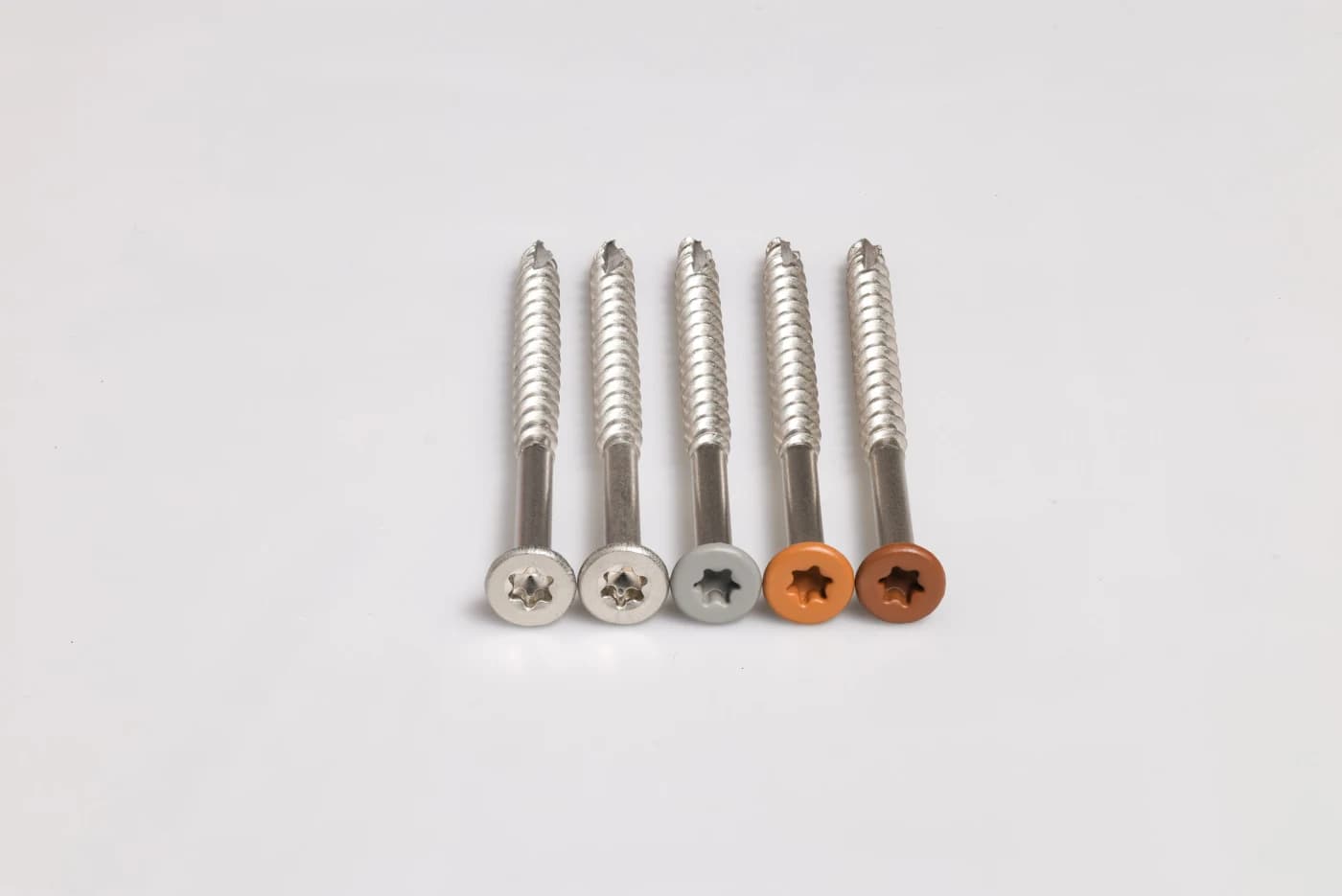
US4 deck screws are available in five finishes: Clear, Timber Gray, Black, Cedar, and Tropical Timber Brown. While these finishes are primarily for aesthetic matching with decking boards, the underlying material and coating are what provide the necessary corrosion resistance for treated lumber applications. Always prioritize the fastener's material and coating over its finish when assessing compatibility with treated lumber.
Drill Bits and Accessories for Treated Lumber
When using US4 fasteners with treated lumber, proper pilot drilling can be essential, especially for dense hardwoods or when working near board ends to prevent splitting. US4 drill bits are designed for precision and efficiency in hardwoods and structural applications. Using the correct size drill bit for pilot holes ensures that the fastener drives cleanly without undue stress on the lumber or the fastener itself.
While the drill bits themselves do not directly interact with the treated lumber's chemicals in a corrosive manner, using high-quality, durable bits like those from US4 can improve installation efficiency and fastener performance. US4 offers drill bits specifically for hardwoods and structural applications, which can be beneficial when pre-drilling into treated lumber that might be denser or have a harder surface due to the treatment process.
Worked Example: Deck Framing with Treated Lumber
Consider a hypothetical deck project where the structural framing (joists, beams, posts) is constructed from pressure-treated Southern Yellow Pine. The lumber documentation specifies it is treated with MCA (Micronized Copper Azole). The deck surface will be Ipe, a dense hardwood.
For fastening the Ipe deck boards to the treated lumber joists, stainless steel fasteners are critical. Ipe requires pre-drilling and stainless steel fasteners due to its density and the potential for staining with incompatible metals. The finish of the screw (e.g., Tropical Timber Brown) can then be selected to match the Ipe aesthetically.
For connecting the treated lumber framing components to each other (e.g., joist hangers, post bases), specialized hardware rated for use with treated lumber should be used. While US4 focuses on fasteners for decking, understanding the broader structural requirements is important. Always ensure all fasteners and connectors used throughout the treated lumber structure are compatible with MCA-treated wood.
Limitations and Considerations
Always consult the manufacturer's recommendations for both the treated lumber and the fasteners. Treatment chemistries can vary, and fastener manufacturers provide specific guidance for compatibility. Mixing different types of metals (e.g., galvanized steel with stainless steel) in direct contact with treated lumber can sometimes lead to galvanic corrosion, even if each metal individually is rated compatible.
Ensure that any accessories, such as hidden clip systems or specialized connectors, are also rated for use with treated lumber. The US4 system aims for compatibility across its components, but always confirm for your specific project. For instance, US4 offers clip systems that release, allowing for board replacement, but their compatibility with treated lumber should be verified for the specific clip material.
Environmental factors like constant moisture, coastal exposure, or industrial atmospheres can increase the risk of corrosion. In such cases, opting for higher-grade corrosion resistance, such as 316 stainless steel, is a prudent choice, as offered in the US4 marine-grade options.
Before you order
- Identify the specific preservative used in your treated lumber (e.g., MCA, CA, CCA).
- Confirm the US4 fastener material and coating are rated for compatibility with your treated lumber's preservative.
- Ensure all other hardware in contact with treated lumber (e.g., hangers, connectors) is also compatible.
- Plan for pilot drilling using US4 drill bits, especially for dense decking or near board ends.
- Avoid direct contact between dissimilar metals within the treated lumber unless specifically rated for such use.
Confirm installation details, approved uses and warranty terms in the current instructions for the exact product and profile. Your installer should verify the substrate, structure and applicable project requirements.
Questions to help you decide
Why is it important to check fastener compatibility with treated lumber?
Treated lumber contains chemicals, often copper-based, that protect against rot and insects. These chemicals can accelerate the corrosion of incompatible metal fasteners, leading to premature failure and compromising the structural integrity of your project. Proper compatibility ensures long-term safety and durability.
Are US4 marine-grade fasteners suitable for all treated lumber types?
They are particularly recommended for high-moisture or coastal environments.
Do I need special drill bits for treated lumber?
While US4 drill bits are designed for hardwoods and structural applications, they are suitable for drilling into treated lumber. The key is to use the correct drill bit size for pilot holes to prevent splitting the lumber and to ensure the fastener drives properly. The drill bit itself does not have the same corrosion concerns as the fasteners.
Request a Quote for Your Project
To ensure you select the correct US4 Tools and Accessories for your treated lumber project, provide your project dimensions, the exact profile of your lumber, and your ZIP code. Our team can help confirm current availability and service options for the right fasteners and tools.
Request a material quote →