Understanding Overhead Substrates and Materials
Overhead finish work typically involves fastening materials to a variety of substrates, each with its own characteristics. Common substrates include wood framing (joists, rafters), steel studs, or existing structural elements like concrete. The type of finish material also varies, from lightweight soffit panels to heavier ceiling boards or decorative elements. Identifying your specific substrate and finish material is the first step in selecting the right US4 tools and accessories.
For wood framing, general-purpose US4 deck screws may be suitable, but for denser hardwoods or treated lumber, specialized drill bits are essential to prevent splitting and ensure proper screw engagement. When working with metal framing, self-tapping screws designed for metal, along with appropriate drill bits, become necessary. US4 offers drill bits rated for hardwoods and structural applications, which can be adapted for various overhead fastening scenarios by matching the bit to the fastener and substrate.
Consider the weight and dimensions of the material you are installing. Lighter soffit panels might allow for simpler fastening methods, while heavier ceiling boards may require more robust screws and potentially longer lengths to achieve adequate embedment and pull-out resistance. Always refer to the specific installation guidelines for your finish material to determine recommended fastener types and spacing.
Choosing the Right Fasteners for Overhead Applications
The primary concern for overhead fasteners is their ability to resist pull-out and shear forces over time. US4 Deck Screws are engineered for durability, and their various finishes can be matched to the aesthetic requirements of your project. For overhead applications, focus on the screw's thread design, length, and material.
Screws with aggressive threads are generally better for wood substrates, providing superior grip. The length of the screw should ensure sufficient penetration into the structural substrate beyond the thickness of the finish material.
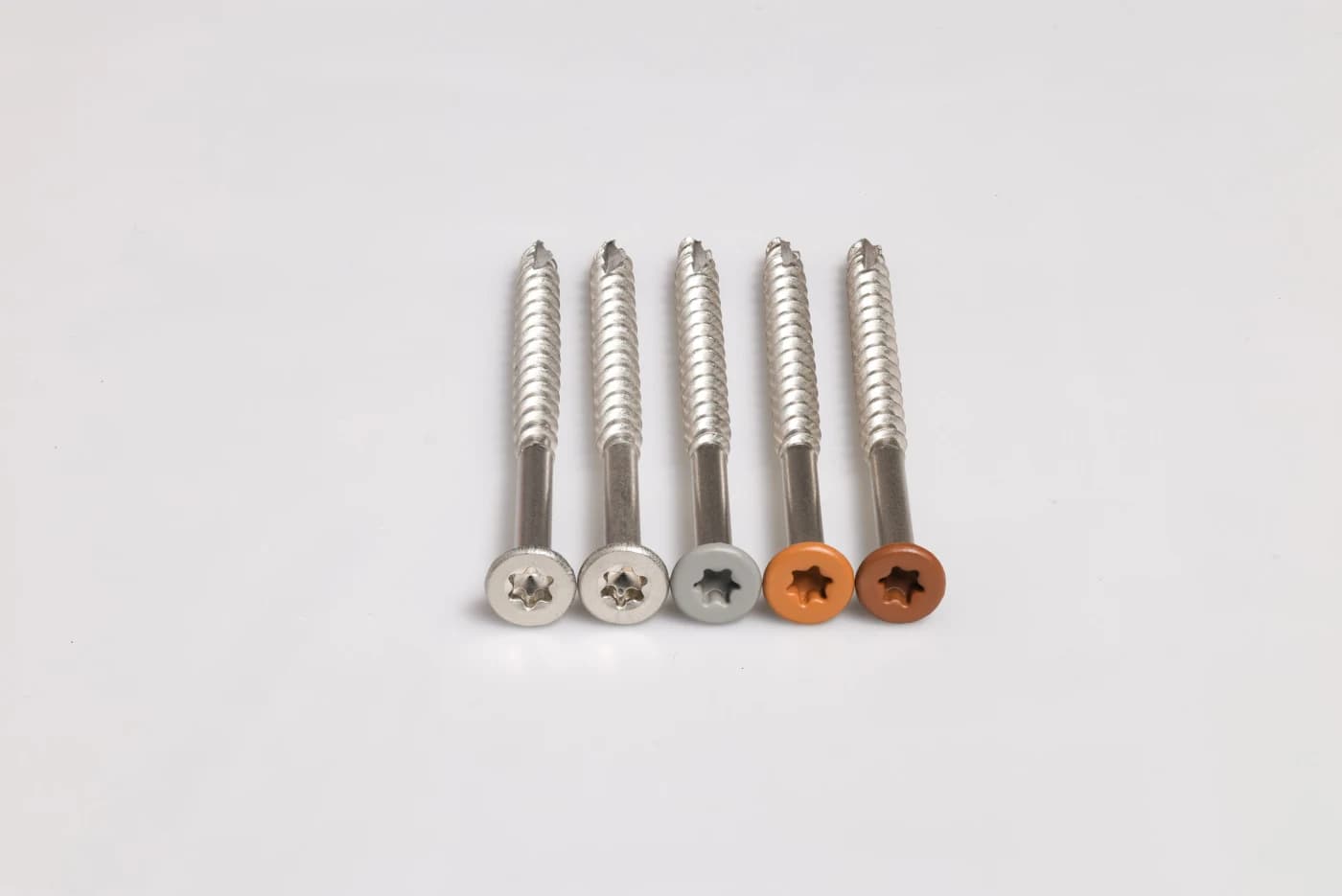
While US4 deck screws are offered in five finishes (Clear, Timber Gray, Black, Cedar, Tropical Timber Brown) that match various decking materials, the structural integrity for overhead use is paramount. For exterior soffits exposed to moisture or coastal environments, consider marine-grade options like 316 stainless steel, if available, to resist corrosion. Always verify the compatibility of the fastener material with both the finish material and the substrate to avoid galvanic corrosion.
Drill Bits and Accessories for Precision
Pre-drilling is often necessary for overhead work, especially when dealing with dense materials or to prevent splitting in wood. US4 Drill Bits are designed for demanding professionals and deliver precision in hardwoods and structural applications. Using the correct drill bit size is crucial: too small, and the screw may bind or strip; too large, and the screw may not hold securely.
For overhead applications, a drill bit that creates a pilot hole slightly smaller than the screw's major diameter is typically recommended. If the screw has a shoulder or a specific head design that requires countersinking for a flush finish, US4 offers accessories to achieve this. Accurate pilot holes reduce the effort required to drive screws overhead and minimize the risk of damaging the finish material.
Consider using an impact-rated drill or driver with US4 impact-rated drive bits. This combination provides the necessary torque and control for driving screws overhead, reducing user fatigue and improving efficiency. Ensure the drive bit matches the screw head type (e.g., Phillips, Square, Torx) to prevent cam-out and damage to the screw head.
Planning for Soffit and Ceiling Panel Installation: A Worked Example
Let's consider a hypothetical project: installing a new exterior soffit on a covered porch. The total area to cover is 10 feet by 20 feet.
First, determine the fastener type and length. For pressure-treated wood, confirm the screw's compatibility with the preservative chemicals.
Next, calculate the number of fasteners. However, a more precise count considers panel dimensions and joist spacing. Always add 10-15% for waste and future repairs.
For tools, US4 drill bits for hardwoods and structural applications would be needed for pre-drilling pilot holes, especially in the dense composite and treated wood. An impact-rated driver with matching US4 drive bits would ensure efficient and secure fastening. Router bits may be considered if custom grooving or edge detailing is required for the soffit panels, but for standard installation, they are typically not needed.
Maintenance and Long-Term Considerations
Even after installation, considering long-term performance is part of effective project planning. The US4 system is designed for durability, but environmental factors can still influence the longevity of overhead finishes. Regular inspection of overhead fasteners and materials can help identify and address any issues early.
For exterior soffits, environmental factors like moisture, temperature fluctuations, and UV exposure can impact the finish and the fasteners. While US4 fasteners are built for resilience, ensure that the chosen finish is appropriate for the exposure level. For example, in coastal areas, even marine-grade fasteners may require periodic checks for salt buildup.
The ability to repair or replace individual components is also a valuable consideration. If a US4 clip system is used for certain panel types, this can facilitate easier removal and replacement of individual boards without disturbing the entire installation. For face-screwed applications, proper pre-drilling and countersinking ensure that fasteners are flush and less prone to snagging or damage over time.
Before you order
- Identify the exact overhead finish material (e.g., soffit panel, ceiling board, trim).
- Determine the structural substrate (e.g., wood joists, steel studs, concrete).
- Verify the thickness and weight of the finish material.
- Choose US4 fasteners with appropriate length and material for the substrate and exposure (e.g., standard, corrosion-resistant, marine-grade).
- Select US4 drill bits for pre-drilling, matching size to the fastener and material density.
- Ensure US4 drive bits match the fastener head type and are impact-rated for overhead driving.
- Calculate the required quantity of fasteners, adding a buffer for waste and future repairs.
- Confirm any specific manufacturer installation requirements for the finish material.
- Consider long-term maintenance and potential repair needs for the overhead installation.
Confirm installation details, approved uses and warranty terms in the current instructions for the exact product and profile. Your installer should verify the substrate, structure and applicable project requirements.
Questions to help you decide
Are US4 deck screws suitable for all overhead applications?
US4 deck screws are engineered for high performance and durability, making them suitable for many overhead applications, particularly with wood substrates. However, their suitability depends on the specific finish material, the structural substrate (e.g., wood vs. metal), and environmental exposure (e.g., interior vs. exterior, coastal). Always match the screw's length, material, and finish to the project's requirements and consult the finish material's installation guidelines.
Do I always need to pre-drill for overhead installations?
Pre-drilling is highly recommended for most overhead installations, especially when working with dense materials like hardwoods or certain composites, or when fastening near the edges of wood to prevent splitting. US4 drill bits are designed for precision in demanding materials, making them ideal for creating accurate pilot holes. Pre-drilling significantly reduces the risk of material damage and ensures a cleaner, more secure fastener engagement, which is particularly important for overhead stability.
How do I choose the right US4 drive bit for overhead work?
Selecting the correct US4 drive bit is crucial for efficient and secure overhead fastening. First, ensure the drive bit matches the head type of your US4 fasteners (e.g., Square, Torx, Phillips). Second, opt for impact-rated US4 drive bits, as these are designed to withstand the high torque and repetitive impacts of power drivers, reducing cam-out and stripping, especially when working in challenging overhead positions.
Request a Material Quote for Your Overhead Project
For your next overhead finish project, request a material quote with your project dimensions, desired US4 fastener profile, and ZIP code. Confirm current availability and service options for all US4 tools and accessories you need.
Request a material quote →