Understanding Galvanic Corrosion in Decking
Galvanic corrosion occurs when two dissimilar metals are in electrical contact in the presence of an electrolyte, such as moisture or saltwater. One metal acts as an anode and corrodes, while the other acts as a cathode and is protected. In decking, this can manifest as fasteners corroding rapidly or staining adjacent materials, compromising structural integrity and aesthetics.
The severity of galvanic corrosion depends on several factors: the difference in electrochemical potential between the metals, the ratio of cathodic to anodic surface areas, and the presence and conductivity of the electrolyte. For outdoor decking, moisture is almost always present, making careful material selection essential.
US4 Fastener Materials and Finishes
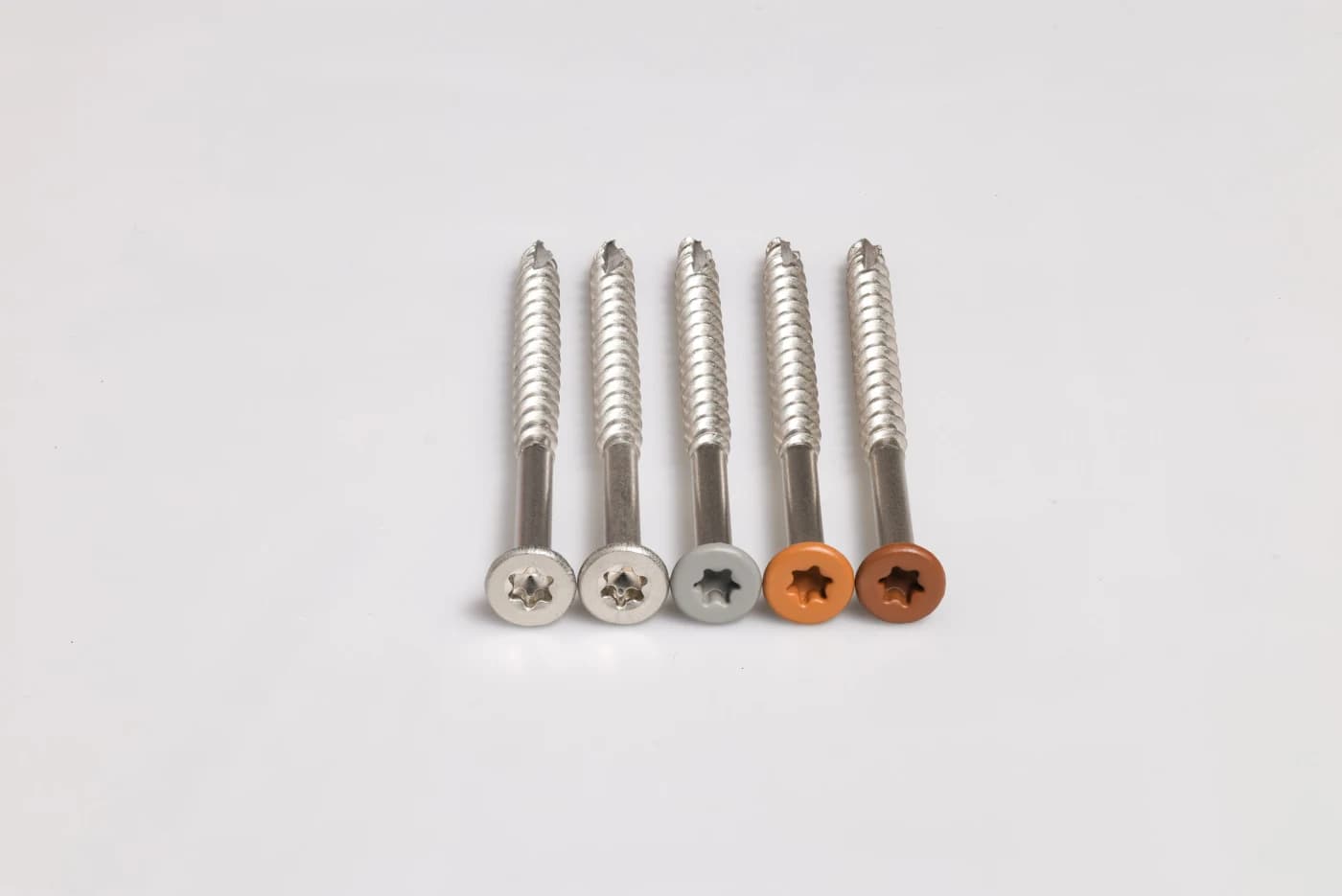
US4 deck screws are engineered for demanding applications, including dense tropical hardwoods. They are available in various finishes, which often correspond to different base materials or coatings. These finishes include Clear, Timber Gray, Black, Cedar, and Tropical Timber Brown. While these finishes primarily address aesthetics and some level of surface protection, the underlying metal composition is key for galvanic compatibility.
For projects requiring enhanced corrosion resistance, US4 offers marine-grade options, typically indicating 316 stainless steel. This material is particularly suitable for environments with high moisture or salt exposure, such as coastal areas, docks, or seawall caps. Always confirm the specific material composition of any US4 fastener before combining it with other metals.
Common Metal Combinations and Risks
Decking projects frequently involve multiple metal components beyond just the fasteners. These can include structural framing (pressure-treated lumber with metal connectors, steel, or aluminum), railing systems, flashing, and other accessories. Each of these introduces a potential point of galvanic interaction.
For example, using standard galvanized fasteners with aluminum framing can lead to corrosion of the aluminum. Similarly, certain grades of stainless steel can react with specific types of treated lumber, though US4 fasteners are designed to be compatible with common decking materials. The primary concern is often the interaction between fasteners and structural connectors or framing materials.
The "One system per board" advantage of US4 suggests that their fastening specs are designed to match specific board profiles, including hardwoods, thermally modified wood, composite, or PVC. This system approach often simplifies compatibility decisions, as the fasteners are intended to work with the specified decking material.
Worked Example: Deck Fastening with Mixed Materials
Consider a hypothetical 10x12-foot Ipe deck built on a steel frame, intended for a coastal property. Ipe, being a dense hardwood, requires pre-drilling and the use of stainless steel fasteners.
Standard carbon steel framing, even if galvanized, can still pose a galvanic risk when in direct contact with stainless steel in a saltwater environment.
To mitigate this, a physical barrier or isolation material, such as a PVC or rubber washer, should be placed between the stainless steel fastener head and the steel joist, and between the Ipe board and the steel joist. This breaks the electrical pathway, preventing galvanic corrosion. The US4 system recommends "Pre-drill, stainless only" for Ipe, reinforcing the need for specific fastener types for this wood species.
Best Practices for Mixed-Metal Compatibility
US4's "Marine-Grade Options" and "316 stainless for docks, seawall caps, and anything living in salt spray" claims highlight their suitability for specific harsh conditions.
3. **Choose Compatible Metals:** Whenever possible, use metals that are close in the galvanic series.
4. **Isolate Dissimilar Metals:** If dissimilar metals must be used, introduce a non-conductive barrier (e.g., rubber gaskets, PVC washers, bituminous coatings) to prevent direct contact and break the electrical circuit.
5. **Minimize Electrolyte Exposure:** While impossible to eliminate entirely outdoors, proper drainage and design can reduce standing water and moisture accumulation.
6. **Surface Area Ratio:** Aim for a larger anodic (more corrodible) surface area to a smaller cathodic (less corrodible) surface area if isolation is not possible. For fasteners, this means the fastener (anode) should be larger relative to the surrounding structural metal (cathode), which is rarely the case in practice, making isolation critical.
For steel or aluminum framing, always confirm the compatibility with your chosen US4 fasteners.
Before you order
- Have I identified all metal components in my deck project (fasteners, connectors, framing, railings)?
- What are the specific materials of my structural framing (e.g., pressure-treated wood, steel, aluminum)?
- Is my project in a high-moisture or coastal environment requiring marine-grade fasteners?
- Do the US4 fasteners have specific compatibility notes for my chosen decking material (e.g., "Pre-drill, stainless only" for Ipe)?
- If dissimilar metals are in contact, have I planned for non-conductive isolation barriers?
- Have I reviewed the manufacturer's guidelines for all metal components regarding mixed-metal contact?
Confirm installation details, approved uses and warranty terms in the current instructions for the exact product and profile. Your installer should verify the substrate, structure and applicable project requirements.
Questions to help you decide
What happens if I use incompatible metals in my deck?
Using incompatible metals can lead to galvanic corrosion, where one metal rapidly corrodes. This can weaken fasteners, stain decking materials, and compromise the structural integrity and longevity of your deck. In severe cases, fasteners can fail prematurely.
Are US4 marine-grade fasteners always compatible with other metals?
However, even 316 stainless steel can cause galvanic corrosion when in direct, prolonged contact with certain other metals (like carbon steel or aluminum) in the presence of an electrolyte. Isolation remains a best practice when possible.
How do I know if a US4 fastener is marine-grade?
Look for explicit labeling or product descriptions indicating "marine-grade options" or "316 stainless." US4 product specifications highlight these features. If uncertain, always consult with your supplier or the product documentation to confirm the material composition for your specific application.
Request a Material Quote for Your Decking Project
Planning your deck? Provide your project dimensions, desired US4 fastener profile, and ZIP code to receive a material quote. We can confirm current availability and service options for all US4 Tools and Accessories, along with your decking materials. Contact us to ensure your components are compatible and appropriate for your build.
Request a material quote →