Why Fascia Fastening Differs from Decking
Fascia boards are primarily aesthetic, designed to conceal the deck's substructure (rim joist). Because they are not walked upon, they do not experience the same load-bearing stresses as deck boards. However, they are highly visible and prone to expansion and contraction due to temperature and moisture changes. Improper fastening can lead to buckling, cupping, or screws pulling through the material.
Traditional decking fasteners are often designed for structural strength or hidden installation between boards. Fascia, on the other hand, frequently requires face-fastening, making the fastener head a visible component of the finished deck. This necessitates careful selection of screws that offer both secure attachment and an appropriate aesthetic, often with smaller heads or color-matched finishes.
Selecting US4 Fasteners for Fascia Boards
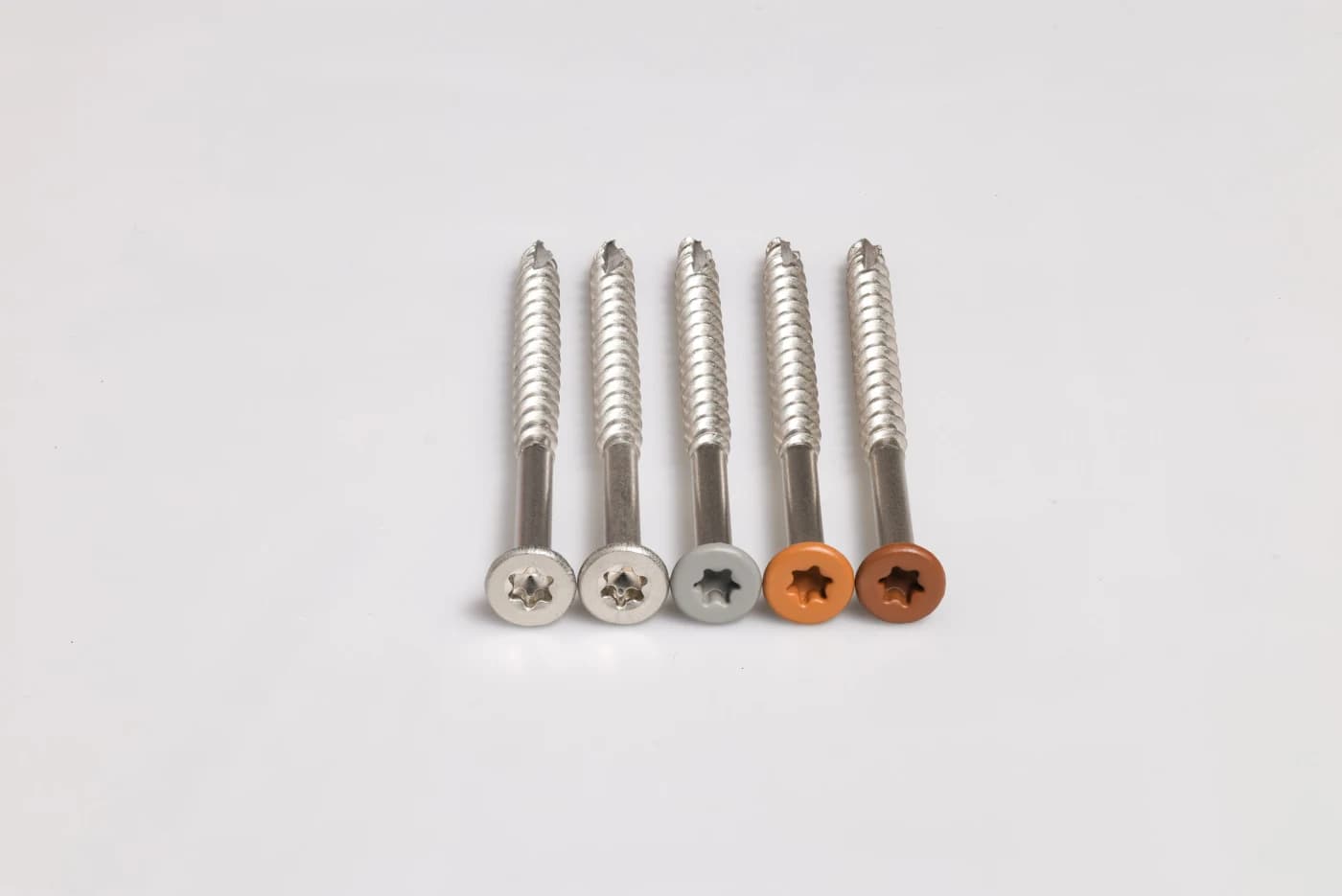
US4 offers a range of fasteners that can be adapted for fascia applications. The key is to choose screws that are appropriate for the fascia material and provide a clean, secure hold. For many fascia materials, a smaller head profile and a finish that blends with the board are desirable. US4 deck screws are engineered for exceptional performance and durability, and they come in five finishes: Clear, Timber Gray, Black, Cedar, and Tropical Timber Brown.
When selecting, consider the material of your fascia board. For composite or PVC fascia, ensure the chosen US4 screw is compatible with the material's expansion and contraction properties. The finish of the screw should ideally match or complement the fascia board for a seamless look. US4 deck screw finishes are matched against our own hardwood stock, not a generic color card.
While US4 provides robust deck screws, some fascia applications may benefit from specialized trim screws or color-matched plugs if a completely hidden fastener system is preferred for the fascia. Always consult the specific manufacturer guidelines for your fascia material regarding fastening methods.
Essential US4 Tools and Accessories for Fascia Installation
Proper installation of fascia requires precise drilling and driving. US4 offers several tools that can assist in achieving a professional finish:
US4 Drill Bits: For hardwoods and structural applications, US4 drill bits are designed for demanding professionals, delivering precision and efficiency. These are crucial for pre-drilling pilot holes in dense fascia materials like Ipe to prevent splitting and ensure screws drive cleanly. Selecting the correct diameter drill bit for the pilot hole is vital.
US4 Drive Bits and Accessories: Built for professionals who demand strength, precision, and reliability, US4 impact-rated drive bits ensure screws are driven securely without stripping the screw head. Using the correct drive bit (e.g., Torx, square drive) for your chosen US4 screw is critical for efficient and damage-free installation.
US4 Countersinking Accessories: While not explicitly listed as a separate category, suitable countersinking bits (often included with drill bit sets or available as accessories) are invaluable for fascia. Countersinking allows the screw head to sit flush with or slightly below the surface of the fascia board, providing a cleaner look and preventing snagging. This is particularly important for face-fastened fascia.
Worked Example: Fastening Ipe Fascia
Consider a hypothetical deck project where you are installing 1x12 Ipe fascia boards, 16 feet long, around the perimeter of a 12x16 foot deck. The fascia will be face-fastened to the rim joists.
You'll also need US4 impact-rated drive bits matching the screw head type and a countersinking bit to ensure flush installation.
4. **Installation Steps:**
* Using the US4 drill bit, pre-drill pilot holes at each marked location.
* Switch to the countersinking bit and countersink each pilot hole to allow the screw head to sit flush.
* Position the Ipe fascia board against the rim joist.
* Using the US4 drive bit, drive the US4 stainless steel screws through the pre-drilled and countersunk holes into the rim joist, ensuring they are flush with the fascia surface. Avoid over-tightening, which can strip the wood or fastener.
5. **Quantity Calculation:** For a 12x16 foot deck, you have two 16-foot fascia boards and two 12-foot fascia boards. (Assuming the fascia is applied to the outside perimeter, not wrapped around existing boards).
Considerations for Coastal or High-Moisture Environments
For decks in coastal areas or environments with high humidity and frequent moisture exposure, material compatibility is paramount. These are ideal for docks, seawall caps, and any application where prolonged exposure to harsh elements is expected.
Even if your fascia material is naturally rot-resistant, the fasteners must also withstand the environment.
Maintenance and Longevity of Fascia Fasteners
Once installed, US4 fasteners in fascia boards generally require minimal maintenance. However, periodic inspection of the fascia for any signs of movement, warping, or fastener protrusion can help identify potential issues early. For face-fastened systems, ensure that the screw heads remain flush with the surface. If any screws appear to be backing out, they may need to be re-driven or replaced.
The longevity of the fastening system is directly related to the initial proper selection and installation, particularly when considering the expansion and contraction of the fascia material. Using the correct US4 tools for pre-drilling and driving helps prevent undue stress on the fasteners and the fascia board itself.
Before you order
- Identify fascia board material (e.g., Ipe, composite, PVC).
- Determine if fascia will be face-fastened or use a hidden system.
- Choose a US4 screw finish that matches or complements the fascia board.
- Verify compatibility of US4 drill bits for pre-drilling fascia material.
- Ensure you have the correct US4 drive bits for the chosen screws.
- Consider US4 countersinking accessories for flush fastener installation.
- Review fascia manufacturer's specific fastening recommendations.
- Confirm current availability of US4 products and service options.
Confirm installation details, approved uses and warranty terms in the current instructions for the exact product and profile. Your installer should verify the substrate, structure and applicable project requirements.
Questions to help you decide
Can I use the same US4 screws for my deck boards and fascia?
While US4 deck screws are robust, fascia often benefits from a different approach. Deck boards may use hidden clip systems or larger structural screws. Fascia, being highly visible and non-structural, often requires screws with smaller heads, specific finishes, or even specialized trim screws for a cleaner aesthetic. Always prioritize the visual outcome and the specific expansion properties of the fascia material.
Do I always need to pre-drill for fascia screws?
Pre-drilling is highly recommended, especially when working with dense hardwoods like Ipe or when using stainless steel fasteners. It prevents splitting the fascia board, ensures a cleaner entry for the screw, and reduces stress on the fastener. For some softer composite or PVC fascia materials, pre-drilling may be less critical but is still good practice to achieve a consistent finish and prevent material deformation.
What US4 drill bit size should I use for fascia?
The correct US4 drill bit size for pilot holes depends on the diameter of the US4 screw you are using and the density of the fascia material. Generally, the pilot hole should be slightly smaller than the screw's shank (the non-threaded part) to allow the threads to grip effectively without splitting the wood. For dense hardwoods, a slightly larger pilot hole may be necessary. Always perform a test on a scrap piece of fascia to confirm the optimal drill bit size before beginning your project.
Request a Material Quote for Your Fascia Project
Ready to select the right US4 Tools and Accessories for your deck fascia? Provide your project dimensions, desired fascia profile, and your ZIP code to request a material quote. Our team can help you confirm current availability and service options for all US4 products.
Request a material quote →