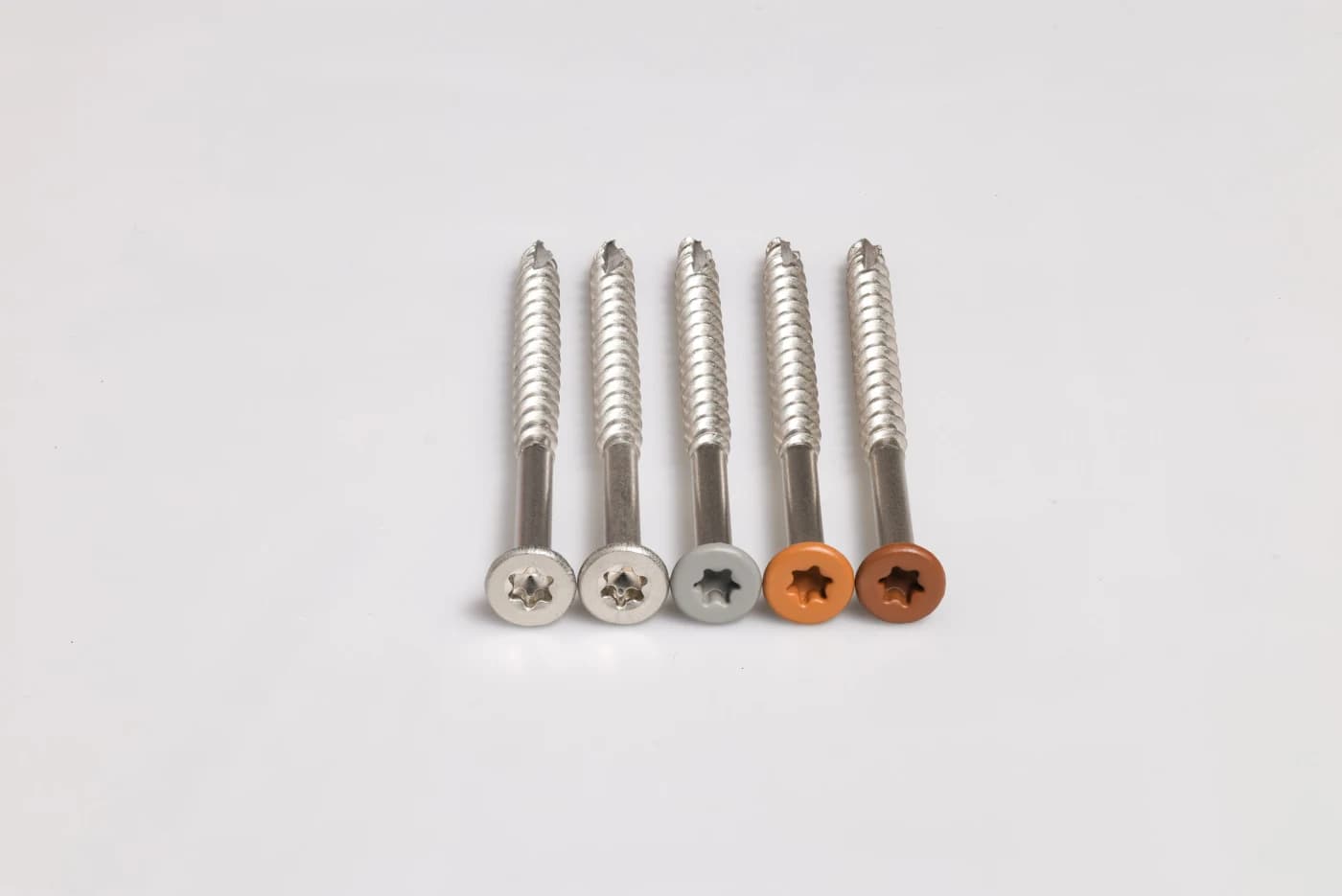
Understanding US4 Drill Bit Capabilities
US4 drill bits are designed for high performance in challenging materials. Unlike general-purpose bits, these are specifically rated for hardwoods and structural applications, meaning they are built to withstand the stresses of drilling through dense wood species like Ipe, which has a high Janka hardness rating. This specialization helps ensure cleaner cuts and reduces the risk of bit breakage or material splitting.
The engineering behind US4 drill bits aims for precision and efficiency, which is crucial when working on projects where material integrity and appearance are paramount. Whether you are installing decking, cladding, or other outdoor structures, the choice of drill bit directly impacts the quality of your pilot holes and, subsequently, the performance of your fasteners.
Matching Drill Bit Diameter to Fastener Type
The most critical aspect of drill bit selection is matching the bit diameter to the fastener you intend to use. For face-screwed applications, a pilot hole is typically required to prevent splitting, especially in hardwoods. The pilot hole diameter should be slightly smaller than the shank diameter of the screw to allow the threads to grip the wood effectively.
For US4 deck screws, which are engineered for dense boards, pre-drilling is often recommended. If using a countersinking bit, the pilot hole diameter must correspond to the screw's shank, while the countersink portion matches the screw head. Always consult the fastener manufacturer's recommendations for precise pilot hole diameters, as these can vary based on screw design and material density.
Choosing for Hardwood Decking Applications
When working with hardwood decking, such as Ipe, US4 drill bits are a suitable choice due to their "Hardwood-Rated" designation. Hardwoods are notoriously dense and can cause lesser bits to overheat, dull quickly, or even break. The design of US4 drill bits aims to provide clean, precise holes without damaging the wood fibers, which is essential for both the structural integrity and the aesthetic finish of your deck.
For Ipe decking, specifically, the recommendation is often to pre-drill and use stainless steel fasteners. This underscores the need for a drill bit that can consistently perform in such challenging materials. Using the correct US4 drill bit can help ensure that pilot holes are straight and accurately sized, allowing for proper screw installation and preventing issues like stripped screw heads or cracked boards.
Considerations for Structural Applications
Beyond decking, US4 drill bits are also suitable for other structural applications where precision and strength are required. This can include framing, ledger board installation, or other scenarios where fasteners bear significant loads. In these cases, ensuring the pilot hole is correctly sized and clean is vital for the fastener to achieve its intended pull-out and shear strength.
When working with treated lumber for structural elements, the material can sometimes be inconsistent in density. A robust drill bit helps to maintain consistent hole quality across different sections of the wood. Always verify the specific requirements for your structural project, including fastener type and any local building code mandates for pre-drilling.
Worked Example: Deck Board Fastening
For a countersunk finish, a separate countersink bit or a combination drill/countersink bit would also be needed.
To calculate the number of drill bits needed, consider the project scope. This means about 360 linear feet of board.
While a single high-quality US4 drill bit can handle many holes, it's prudent to have spares. For a project requiring over 10,000 holes in Ipe, having at least 3-5 drill bits of the specified size is a practical approach to account for wear, accidental damage, or loss, ensuring continuous workflow.
Before you order
- What material am I drilling into (e.g., Ipe, thermally modified wood, treated lumber)?
- What is the specific fastener I am using (brand, type, diameter)?
- Does the fastener manufacturer specify a pilot hole diameter?
- Is a countersunk finish desired? If so, what size countersink is needed?
- How many holes do I anticipate drilling for the entire project?
- Do I need a combination drill/countersink bit, or separate bits?
- Are there any specific project or local code requirements for drilling?
Confirm installation details, approved uses and warranty terms in the current instructions for the exact product and profile. Your installer should verify the substrate, structure and applicable project requirements.
Questions to help you decide
What makes US4 drill bits suitable for hardwoods?
US4 drill bits are specifically designated as "Hardwood-Rated" (S1). This means they are engineered with materials and geometries designed to effectively cut through dense wood species like Ipe, minimizing wear, overheating, and the risk of splitting the material, which are common issues with general-purpose bits.
Do I always need to pre-drill when using US4 fasteners?
While US4 fasteners are robust, pre-drilling is generally recommended, especially when working with dense hardwoods like Ipe or in structural applications (S1). Pre-drilling helps prevent material splitting, ensures the screw drives straight, and allows the fastener to achieve its optimal holding power. Always refer to the specific fastener manufacturer's guidelines for your chosen screw and material.
Where can I find the correct pilot hole size for my US4 screws?
The correct pilot hole size is typically specified by the fastener manufacturer. This information is crucial for proper installation. When you request a quote for US4 fasteners, ensure you also confirm the recommended drill bit diameter for your specific board profile and fastener type.
Request a Material Quote for Your Project
Ready to select the right US4 drill bits and fasteners for your project? Contact us with your project dimensions, desired fastener profile, and ZIP code. We'll help you confirm current availability and service options for all your US4 Tools and Accessories needs, including US4 Drill Bits and Accessories and US4 Fasteners.
Request a material quote →