The Challenge of Coastal Environments
Coastal regions present unique environmental challenges for building materials. Saltwater, whether as direct spray or airborne particles, is highly corrosive to many metals. High humidity accelerates corrosion, and strong winds can introduce abrasive elements. These factors collectively contribute to a harsh environment where ordinary fasteners can quickly rust, weaken, and compromise the safety and longevity of a structure. Understanding these challenges is the first step in selecting the right materials.
The appearance of fasteners can also be affected, leading to unsightly rust stains on decking or cladding. Beyond aesthetics, compromised fasteners can lead to loose boards, structural instability, and costly repairs. Therefore, choosing hardware specifically designed for coastal conditions is not merely a preference but a necessity for ensuring both the performance and visual appeal of your project.
Understanding US4 Marine-Grade Options
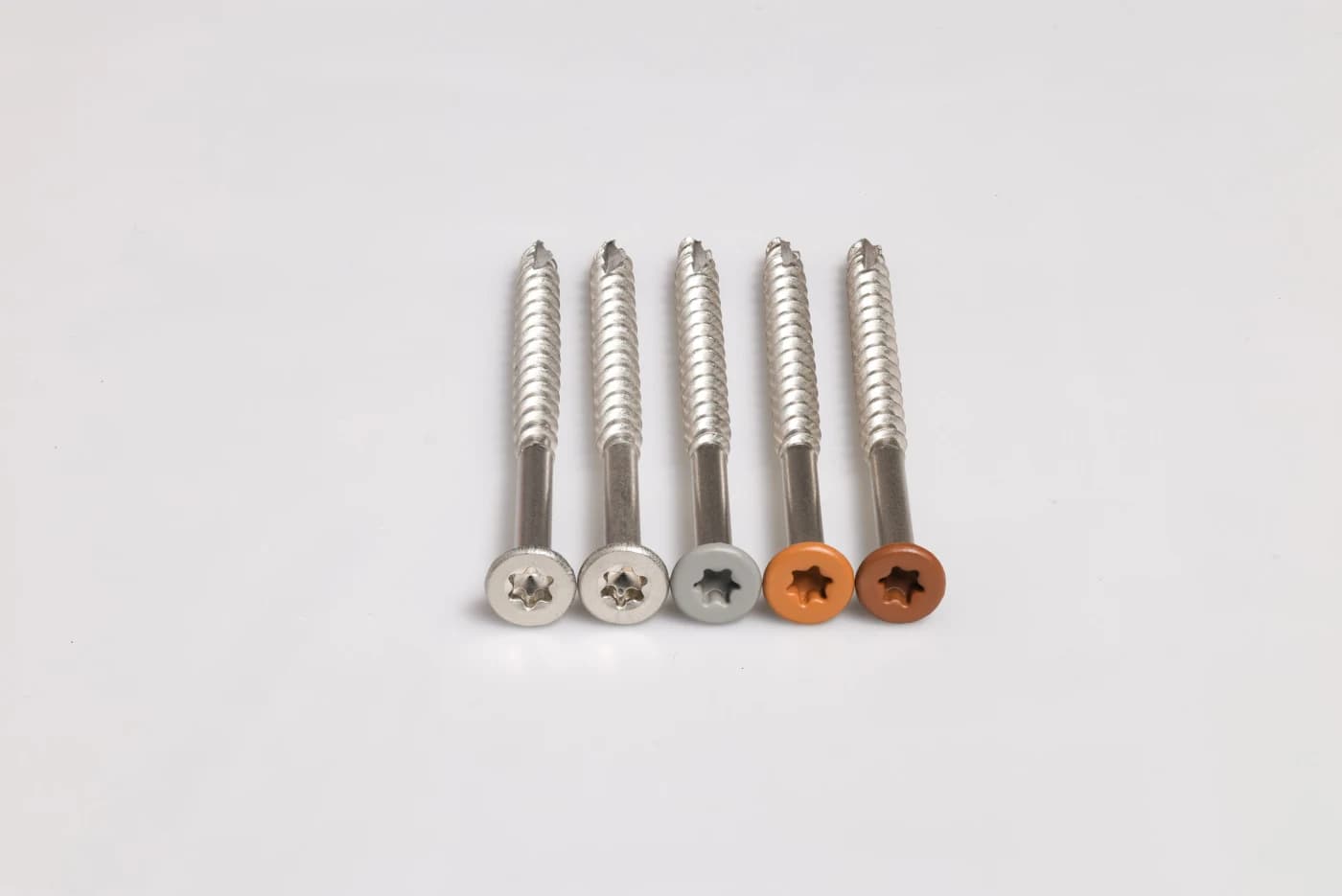
US4 offers specific fasteners engineered for demanding conditions, including marine-grade options. These are designed to provide enhanced resistance to corrosion, particularly in environments with salt exposure. The key distinction lies in the alloy composition of the fasteners. For coastal applications, the primary recommendation is often 316 stainless steel.
The US4 range includes fasteners, drill bits, router bits, cutting tools, and drive bits. While the primary concern for coastal compatibility is with the fasteners themselves, it is also important to consider the tools used for installation. Using compatible tools can help ensure proper installation and avoid damaging the corrosion-resistant properties of the fasteners during the process. For example, using the correct drive bits helps prevent stripping screw heads, which can expose underlying, less resistant metal.
316 Stainless Steel: The Coastal Standard
For projects directly exposed to salt spray or submersion, 316 stainless steel is generally considered the standard. This alloy contains molybdenum, which provides superior corrosion resistance compared to other stainless steel grades, particularly against chlorides found in saltwater. US4 offers marine-grade options, specifically 316 stainless steel, suitable for docks, seawall caps, and other structures in constant contact with or heavily exposed to salt spray.
Regular inspection and maintenance can help prolong the life of even marine-grade fasteners in extreme environments. Always confirm the specific grade and suitability of fasteners for your project's exact exposure level.
Compatibility with Decking Materials
The choice of fasteners must also be compatible with the decking material itself. US4 fasteners are designed to work with a range of decking options, including dense hardwoods like Ipe, thermally modified wood, composite, and PVC boards. When selecting fasteners for coastal projects, ensure that the chosen marine-grade US4 fastener is also appropriate for the specific decking material.
For example, for Ipe decking, which is dense, US4 recommends pre-drilling and using stainless steel fasteners. This ensures proper penetration and avoids splitting the wood while leveraging the corrosion resistance needed for coastal areas. For other materials like PVC or composite, specific US4 clip systems or screws may be recommended, and their material composition for coastal use should be verified.
Discover more about compatible decking materials at:
Ipe: /decking/hardwood/ipe
Thermally Modified Wood: /thermally-modified-wood
Azek (PVC): /brands/azek
All Decking: /decking
Worked Example: Deck Fastening for a Coastal Balcony
Consider a hypothetical 10-foot by 12-foot elevated balcony deck project located within 500 feet of the ocean. The client specifies Ipe decking for its durability and appearance. Given the coastal exposure, the primary concern is corrosion resistance for all fasteners. The structural framing is treated lumber.
These screws would be used for face-fastening the Ipe deck boards to the treated lumber joists. Pre-drilling would be essential for the Ipe, requiring US4 drill bits rated for hardwoods. The quantity calculation would involve determining the number of screws per board and the total board footage.
This estimate must be refined based on actual board lengths, joist layout, and any perimeter fastening requirements. This ensures both the structural integrity and long-term resistance to the corrosive coastal environment.
Before you order
- Is the project within direct salt spray range or in a high-humidity coastal zone?
- Have US4 drill bits and drive bits been selected that are compatible with both the fastener type and the decking material?
- Is the chosen decking material compatible with stainless steel fasteners (e.g., Ipe requires pre-drilling and stainless)?
- Have all other hardware components (e.g., hidden clips, brackets) also been verified for coastal suitability and material compatibility?
- Are there any mixed-metal connections that could lead to galvanic corrosion? If so, are isolation measures planned?
- Has the project plan accounted for potential maintenance and inspection of fasteners in coastal conditions?
Confirm installation details, approved uses and warranty terms in the current instructions for the exact product and profile. Your installer should verify the substrate, structure and applicable project requirements.
Questions to help you decide
What is the difference between standard stainless steel and marine-grade stainless steel for fasteners?
Standard stainless steel, often 304 grade, offers good corrosion resistance in many environments. However, marine-grade stainless steel, typically 316 grade, contains molybdenum, which significantly enhances its resistance to chlorides found in saltwater. This makes 316 stainless steel the preferred choice for projects exposed to salt spray or submersion in coastal and marine environments.
Can I use US4 fasteners with treated lumber in coastal areas?
Yes, US4 offers fasteners compatible with treated lumber. Always confirm specific fastener compatibility with the type of treated lumber being used.
How do I ensure the longevity of my US4 fasteners in a coastal environment?
Proper installation, including pre-drilling dense hardwoods to avoid stress on the fastener, is essential. Regular inspection for any signs of corrosion and prompt cleaning can also help. While 316 stainless steel is highly resistant, no material is entirely corrosion-proof, so ongoing care is beneficial.
Request a Material Quote for Your Coastal Project
Planning a coastal deck or outdoor structure? Contact us with your project dimensions, desired US4 fastener profile, and ZIP code to request a material quote. Our team can help confirm current availability and service options for the US4 tools and accessories best suited for your marine-exposed project.
Request a material quote →