Understanding Cladding Systems and Their Hardware Needs
Cladding refers to the exterior layer of a building, providing protection against weather, improving aesthetics, and sometimes contributing to insulation. Different cladding systems dictate distinct hardware requirements. For instance, a traditional face-fastened system for horizontal siding will primarily rely on screws, requiring appropriate drill bits for pilot holes and drive bits for installation. A rainscreen system, however, often uses clips or hidden fasteners to create an air gap, necessitating router bits for grooving and specialized fasteners.
The material of your cladding also plays a significant role. Hardwoods, thermally modified wood, composite, and PVC each have unique properties that influence fastener type, pre-drilling needs, and tool selection.
Selecting US4 Fasteners for Cladding
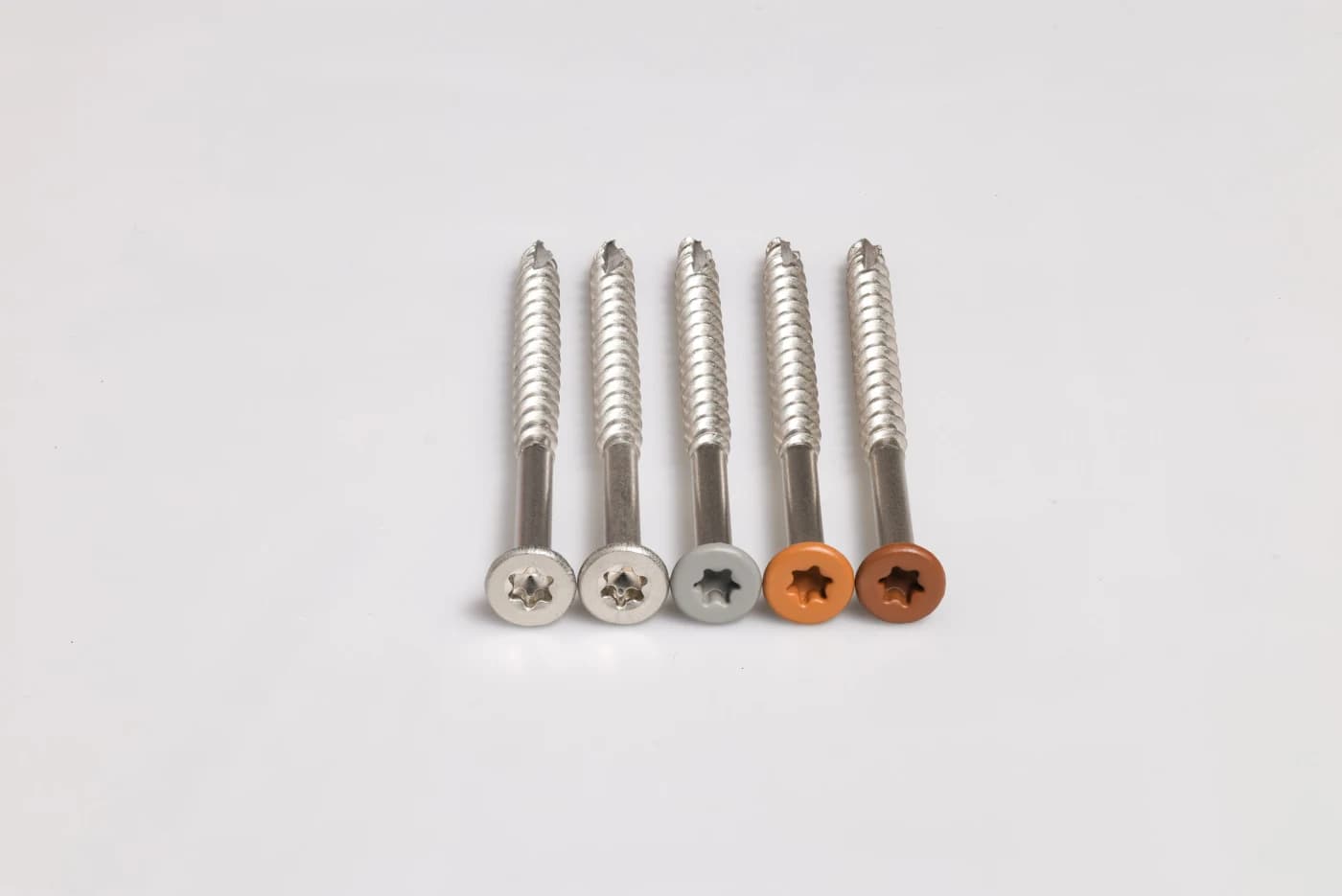
US4 offers deck screws in five finishes: Clear, Timber Gray, Black, Cedar, and Tropical Timber Brown. While primarily designed for decking, these screws can be suitable for certain cladding applications where face-fastening is appropriate and the finish matches the aesthetic.
When specifying fasteners, consider the substrate you are attaching to (e.g., wood sheathing, furring strips) and the thickness of your cladding material. The length and gauge of the screw must provide adequate embedment for structural integrity. Always check local building codes and manufacturer recommendations for specific cladding materials regarding fastener type and spacing.
Matching US4 Drill Bits and Accessories to Cladding Materials
Pre-drilling is often essential for cladding, especially with dense hardwoods or to prevent splitting in softer woods. US4 drill bits are designed for hardwoods and structural applications, making them suitable for many cladding materials. For Ipe, which is a very dense hardwood, pre-drilling with appropriate drill bits is crucial.
When using pilot holes, ensure the drill bit diameter matches the screw shank (not the threads) to allow the screw to draw the cladding tightly to the substrate without binding. Countersinking accessories may also be needed to create a flush or recessed screw head, particularly for face-fastened systems where a clean finish is desired. US4's range includes drill bits suitable for demanding professional use, ensuring precision and efficiency.
Utilizing US4 Router Bits for Hidden Fastening Systems
Many modern cladding systems, particularly rainscreen applications or those using grooved-edge boards, rely on hidden fastening. US4 slotting cutters are precision-engineered router bits designed to create clean and accurate grooves. These can be instrumental in preparing cladding boards to accept hidden clips or other interlocking systems.
For cladding materials like thermally modified wood or certain composite and PVC boards, which may utilize hidden clips, a US4 slotting cutter can be used to create the necessary grooves if the boards are not pre-grooved. Always verify the exact profile required by your chosen hidden clip system to ensure compatibility with the router bit.
US4 Cutting and Grinding Tools for Cladding Installation
Accurate cuts are fundamental to a professional cladding installation. US4 TCT (Tungsten Carbide Teeth) saw blades are available in circular saw sizes from 7-1/4″ to 12″ and deliver maximum cutting power and durability. These blades are suitable for cutting various cladding materials, including hardwoods, composites, and PVC.
When cutting cladding boards, use a blade appropriate for the material to achieve clean, splinter-free cuts. For example, a fine-tooth blade may be preferred for finish cuts on visible cladding elements. Always ensure your saw blades are sharp and correctly installed for safety and optimal performance.
Worked Example: Cladding a Small Wall Section with US4 Hardware
Consider a hypothetical project to clad a 10-foot wide by 8-foot high exterior wall section with horizontal thermally modified wood siding, using a hidden clip system. The cladding boards are 5.5 inches wide and require a 1/8-inch deep groove along their edges to accept the clips. The furring strips are 1.5 inches thick.
First, for creating the grooves in the thermally modified wood, you would select a US4 slotting cutter (router bit) that matches the required groove dimensions. For fastening the starter strip and any end trim that may require face-fastening, you would choose US4 deck screws in a finish that complements the thermally modified wood, such as Timber Gray. Ensure the screw length is appropriate for penetration into the furring strips without over-penetrating the sheathing.
Next, for installing the hidden clips, while the clips themselves are not US4, the US4 drive bits would be essential for fastening the clips securely to the furring strips. Given the nature of thermally modified wood, pre-drilling for face-fastened components might be advisable to prevent splitting, for which US4 drill bits for hardwoods would be selected. For cutting the cladding boards to length and around openings, a US4 TCT circular saw blade (e.g., 7-1/4″ or 10″ depending on your saw) would provide clean, precise cuts.
Before you order
- Verify the specific cladding system (e.g., face-fastened, hidden clip, rainscreen).
- Identify the cladding material (e.g., hardwood, thermally modified wood, composite, PVC).
- Determine if pre-drilling is required for the cladding material and fastener type.
- Select US4 fasteners with appropriate length, gauge, and finish for the application.
- Choose US4 drill bits that match the fastener shank diameter for pilot holes.
- Consider US4 countersinking accessories for flush or recessed screw heads.
- If using hidden clips, confirm if US4 router bits are needed for grooving cladding boards.
- Select US4 cutting tools (saw blades) appropriate for the cladding material and desired cut quality.
- Ensure US4 drive bits are compatible with your chosen fasteners and impact-rated for durability.
- Review manufacturer guidelines for both cladding and fastening systems for compatibility.
Confirm installation details, approved uses and warranty terms in the current instructions for the exact product and profile. Your installer should verify the substrate, structure and applicable project requirements.
Questions to help you decide
Are US4 deck screws suitable for all types of cladding?
US4 deck screws are designed for demanding applications, including dense hardwoods. While they are primarily marketed for decking, they can be suitable for face-fastened cladding systems where their finishes and strength meet the project requirements. For specific cladding materials or systems, always consult the cladding manufacturer's fastening recommendations and local building codes. Marine-grade US4 options are available for enhanced corrosion resistance.
Do I always need to pre-drill when installing cladding with US4 tools?
Pre-drilling is highly recommended, and often necessary, when installing cladding, especially with dense materials like Ipe or other hardwoods, to prevent splitting and ensure a clean installation. Even with softer woods or composites, pre-drilling can improve fastener engagement and reduce stress on the material. US4 drill bits are designed for hardwoods and structural applications, making them well-suited for this purpose. Always refer to the cladding and fastener manufacturer's guidelines for specific recommendations.
Can US4 router bits be used to create custom profiles for cladding?
US4 offers slotting cutters designed to create clean and accurate grooves, which are useful for hidden clip systems in cladding. While these are specific types of router bits, they are not designed for creating highly complex or custom decorative profiles. For specialized custom profiles, you would need to ensure the US4 router bit's design and size align with your specific profiling needs. Always verify the exact bit profile against your design requirements.
Plan Your Cladding Project with US4 Tools and Accessories
Ready to select the right US4 tools and accessories for your cladding project? Request a material quote today. Provide your project dimensions, exact cladding profile, and ZIP code to confirm current availability and service options for all your hardware needs. Visit our US4 product page for more details: [US4 Tools and Accessories](/brands/us4).
Request a material quote →