Understanding Border Board Types and Their Fastening Needs
Deck borders can be constructed from various materials, each with specific fastening requirements. Hardwood border boards, such as Ipe, are known for their density and durability. Composite and PVC border boards, while offering different advantages, also have specific fastening guidelines, often involving hidden clip systems or specialized screws to maintain their appearance and structural integrity. US4 fasteners are engineered for various board profiles, including hardwood, thermally modified wood, composite, and PVC.
When selecting your border material, consider its compatibility with your chosen fastening system. A mismatch can lead to premature wear, board damage, or an unsatisfactory finish.
For example, if you're installing an Ipe border, US4 recommends pre-drilling and using stainless steel fasteners. This approach ensures the fastener can penetrate the dense wood without causing damage and provides long-lasting corrosion resistance, especially in exposed conditions. For composite or PVC boards, you might explore US4's range of fasteners designed to work with grooved-edge clip systems, offering a hidden fastening solution for a clean surface.
Subframe Preparation and Blocking for Borders
The subframe beneath your deck border is critical for providing adequate support and a stable fastening surface. Proper blocking is essential to ensure that border boards have solid material to attach to along their entire length and at butt joints. Without sufficient blocking, border boards can warp, sag, or become loose over time.
For a perimeter border, ensure that joists or blocking run parallel to the border board, providing continuous support. At corners or where border boards meet, additional blocking, such as a double joist or solid blocking between joists, creates a robust fastening point.
When installing blocking, use structural screws or appropriate framing connectors to secure it firmly to the main joist system. The goal is to create a rigid framework that can support the border boards and resist movement from foot traffic and environmental factors. Consider the type of framing material—whether treated lumber, steel, or aluminum—and select compatible US4 fasteners for the subframe connections if they are exposed or require specific corrosion resistance.
Choosing the Right US4 Fasteners for Border Applications
US4 offers a variety of fasteners designed for different decking materials and applications. For deck borders, the choice often comes down to visible face screws or hidden fastening systems.
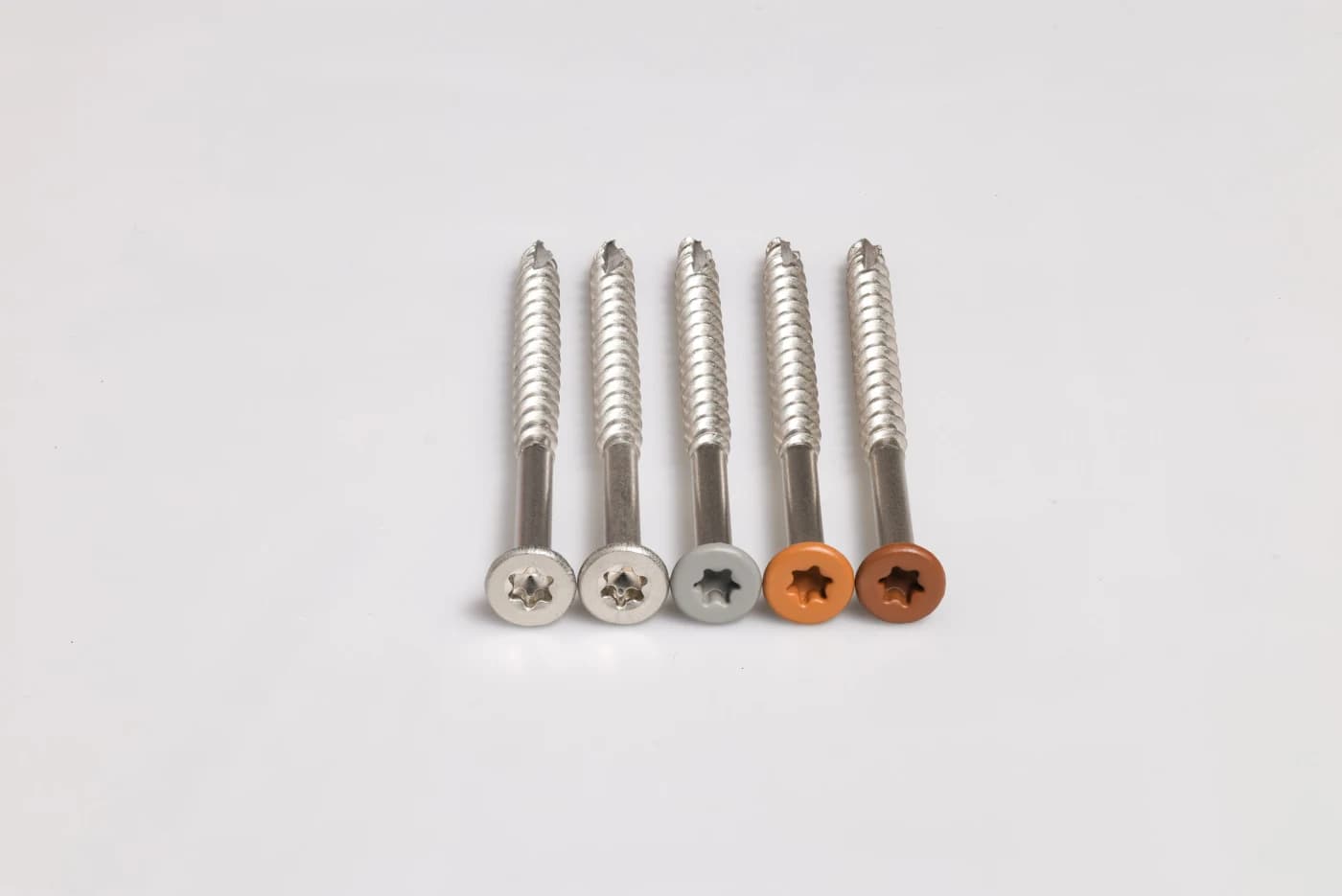
Face screws provide a strong, direct connection and are suitable for many border applications. US4 deck screws are available in five finishes—Clear, Timber Gray, Black, Cedar, and Tropical Timber Brown—allowing you to match or complement your decking material.
For a seamless appearance, consider hidden fastening systems. While US4 primarily offers screws and bits, their system is designed to integrate with various board profiles. For grooved-edge composite or PVC boards, US4 fasteners can be used to secure starter and end clips, or to face-fasten the first and last board if a hidden clip system is used for the field boards. Always verify the specific fastening requirements for your chosen board profile and clip system to ensure compatibility with US4 components.
Remember that every US4 clip, screw, and plug is designed to map to a board profile stocked by Lumber Plus, simplifying the selection process. When in doubt, consult the product specifications for your specific border boards.
Utilizing US4 Drill Bits and Accessories for Precision
Proper pilot drilling is essential when installing border boards, especially with dense hardwoods, to prevent splitting and ensure the fastener drives cleanly. US4 drill bits are designed for hardwoods and structural applications, offering precision and efficiency.
For face-fastening, select a drill bit that matches the shank diameter of your chosen US4 screw. If countersinking is desired to recess the screw head below the surface for a flush or plugged finish, use a US4 countersink bit. US4 also offers slotting cutters among its router bits, which could be relevant if custom grooving is required for a specific border profile or hidden clip system.
When working with different materials, ensure you have the correct drill bit type. For instance, a bit suitable for Ipe might differ from one optimized for composite. Using the right US4 drill bit helps maintain the integrity of the border board and ensures a professional finish. US4 drive bits are impact-rated, providing the durability needed for consistent fastening without stripping screw heads.
Worked Example: Fastening an Ipe Deck Border
Consider a hypothetical 12-foot by 16-foot Ipe deck with a single border board around the perimeter. The Ipe boards are 1x6 (actual 0.75" x 5.5").
First, confirm that the subframe provides continuous blocking for the border. Since there's a double rim joist, this is sufficient for the outer edge of the border. At the corners, ensure solid blocking is installed to support the mitered ends of the border boards.
Before fastening, pre-drill all pilot holes using a US4 hardwood-rated drill bit, sized to the screw shank. For a clean, flush finish, use a US4 countersink bit to recess the screw heads slightly.
For the 12-foot by 16-foot deck, the perimeter is (12+16) * 2 = 56 linear feet. If each 1x6 border board is 16 feet long, you would need 4 boards for the 16-foot sides and 2 boards for the 12-foot sides (cutting one 16-foot board into two 12-foot sections, assuming efficient cuts and no waste). This totals 6 boards. Remember to account for any waste from cutting and potential installation errors. The US4 drive bits will ensure consistent driving.
Before you order
- Identify border board material (hardwood, composite, PVC) and its specific fastening needs.
- Verify subframe blocking provides continuous support for border boards and at corners.
- Choose US4 fasteners (face screws, hidden clips) compatible with your board type and desired aesthetic.
- Select appropriate US4 drill bits for pilot holes and countersinking, especially for dense materials.
- Determine the correct US4 drive bits for your chosen fasteners to prevent stripping.
- Plan fastener spacing and quantity, accounting for board length, joints, and corners.
- Consider the finish of US4 screws to match or complement your border material.
- Confirm any marine-grade or specific corrosion resistance requirements for your project location.
Confirm installation details, approved uses and warranty terms in the current instructions for the exact product and profile. Your installer should verify the substrate, structure and applicable project requirements.
Questions to help you decide
What types of wood are US4 fasteners suitable for?
They are also suitable for thermally modified wood, composite, and PVC deck boards. Always check the specific product documentation for compatibility with your chosen material.
Can I use US4 screws with a hidden fastening system for my deck border?
While US4 primarily offers deck screws and related bits, their system is designed to integrate with various board profiles. For grooved-edge composite or PVC boards, US4 fasteners can be used to secure starter and end clips, or to face-fasten the first and last board if a hidden clip system is used for the field boards. Always verify the specific fastening requirements for your chosen board profile and clip system to ensure compatibility.
How do I choose the correct finish for US4 deck screws?
US4 deck screws come in five finishes: Clear, Timber Gray, Black, Cedar, and Tropical Timber Brown. These finishes are matched to various species and board types. It is recommended to check a physical sample of the screw finish against your border board material before making a final commitment, as screen approximations may vary.
Ready to Plan Your Deck Border Fastening?
Request a material quote with your project dimensions, exact profile, and ZIP code. Confirm current availability and service options for US4 Tools and Accessories.
Request a material quote →