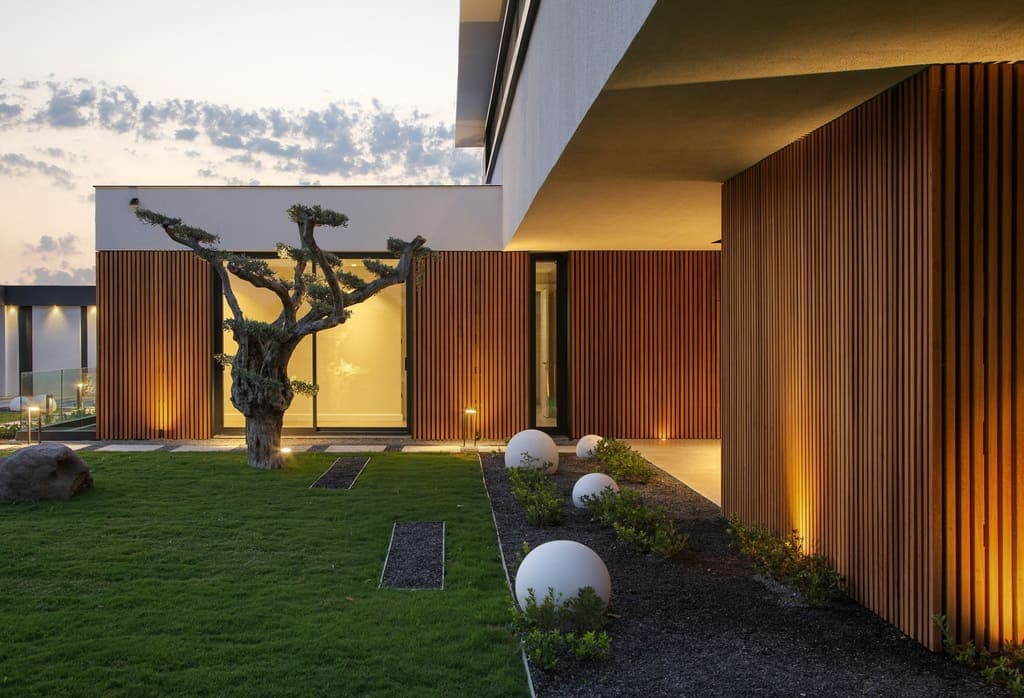
Why Thermally Modified Wood for Covered Patio Walls?
Thermally modified wood undergoes a high-heat treatment process that alters its cellular structure. This process enhances the wood's stability by reducing its tendency to expand and contract with changes in humidity, a common concern in outdoor applications. For covered patio walls, this improved stability means a reduced risk of warping or cupping compared to untreated wood, helping maintain a consistent appearance over time.
The modification process also typically darkens the wood, creating a rich, uniform color that can enhance the aesthetic of a covered outdoor space. While it's naturally resistant to decay and insects due to the treatment, the 'covered' aspect of patio walls adds an extra layer of protection, further preserving its appearance and structural integrity.
Selecting the Right Profile and Species
When selecting thermally modified wood for covered patio walls, the profile plays a significant role in the final look and installation. Common profiles include tongue and groove, shiplap, and square edge boards. Tongue and groove profiles offer a seamless, interlocking fit, often favored for a clean, continuous wall surface. Shiplap creates distinct shadow lines, adding architectural interest and depth.
Square edge boards, while simpler, can be installed with a gap for an open-joint rainscreen aesthetic, though for covered patio walls, a tighter fit is often preferred for a more finished look. The choice of species, such as thermally modified Pine or Ash, will influence the grain pattern and initial color, even after the thermal modification process. Consider how the grain will interact with natural light in your covered patio space.
Finishing Options and Appearance Over Time
Thermally modified wood can be left unfinished to gradually weather to a silver-gray patina, or it can be finished with stains or oils to preserve or enhance its initial color. For covered patio walls, an unfinished look can be appealing, offering a low-maintenance option that embraces natural aging. However, even in a covered setting, UV exposure and humidity fluctuations will contribute to the weathering process.
If maintaining the original rich tones is desired, applying a UV-protective oil or stain is recommended. These finishes help protect the surface from UV degradation and can be reapplied periodically to refresh the appearance. Always follow the manufacturer's recommendations for specific finishing products compatible with thermally modified wood.
Installation Considerations for Covered Patio Walls
Proper installation is key for the longevity and appearance of thermally modified wood walls. Ensure the substructure is sound, plumb, and adequately spaced to support the cladding. For a covered patio, a furring strip system can create an air gap behind the cladding, promoting ventilation and helping manage moisture, even in a protected environment. This is especially relevant in Trenton's climate, which experiences seasonal humidity.
Fastening methods should be chosen based on the profile and desired aesthetic. Concealed fasteners can provide a clean, unblemished surface, while face fastening offers a more traditional look. Always use corrosion-resistant fasteners, such as stainless steel, to prevent staining and ensure long-term durability, particularly in outdoor settings where condensation or humidity might occur.
Hypothetical Project Example: A Trenton Patio Wall
Consider a covered patio in Trenton, NJ, with a main wall section measuring 12 feet wide by 8 feet high. The homeowner desires a modern, clean look, opting for thermally modified Pine in a tongue and groove profile, with each board having an effective coverage width of 5 inches and a standard length of 16 feet.
To calculate the required boards: The wall area is 12 ft x 8 ft = 96 square feet. Each 16-foot board with 5-inch coverage provides (16 ft * 12 in/ft) / 5 in = 38.4 boards per foot of height, or 16 ft * (5/12) ft = 6.67 square feet per board. For 96 square feet, approximately 96 / 6.67 = 14.4 boards are needed. Accounting for cuts and potential waste, especially given the 12-foot width not being a direct multiple of 16 feet, purchasing 18 boards would be a prudent estimate to ensure enough material for the 8-foot height and any necessary trimming. For instance, each 16-foot board can yield two 8-foot sections, allowing for efficient use. This calculation assumes minimal waste and straight cuts, but always add a buffer for unforeseen circumstances.
The project would also require stainless steel fasteners and, if a consistent color is preferred, a UV-protective oil finish applied after installation and allowed to cure before exposure to the elements.
Before you order
- Confirm the specific thermally modified wood species and profile (e.g., Pine T&G, Ash Shiplap) for your aesthetic preference.
- Determine if the wood will be left to weather naturally or finished with a UV-protective oil or stain.
- Verify the substructure requirements for your chosen profile and fastening method.
- Calculate the total square footage and account for waste factor (typically 10-15%) when ordering.
- Select appropriate corrosion-resistant fasteners for outdoor use.
- Plan for ventilation behind the cladding, even in a covered setting.
- Consider the appearance of cut ends and how they will be addressed.
Confirm installation details, approved uses and warranty terms in the current instructions for the exact product and profile. Your installer should verify the substrate, structure and applicable project requirements.
This is a planning guide for projects in Trenton, NJ. Ask our team to confirm availability, delivery to your ZIP code and which branch can support your order.
Questions to help you decide
Can thermally modified wood be painted?
While thermally modified wood can be painted, it is more commonly finished with stains or oils that allow its natural grain and enhanced color to show through. If painting is desired, ensure the paint is suitable for exterior wood and follow the manufacturer's preparation and application guidelines.
Does thermally modified wood require special tools for cutting?
Thermally modified wood can typically be cut with standard woodworking tools. However, as with any wood product, using sharp blades designed for wood will ensure clean cuts and prevent splintering. Always wear appropriate personal protective equipment.
How does Trenton's climate affect thermally modified wood on a covered patio?
Trenton, NJ, experiences a range of temperatures and humidity throughout the year. While thermally modified wood offers enhanced stability against moisture fluctuations, a covered patio provides significant protection from direct rain and prolonged sun exposure. This protection helps preserve the wood's appearance and structural integrity over time, reducing the impact of extreme weather cycles. Good ventilation behind the cladding is still beneficial.
Ready to Plan Your Thermally Modified Wood Patio Walls?
For a material quote tailored to your project dimensions, exact profile, and ZIP code, contact us. We can help you confirm current availability and service options for your Trenton, NJ, project. Explore our selection of Thermally Modified Wood, Siding and Cladding, and products from NORX and Maximo Accoya to find the perfect materials.
Request a material quote →