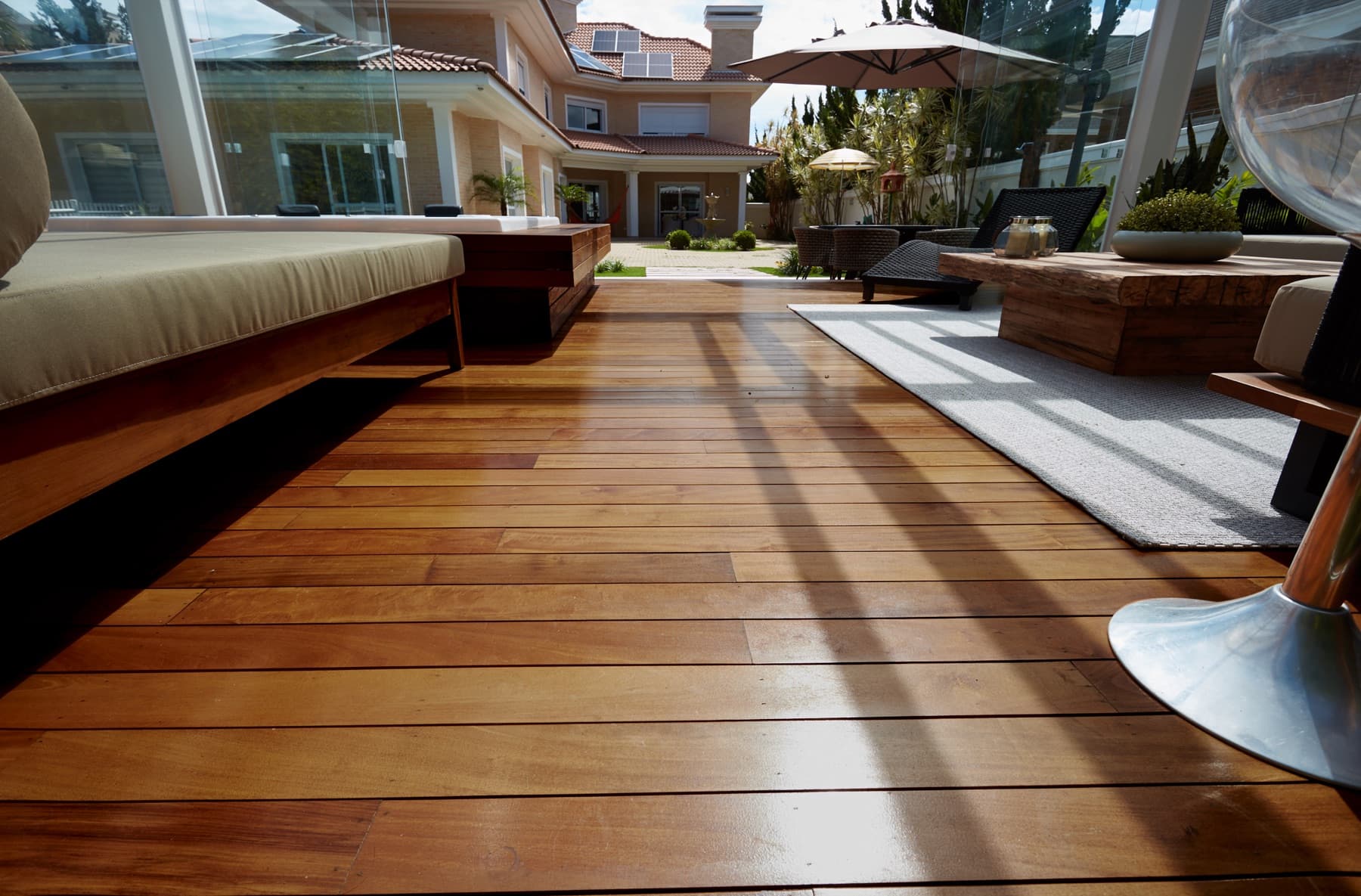
Assessing Your Existing Deck Frame
Before selecting new decking, a critical first step is to inspect your existing deck frame. The condition and structural integrity of the joists, beams, and posts will dictate whether they can support new hardwood decking. Hardwoods like Ipe and Cumaru are dense and heavier than many alternative decking materials, which means the substructure must be robust enough to handle the increased load.
Look for signs of rot, insect damage, or excessive deflection in the existing framing. Check all connections, fasteners, and ledger boards for soundness. Any compromised elements must be repaired or replaced before new decking is installed. If the existing frame is not sound, it may require significant reinforcement or a complete rebuild, impacting your project timeline and budget.
Consider the existing joist spacing. Consult product specifications for minimum joist spacing requirements for your chosen hardwood.
Comparing Hardwood Decking Options: Ipe vs. Cumaru
Lumber Plus offers a range of hardwood decking options, with Ipe and Cumaru being two popular choices known for their durability and aesthetic appeal. Understanding their distinct characteristics can help you make an informed decision for your Trenton renovation.
Ipe, also known as Brazilian walnut, is renowned for its exceptional hardness and longevity. Its color ranges from reddish-brown to olive-brown and it naturally resists rot, insects, and mold. Ipe offers minimal movement post-installation, making it a stable choice for outdoor environments. It can be left untreated to weather to a silvery-gray patina or sealed to maintain its original rich color. (S1)
It is also resistant to termites and weather changes, making it a dependable choice for demanding builds. Cumaru shares many advantages with Ipe, including natural resistance to insects and rot. When worked, Cumaru can emit a scent of cinnamon and vanilla. Like Ipe, it can be maintained with an annual oil application to preserve its color or allowed to weather to a gray. (S1)
Understanding Hardwood Profiles and Lengths
Hardwood decking is available in various profiles and lengths, which can influence both the aesthetics and installation of your renovation project. Common profiles include standard dimensional lumber sizes, with options for smooth or grooved edges depending on the fastening system. Grooved profiles are typically used with hidden fastener systems, providing a clean, screw-free surface.
Lengths can vary significantly, often ranging from 3 to 24 feet. Longer boards can reduce the number of end joints, creating a more continuous appearance. However, longer boards may also be heavier and require more careful handling during installation. When planning your layout, consider how board lengths will align with your deck's dimensions to minimize waste and optimize visual flow. (S1)
For a renovation, assess if your existing frame can accommodate longer spans or if you'll need to plan for more frequent butt joints. Proper spacing between boards is crucial for drainage and ventilation, and to accommodate any natural movement of the wood. Always follow the manufacturer's specific recommendations for board spacing for the chosen species and profile.
Fastening Systems for Hardwood Decking
The choice of fastening system impacts both the appearance and long-term performance of your hardwood deck. Two primary methods are face-fastening and hidden fastening.
Face-fastening involves screwing directly through the face of the board into the joists. This method is generally robust and secure, but the screw heads will be visible. Stainless steel screws are recommended to prevent staining and ensure durability. Pre-drilling is almost always necessary with dense hardwoods like Ipe and Cumaru to prevent splitting.
Hidden fastening systems offer a smooth, unblemished deck surface by securing boards from the sides or underside. These systems often use clips that fit into grooved board edges or specialized fasteners that are driven at an angle. While they provide a premium aesthetic, hidden fasteners can sometimes require more precise installation and may not be suitable for all board profiles or subframe conditions. Always verify compatibility with your chosen hardwood species and profile.
Worked Example: Deck Renovation in Trenton
Consider a hypothetical deck renovation project in Trenton, NJ. The homeowner wants to replace worn composite decking with Cumaru hardwood decking, preserving the sound existing pressure-treated pine frame.
First, the existing decking is removed. The joists are inspected for rot, loose fasteners, and levelness. Minor repairs are made to secure a few joist hangers, and a few slightly bowed joists are sistered with new lumber to ensure a flat surface for the new decking. The total deck area is 12 ft x 16 ft = 192 square feet.
For the 12-foot width: 12 feet / 0.46875 feet/board = approximately 25.6 boards. Rounding up, we'll need 26 board widths across the deck. For the 16-foot length, if 16-foot boards are available, this simplifies the calculation. We would need 26 boards, each 16 feet long. Total linear footage: 26 boards * 16 feet/board = 416 linear feet.
It is always recommended to add 10-15% for cuts, waste, and future repairs. For this example, we would purchase approximately 416 linear feet * 1.15 = 478.4 linear feet of Cumaru decking. This would then be converted to board feet or bundles based on supplier packaging.
Before you order
- Assess the condition and load-bearing capacity of your existing deck frame.
- Measure your deck dimensions accurately, including joist spacing.
- Research hardwood species (e.g., Ipe, Cumaru) for durability, appearance, and maintenance needs.
- Determine the preferred board profile (smooth or grooved) and fastening method (face or hidden).
- Calculate the required linear footage, accounting for waste and cuts.
- Consider ventilation requirements under the deck, especially for dense hardwoods.
- Plan for proper drainage away from the deck structure.
- Confirm local building codes and permit requirements for deck renovations in Trenton, NJ.
Confirm installation details, approved uses and warranty terms in the current instructions for the exact product and profile. Your installer should verify the substrate, structure and applicable project requirements.
This is a planning guide for projects in Trenton, NJ. Ask our team to confirm availability, delivery to your ZIP code and which branch can support your order.
Questions to help you decide
Can I install hardwood decking over my existing deck boards?
No, it is not recommended to install new hardwood decking directly over existing deck boards. The existing boards can trap moisture, lead to rot in the substructure, and create an uneven surface. For a proper and durable installation, always remove old decking to expose and inspect the underlying frame.
How do I maintain the original color of my hardwood deck?
To preserve the rich, natural color of hardwood decking like Ipe or Cumaru, you can apply a UV-blocking oil or sealer annually. If left untreated, these hardwoods will naturally weather to a silvery-gray patina over time, which is a common and desirable aesthetic for many homeowners. Regular cleaning to remove dirt and debris is also recommended regardless of whether you apply a finish.
Is hardwood decking suitable for areas with harsh winters, like Trenton, NJ?
Yes, hardwoods like Ipe and Cumaru are well-suited for varying climates, including those with harsh winters. Their natural density and oil content provide resistance to moisture, rot, and insects, which helps them withstand freeze-thaw cycles. They are known for their minimal movement post-installation and resilience to weather changes. However, proper installation with adequate ventilation and drainage is crucial in any climate to ensure longevity.
Ready to Plan Your Hardwood Deck Renovation?
Request a material quote today with your project dimensions, desired hardwood profile, and ZIP code to confirm current availability and service options for your Trenton, NJ project.
Request a material quote →