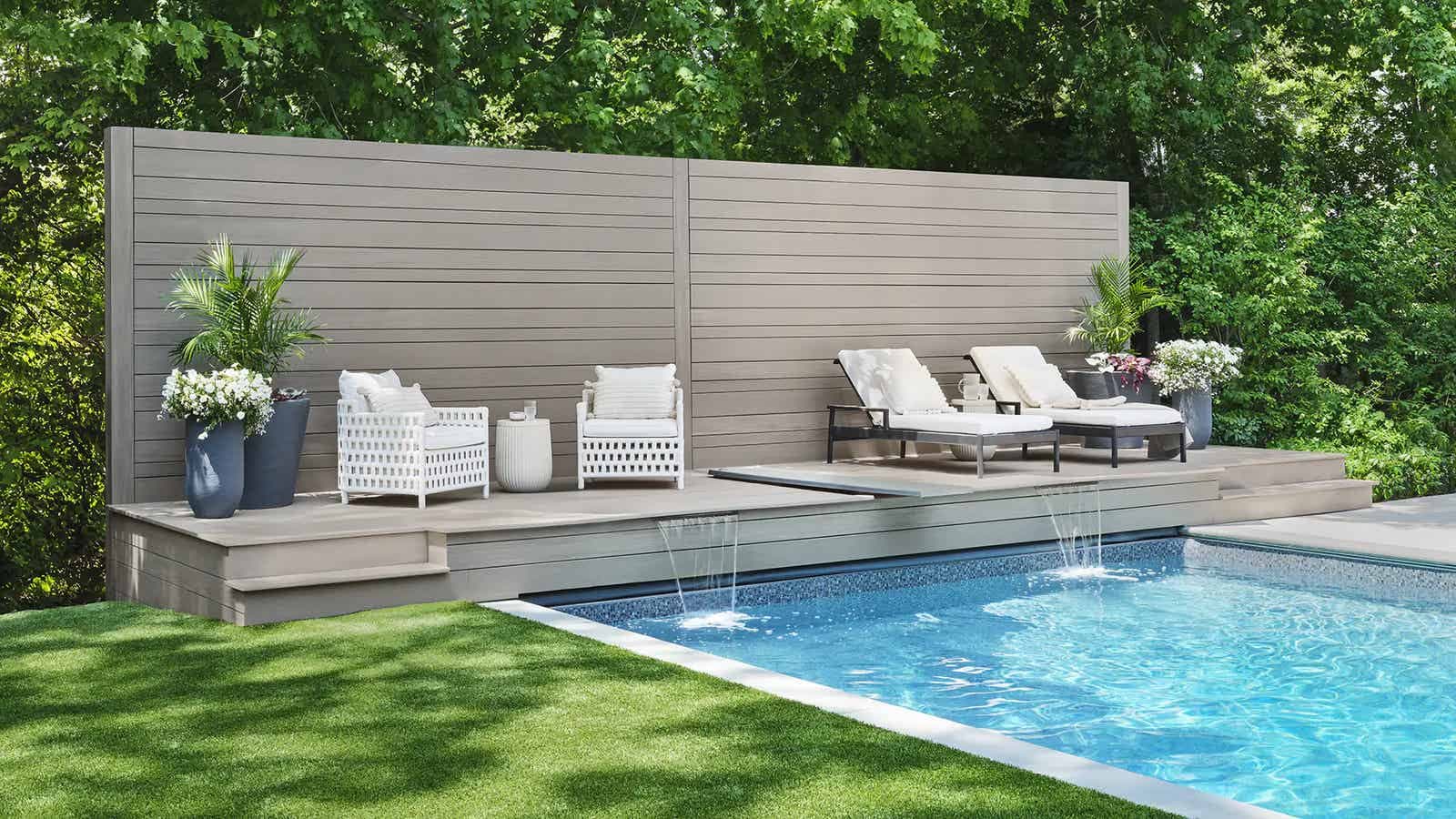
Why PVC Decking for a Pool Terrace?
The primary advantage of PVC decking around a pool is its inherent resistance to moisture. Made from 100% synthetic materials, these boards contain no wood fiber, which means they are not susceptible to the typical issues wood faces in wet conditions, such as rot, warping, or splintering. This makes PVC a suitable choice for areas that are consistently wet, like pool surrounds and splash zones.
Beyond water resistance, PVC decking is designed for low maintenance. Its capped polymer surface sheds common spills like grease and wine, allowing for easy cleaning with just soap and water. This is particularly beneficial in a poolside setting where spills from drinks, sunscreen, or pool chemicals are common. Some PVC options also offer heat-mitigating color choices, which can be a consideration for bare feet on hot summer days.
PVC decking is also a lightweight material compared to hardwood and even some composite options. This can simplify handling and installation, potentially reducing labor time for larger projects.
Understanding PVC Decking Profiles and Appearance
PVC decking is available in various collections, offering different aesthetic profiles. For instance, lines like TimberTech Azek's Vintage, Landmark, and Harvest collections are known for their deep wood-look textures and advanced capping. These options aim to replicate the appearance of natural wood while retaining the performance benefits of PVC.
When selecting PVC decking for your pool terrace, consider the visual impact of the board width and the grain pattern. Wider boards can create a contemporary feel, while narrower profiles might offer a more traditional look. The color choice is also important, as it contributes significantly to the overall aesthetic of your outdoor space and can impact surface temperature.
Planning for Water Management and Drainage
While PVC decking is waterproof, proper planning for water management beneath the deck surface is still crucial. Even though the boards themselves won't rot, ensuring adequate drainage and ventilation beneath the deck helps prevent moisture buildup that could affect the substructure or lead to issues like mildew growth in shaded areas. Consult specific product guidelines for recommended board spacing to allow for proper airflow and water runoff.
Consider the slope of your pool terrace. The deck surface should ideally be sloped away from the pool and any adjacent structures to facilitate drainage. This helps to prevent standing water on the deck surface and directs water away from the pool's edge and foundations.
Edge Finishes and Fascia for a Polished Look
The edges of your pool terrace require careful consideration for both aesthetics and safety. PVC decking systems typically offer coordinating fascia boards or trim pieces that can be used to finish the perimeter of the deck, creating a clean and cohesive appearance. These fascia boards conceal the deck's substructure and the cut ends of the decking boards.
For steps leading to or from the pool terrace, ensure that the chosen PVC decking profiles are compatible with stair construction. Many manufacturers offer dedicated stair treads or recommend specific methods for finishing stair risers and stringers using their decking material. A well-finished edge enhances the overall look and provides a safer transition.
Hypothetical Project Example: Trenton Pool Terrace Remodel
Imagine a homeowner in Trenton, NJ, wants to replace an aging concrete pool surround with a new PVC deck. The existing pool is rectangular, 15 feet by 30 feet, and they plan a deck area extending 8 feet out from all sides of the pool. The total deck area would be (15 + 2*8) feet by (30 + 2*8) feet, or 31 feet by 46 feet. This results in a total surface area of 1426 square feet. The pool opening itself is 15 x 30 = 450 square feet, so the actual decking surface needed is 1426 - 450 = 976 square feet.
If using 12-foot long PVC decking boards that are 5.5 inches wide, each board covers (12 feet * 12 inches/foot) * 5.5 inches = 792 square inches, or approximately 5.5 square feet. To cover 976 square feet, approximately 178 boards would be needed (976 sq ft / 5.5 sq ft per board). This calculation is a starting point; actual quantities will depend on the specific layout, cut plans, and any waste factor. It's always advisable to add a percentage for cuts and potential future repairs.
The homeowner also plans for a picture-frame border around the entire deck and the pool opening. This would require additional lineal footage of boards cut to specific lengths for the border, separate from the main field boards. For a project like this, it's essential to create a detailed drawing and material list to ensure all components, including fasteners and fascia, are accounted for.
Before you order
- Confirm local building codes and permit requirements for deck construction around a pool in Trenton, NJ.
- Evaluate the existing substructure for suitability with PVC decking, especially if reusing an old frame.
- Select PVC decking color and texture, considering heat retention and aesthetic preference.
- Plan for adequate drainage and ventilation beneath the deck surface.
- Determine the need for coordinating fascia boards, stair treads, and railing systems.
- Estimate material quantities, including decking boards, fasteners, and trim, accounting for waste.
- Consider professional installation or review DIY guides for specific product assembly instructions.
Confirm installation details, approved uses and warranty terms in the current instructions for the exact product and profile. Your installer should verify the substrate, structure and applicable project requirements.
This is a planning guide for projects in Trenton, NJ. Ask our team to confirm availability, delivery to your ZIP code and which branch can support your order.
Questions to help you decide
Is PVC decking slippery when wet, especially around a pool?
Some manufacturers also offer specific collections or finishes designed to enhance slip resistance. It's always important to exercise caution on any wet surface, especially around a pool.
How do I clean PVC decking around a pool?
PVC decking is generally easy to clean. For routine maintenance, soap and water are often sufficient to remove dirt, pool chemicals, and common spills. For more stubborn stains, consult the manufacturer's specific cleaning recommendations, as certain chemicals may not be compatible with all PVC decking products.
Can PVC decking be installed directly over an existing concrete pool deck?
Installing PVC decking directly over concrete often requires a sleeper system to create a level surface, allow for drainage, and provide a fastening point for the decking boards. This approach ensures proper ventilation and prevents moisture entrapment between the concrete and the decking. Always refer to the specific manufacturer's installation guidelines for approved methods.
Ready to Plan Your Trenton Pool Terrace with PVC Decking?
Request a material quote with your project dimensions, desired PVC decking profile, and ZIP code. We can confirm current availability and service options for your project.
Request a material quote →