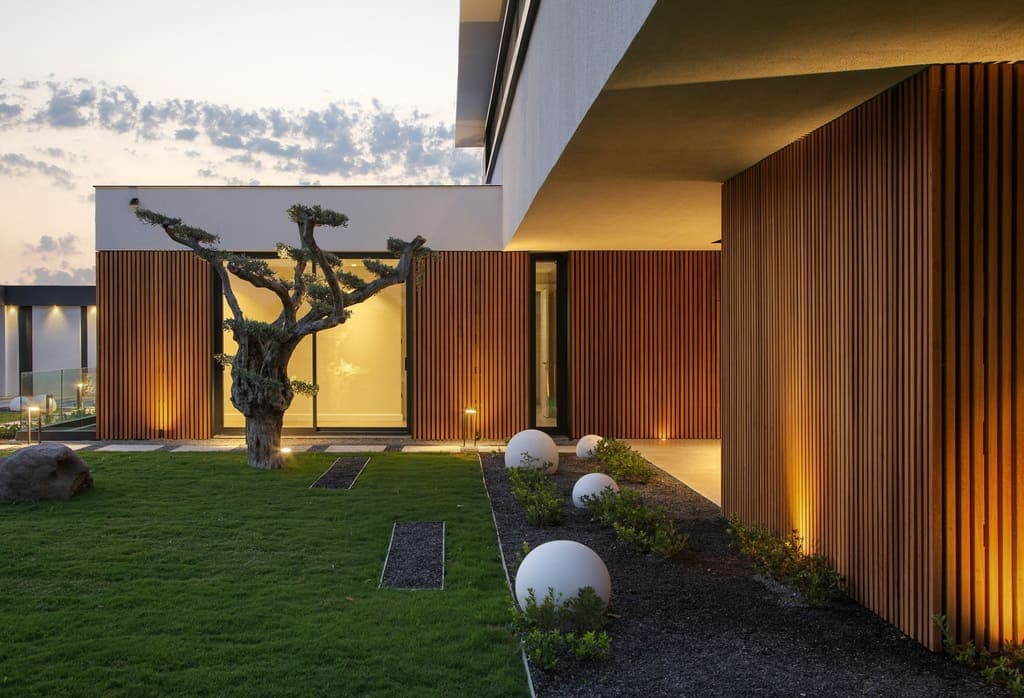
Understanding Thermally Modified Wood for Wall Applications
Thermally modified wood undergoes a high-heat treatment process that alters its cellular structure. This process enhances several properties of the wood, making it more stable and less prone to moisture absorption compared to untreated wood. For covered patio walls, this means a material that is better equipped to resist warping, cupping, and checking, which are common concerns with exterior wood installations, especially in climates like Spokane's where humidity and temperature can fluctuate.
The modification process also imparts a consistent, rich brown tone throughout the wood, offering an attractive aesthetic that can deepen with an applied finish or weather to a silver-gray if left unfinished. While suitable for various applications, its use on covered patio walls specifically leverages its enhanced stability in a protected environment, minimizing direct exposure to harsh sun and rain while still benefiting from its improved resistance to environmental factors.
Selecting the Right Species and Profile
Thermally modified wood is available in various species, each offering unique grain patterns and characteristics. Common options include Ash and Pine, which are transformed through the thermal modification process to achieve enhanced performance. When selecting for covered patio walls, consider both the aesthetic you wish to achieve and the specific profile that complements your design.
Profiles such as tongue-and-groove or shiplap are popular for wall applications, providing a clean, finished look and simplifying installation. Tongue-and-groove profiles offer a tight, interlocking fit, which can be advantageous for a smooth wall surface. Shiplap creates a distinct shadow line, adding depth and architectural interest. For a modern aesthetic, a square-edge profile with precise spacing can also be considered. Always verify that the chosen profile is approved for vertical wall installation and suitable for the expected exposure on a covered patio.
Finishing and Appearance Considerations
Thermally modified wood naturally possesses a beautiful, consistent brown color. You have the option to maintain this natural appearance with a clear UV-protective finish, which can enhance the wood's warmth and protect it from sun exposure that might otherwise lead to a silvering effect over time. Alternatively, stains can be applied to achieve a specific color palette that harmonizes with your Spokane home's exterior or landscaping.
If left unfinished, thermally modified wood will gradually weather to a soft, silvery-gray patina. This natural aging process is often desired for certain architectural styles, offering a low-maintenance option that blends with the outdoor environment. The choice between finishing and natural weathering depends on your preferred aesthetic and the level of maintenance you are prepared to undertake. For covered patio walls, the protected location means the weathering process will typically be slower and more uniform compared to fully exposed siding.
Attachment and Substructure Planning
Proper attachment is critical for the long-term performance of thermally modified wood on covered patio walls. A robust substructure, typically consisting of furring strips or blocking, provides a secure base for fastening the wood. This substructure also creates an air gap behind the cladding, which can aid in ventilation and moisture management, even in a covered application.
Fasteners should be corrosion-resistant, such as stainless steel screws, to prevent staining and ensure durability. Hidden fastening systems, often used with tongue-and-groove or shiplap profiles, can provide a clean, fastener-free appearance on the finished wall surface. For face-fastened applications, pre-drilling can help prevent splitting, especially near board ends. Always follow manufacturer guidelines for fastener type, spacing, and installation to ensure proper performance and to maintain any applicable product considerations.
Hypothetical Project Example: Covered Patio Wall in Spokane
Consider a Spokane homeowner planning to clad a 10-foot wide by 8-foot high covered patio wall using thermally modified Ash shiplap siding, with individual boards measuring 5.5 inches wide (actual coverage) and 12 feet long. The existing substructure consists of vertical studs at 16-inch on-center, requiring horizontal furring strips for proper cladding attachment.
First, calculate the wall area: 10 feet x 8 feet = 80 square feet. Next, determine the number of shiplap boards needed. Each 12-foot board covers 5.5 inches (0.458 feet) x 12 feet = 5.496 square feet. To cover 80 square feet, approximately 80 / 5.496 = 14.55 boards are needed. Accounting for cuts and waste, it is prudent to round up to 16 boards. The 12-foot length allows for efficient cuts, as an 8-foot section can be cut from each board, leaving a reusable 4-foot piece. These 4-foot offcuts can be used for shorter sections or to minimize waste.
Before you order
- Confirm the specific thermally modified wood species and profile are suitable for vertical covered patio wall applications.
- Evaluate desired aesthetic: natural weathering versus a clear or stained finish.
- Plan for a robust substructure (furring strips/blocking) to ensure proper attachment and ventilation.
- Select appropriate corrosion-resistant fasteners (e.g., stainless steel) for the chosen profile.
- Consider how cut ends and field cuts will be managed for appearance and protection.
- Verify local building practices or recommendations for exterior wood cladding in covered areas.
- Request samples to assess the wood's appearance and how finishes might alter it.
Confirm installation details, approved uses and warranty terms in the current instructions for the exact product and profile. Your installer should verify the substrate, structure and applicable project requirements.
This is a planning guide for projects in Spokane, WA. Ask our team to confirm availability, delivery to your ZIP code and which branch can support your order.
Questions to help you decide
Can thermally modified wood be painted?
While thermally modified wood can accept paint, it is often chosen for its natural beauty and enhanced stability, which makes it well-suited for clear finishes or stains that allow its grain to show through. Painting would obscure these characteristics. If painting is desired, ensure the wood is clean and properly primed with an exterior-grade primer specifically formulated for wood, followed by a high-quality exterior paint.
How does Spokane's climate affect thermally modified wood on a covered patio?
Spokane's climate, with its hot summers and cold, sometimes snowy winters, presents challenges for exterior wood. However, thermally modified wood's enhanced dimensional stability and reduced moisture absorption make it more resilient to these fluctuations than untreated wood. On a covered patio, the wood is protected from direct rain and intense sun, further minimizing exposure and helping to maintain its appearance and structural integrity over time. Regular cleaning and reapplication of finish (if chosen) will still be beneficial.
Is special maintenance required for thermally modified wood on covered patio walls?
Thermally modified wood generally requires less maintenance than conventional wood due to its improved stability. For covered patio walls, routine cleaning with a mild soap and water solution can help remove dirt and mildew. If a finish has been applied, periodic reapplication according to the manufacturer's instructions will be necessary to maintain its protective properties and aesthetic. If left to weather naturally, minimal maintenance beyond occasional cleaning is typically required, though its appearance will change over time.
Ready to Plan Your Covered Patio Walls with Thermally Modified Wood?
Contact Lumber Plus today for a material quote. Provide your project dimensions, desired profile, and ZIP code to confirm current availability and service options for your Spokane, WA project. Explore our selection of thermally modified wood, siding and cladding, and NORX products to find the perfect materials.
Request a material quote →