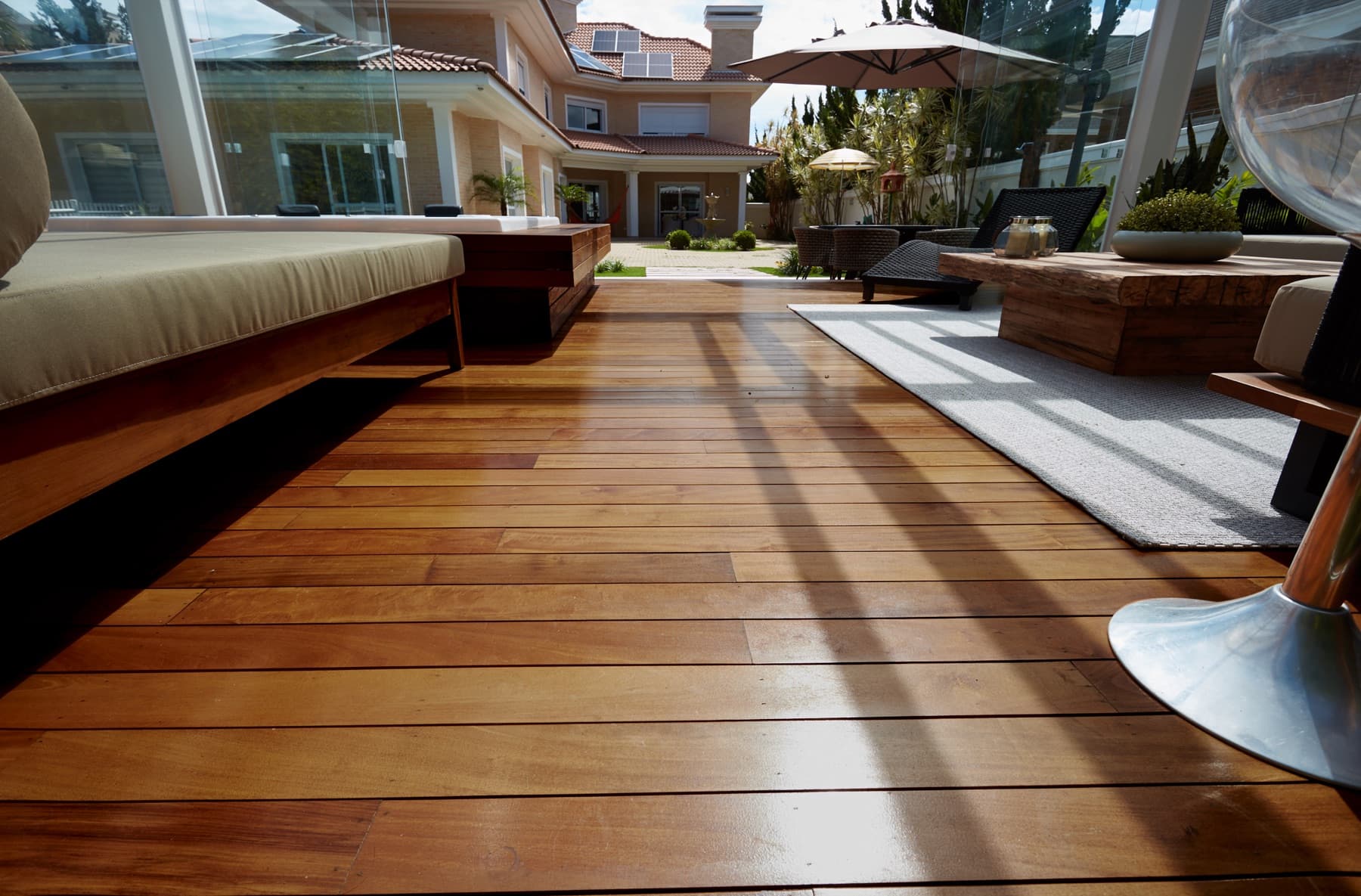
Assess Your Existing Deck Structure
Before selecting any decking material, a thorough inspection of your current deck's substructure is crucial. Hardwood decking species like Ipe and Cumaru are significantly denser and heavier than many common decking materials, including treated pine or composites. This density translates to a greater load on your existing joists, beams, and foundation.
Check for signs of rot, insect damage, or excessive deflection in joists and beams. Verify that all connections are secure and that the ledger board is properly attached to your home. If any structural components show wear or insufficient sizing for the increased load, they will need to be reinforced or replaced. Consulting with a local structural engineer or experienced contractor in Spokane can provide an accurate assessment and ensure your renovated deck meets current building standards and safely supports your chosen hardwood.
Consider the spacing of your existing joists. Wider spacing may necessitate adding blocking or sistering joists.
Choosing the Right Hardwood Species for Spokane's Climate
Spokane's climate, with its warm summers and cold, snowy winters, demands a decking material that can withstand significant temperature fluctuations and moisture exposure. Brazilian hardwoods are well-suited for such conditions due to their natural density and resistance to environmental stressors.
It boasts minimal movement post-installation and can last for decades with proper care. Its reddish-brown to olive-brown tones offer a luxurious aesthetic. You can explore Ipe further at: /decking/hardwood/ipe
It offers excellent resistance to termites and weather changes, making it a dependable choice for demanding outdoor builds. Cumaru presents a slightly lighter, often golden-brown hue and shares many of Ipe's performance benefits. Learn more about Cumaru here: /decking/hardwood
Both Ipe and Cumaru are known for their ability to resist warping and cracking after moisture exposure, a key advantage in a region with distinct seasonal changes. They can be left untreated to weather to a silvery-gray patina or maintained with a UV-blocking sealer to preserve their original color.
Other hardwood options like Garapa or Tigerwood also offer distinct advantages and aesthetics. Garapa is often considered a value pick with a golden tone, while Tigerwood provides a dramatic striped figure. Your choice will depend on your aesthetic preference, budget, and desired maintenance level.
For a comprehensive comparison of species, visit: /decking/hardwood
Planning Your Decking Layout and Fastening
Once your substructure is ready and you've selected your hardwood, plan the decking layout. Consider board widths and lengths to minimize waste and optimize visual flow. Most hardwood decking is available in a range of dimensions, such as 1"x4" or 5/4"x6" profiles, and lengths from 3 to 24 feet. Always confirm current profiles and lengths with your supplier.
Hardwood decking can be installed using either face fastening or hidden fastening systems. Face fastening involves screwing directly through the face of the board into the joists, providing a strong connection. Pre-drilling is essential for dense hardwoods to prevent splitting. Hidden fastening systems create a cleaner, screw-free surface, but require specific board profiles and clips compatible with hardwood. Discuss fastening options with your installer to ensure compatibility with your chosen hardwood species and local building practices.
Proper board spacing is critical for drainage and air circulation, especially in a climate with varying moisture levels. Consult the manufacturer's specific guidelines for the exact spacing required for your chosen hardwood and fastening method.
Considerations for Winter and Coastal Exposure
While Spokane is inland, its winter conditions present challenges similar to some coastal environments in terms of freeze-thaw cycles and moisture. Hardwood species like Ipe and Cumaru are highly resistant to these conditions. Their natural density and oil content help protect them from cracking or warping due to temperature changes and moisture absorption.
These hardwoods are considered marine-grade standards for docks and boardwalks in coastal areas precisely because of their resilience to extreme weather, including salt air and spray. This inherent resistance translates well to Spokane's snowy winters and wet springs, providing a durable surface that can withstand seasonal changes.
Even with high resistance, ensuring adequate ventilation beneath the deck is important. Good airflow helps prevent moisture buildup and promotes uniform drying, contributing to the longevity of the deck structure and the hardwood itself.
Worked Example: Renovating a 12'x16' Spokane Deck with Ipe
Let's consider a hypothetical deck renovation project for a 12-foot by 16-foot existing deck in Spokane, where the homeowner wishes to replace old composite decking with Ipe.
The ledger board and footings are determined to be sound.
2. **Material Selection**: The homeowner chooses 5/4" x 6" Ipe decking boards for their durability and rich color. They plan to use a hidden fastening system to achieve a clean, modern look. The project also includes Ipe fascia boards for the deck perimeter.
3. **Quantity Calculation (Decking)**: The total deck area is 12 ft x 16 ft = 192 sq ft. If Ipe is available in 16-foot lengths, this would mean approximately 29 boards (460.8 / 16). For a 12-foot width, 26 boards of 16-foot length would be needed (12 feet / (5.5 inches / 12 inches/ft) = ~26 boards, plus end cuts). We would purchase 29 boards of 16-foot length (464 linear feet).
4. **Quantity Calculation (Fascia)**: For the perimeter (12+16+12+16 = 56 linear feet), if using 1x12 Ipe boards, 56 linear feet would be needed. Adding 10% for waste, approximately 62 linear feet. If 12-foot lengths are available, 6 boards (72 linear feet) would be purchased.
This example highlights the importance of precise measurements and accounting for structural adjustments and waste during a renovation project.
Before you order
- Inspect existing deck framing for soundness, rot, and insect damage.
- Assess if existing joists and beams can support the increased weight of hardwood.
- Consult a structural engineer or contractor if structural upgrades are needed.
- Choose a hardwood species (e.g., Ipe, Cumaru) suitable for Spokane's climate.
- Determine preferred board width and length availability.
- Decide on face fastening or a hidden fastening system.
- Calculate precise material quantities, including waste factor, for decking and fascia.
- Plan for proper ventilation beneath the deck.
- Confirm current product availability and lead times with your supplier.
Confirm installation details, approved uses and warranty terms in the current instructions for the exact product and profile. Your installer should verify the substrate, structure and applicable project requirements.
This is a planning guide for projects in Spokane, WA. Ask our team to confirm availability, delivery to your ZIP code and which branch can support your order.
Questions to help you decide
How much heavier is hardwood decking compared to composite or treated lumber?
Hardwood decking, especially species like Ipe and Cumaru, is significantly denser than most composite or treated lumber. For example, Ipe has an air dry density of 5.75 lbs/bf, which is considerably higher than many common decking materials. This density is a key factor in its durability but also requires a robust supporting structure.
Can I install hardwood decking over an existing concrete patio?
Yes, hardwood decking can be installed over a concrete patio, but it requires a specific subframe system to ensure proper drainage and ventilation. Typically, a sleeper system or adjustable pedestals are used to elevate the decking boards, preventing moisture entrapment and allowing for air circulation. This creates a floating deck assembly that is not directly attached to the concrete.
What is the typical lifespan of hardwood decking in a climate like Spokane's?
With proper installation and minimal maintenance, high-density hardwoods like Ipe can last up to 75 years, and Cumaru over 25 years. Their natural resistance to rot, insects, and extreme weather conditions allows them to perform exceptionally well even with Spokane's distinct seasonal changes. Occasional cleaning and optional oiling can help preserve their appearance and maximize longevity.
Ready to Transform Your Spokane Deck with Hardwood?
Request a material quote today. Provide your project dimensions, desired hardwood profile, and your ZIP code to confirm current availability and service options for your Spokane renovation.
Request a material quote →