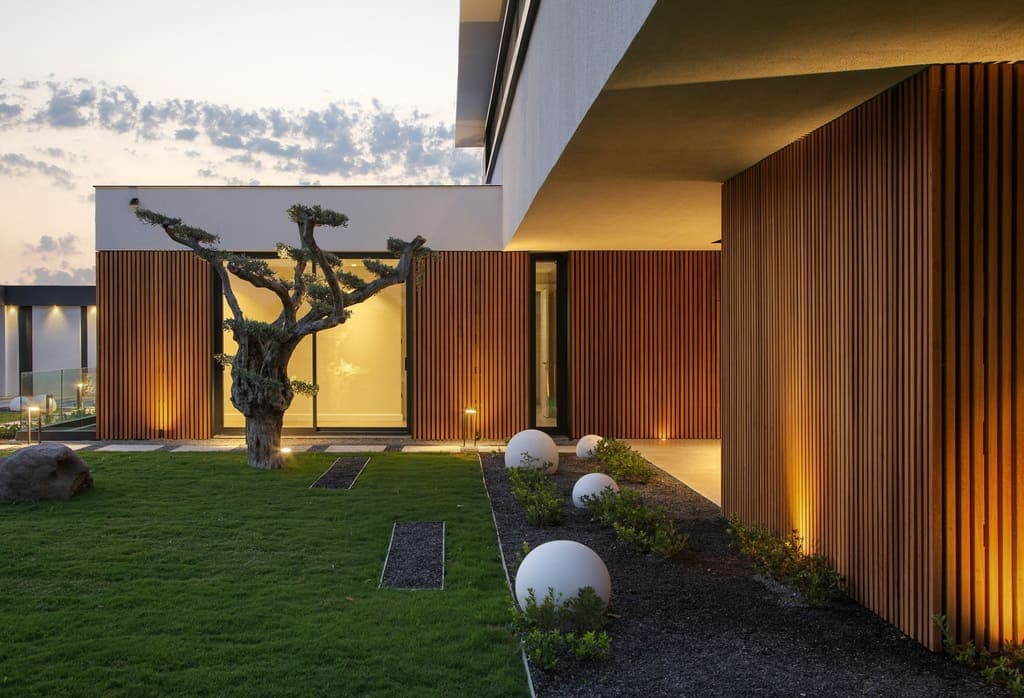
Why Thermally Modified Wood for Covered Patio Walls?
Thermally modified wood undergoes a high-heat process that alters its cellular structure, resulting in a material with reduced moisture absorption and increased dimensional stability. This makes it less prone to warping, cupping, and checking when exposed to environmental changes, a valuable trait even in a covered setting. While covered walls are shielded from the harshest elements, they still experience fluctuations in humidity and temperature.
The modification process also typically gives the wood a darker, richer tone throughout its thickness, offering a consistent color that can be maintained with appropriate finishes or allowed to weather naturally. For covered patios, this inherent stability means a more consistent appearance and potentially less maintenance over time compared to untreated wood.
Common Profiles and Aesthetic Choices
Thermally modified wood is available in various profiles, each offering a different visual effect. For covered patio walls, popular choices often include tongue-and-groove, shiplap, and square-edge profiles. The selection depends on the desired shadow lines, overall architectural style, and ease of installation.
Tongue-and-groove profiles create a tight, interlocking fit, offering a clean, continuous surface with minimal gaps. Shiplap provides a distinct overlap, creating a pronounced shadow line that can add depth and texture. Square-edge boards can be installed with a visible gap for an open-joint look, often requiring a darker backing for contrast. Consider how these profiles will interact with natural light on your Santa Fe patio, especially during different times of day.
Finishing and Weathering in a Covered Setting
While thermally modified wood can be left unfinished to weather to a silvery-gray patina, applying a finish can help preserve its initial color and offer additional protection. For covered patio walls, a clear or lightly pigmented oil-based finish can enhance the wood's natural tones and provide UV protection, even if indirect. The reduced direct sun exposure on covered walls means finishes may last longer than on fully exposed siding.
If you choose to let the wood weather, understand that the patina process will still occur, though potentially at a slower and more even rate due to the protection from direct rainfall and intense sun. Regular cleaning can help maintain the appearance of both finished and unfinished surfaces. The rich, earthy tones of many thermally modified woods can complement the stucco, stone, and adobe aesthetics common in Santa Fe.
Attachment and Substructure Considerations
Proper attachment is crucial for any wall cladding. For covered patio walls, the substructure typically consists of vertical furring strips installed over the existing wall sheathing. These strips create an air gap behind the wood, allowing for ventilation and drainage, even in a covered environment. This air gap is important for managing any moisture that might accumulate.
Fasteners should be corrosion-resistant, such as stainless steel screws, to ensure longevity. Hidden fastening systems, often used with tongue-and-groove or specific shiplap profiles, can provide a clean, fastener-free appearance. For square-edge profiles, visible face fastening is common. Always ensure fasteners are long enough to penetrate the furring and adequately secure the wood to the structural elements.
Worked Example: Covered Patio Wall for a Santa Fe Residence
Consider a covered patio in Santa Fe with a main wall section measuring 12 feet long by 8 feet high. The homeowner desires a shiplap profile with a subtle shadow line. They select 1x6 (nominal size) thermally modified wood boards, which typically have a coverage width of approximately 5 inches (actual dimensions vary by manufacturer and profile).
To calculate the quantity needed:
1. **Total wall area:** 12 feet * 8 feet = 96 square feet.
2. **Number of boards for width:** 12 feet (144 inches) / 5 inches (coverage per board) = 28.8 boards. Round up to 29 boards.
3. **Board length:** Since the wall is 8 feet high, 8-foot boards would be suitable. However, for efficient cutting and to minimize waste, especially if there are window or door cutouts, consider ordering a mix of lengths or longer boards (e.g., 10-foot or 12-foot) if available, to allow for optimal cuts.
4. **Total lineal feet:** 29 boards * 8 feet/board = 232 lineal feet. Allowing for typical waste (e.g., 10-15% for cuts, defects, and future repairs), a purchase of approximately 255-267 lineal feet would be prudent. This calculation assumes a straightforward installation without complex angles or numerous openings. Always verify actual coverage width and waste factors with your supplier.
This example provides a starting point; always measure your specific project dimensions accurately and consult product specifications for precise coverage.
Before you order
- Confirm the specific thermally modified wood species and profile are approved for vertical wall applications.
- Evaluate the level of cover and exposure to direct sun/rain on your patio walls.
- Decide on a finish (or no finish) based on desired appearance and maintenance commitment.
- Plan the substructure, including furring strips for ventilation and drainage.
- Select appropriate corrosion-resistant fasteners compatible with the wood and profile.
- Accurately measure all wall dimensions, accounting for openings and corners.
- Calculate material quantities, including a waste factor for cuts and potential future needs.
Confirm installation details, approved uses and warranty terms in the current instructions for the exact product and profile. Your installer should verify the substrate, structure and applicable project requirements.
This is a planning guide for projects in Santa Fe, NM. Ask our team to confirm availability, delivery to your ZIP code and which branch can support your order.
Questions to help you decide
Can thermally modified wood be used on exterior walls that are not covered?
Yes, thermally modified wood is commonly used for fully exposed exterior siding and cladding due to its enhanced dimensional stability and resistance to decay. For covered patio walls, its benefits are still relevant, offering a stable and attractive material even with less direct exposure.
What kind of maintenance does thermally modified wood require on a covered patio wall?
Maintenance depends on whether the wood is finished or unfinished. Unfinished wood will weather to a silvery-gray patina and may require occasional cleaning to remove dust or mildew. Finished wood will need periodic reapplication of the chosen finish, typically less frequently than fully exposed surfaces due to the protection from direct elements. Always follow the finish manufacturer's recommendations.
Are there specific design considerations for thermally modified wood in Santa Fe's climate?
Santa Fe's high altitude, intense sun, and dry climate (with occasional heavy precipitation) mean that even covered patio walls benefit from materials with good dimensional stability. Thermally modified wood's resistance to warping and checking helps it perform well in these conditions. Ensuring proper ventilation behind the cladding is always a good practice to manage any moisture, even in a dry climate.
Plan Your Covered Patio Wall Project with Thermally Modified Wood
Ready to enhance your Santa Fe covered patio with the natural beauty and stability of thermally modified wood? Request a material quote today. Provide your project dimensions, desired profile, and ZIP code to confirm current availability and service options for your area. Explore our selection of thermally modified wood at /thermally-modified-wood, and consider complementary materials like siding and cladding at /siding-and-cladding.
Request a material quote →