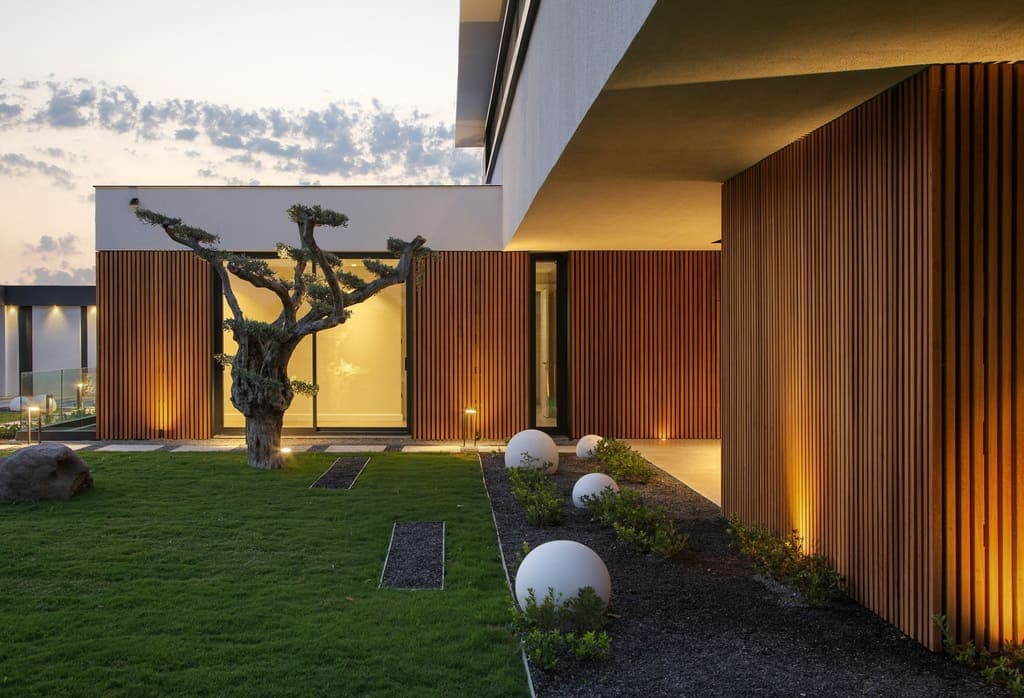
Understanding Thermally Modified Wood for Covered Walls
Thermally modified wood undergoes a high-temperature treatment process that alters its cellular structure. This modification enhances several properties relevant to covered patio wall applications. The treatment reduces the wood's equilibrium moisture content, leading to improved dimensional stability. This means the wood is less prone to swelling, shrinking, or warping due to changes in humidity and temperature, which is beneficial in a partially sheltered environment.
The thermal modification process also darkens the wood, creating a richer, more uniform color that can range from a light golden brown to a deep chocolate tone, depending on the species and treatment intensity. This natural coloration can be a significant aesthetic advantage, offering a sophisticated look without the need for stains, though finishes can be applied for further customization and protection. For covered walls, where direct weathering is reduced, the inherent stability and color of thermally modified wood can be a compelling choice.
While protected from direct precipitation, covered patio walls still experience ambient humidity and temperature fluctuations. Thermally modified wood's enhanced resistance to moisture absorption helps maintain its form and appearance over time in these conditions. It also contributes to a reduced susceptibility to certain types of decay, making it a robust option for long-term outdoor use.
Selecting the Right Species and Profile
Thermally modified wood is available in various species, with popular options including Ash, Poplar, and Pine. Each species offers a unique grain pattern and color potential after modification. For covered patio walls, the choice of species often comes down to desired aesthetic and availability.
Profiles play a crucial role in the final appearance of your covered patio walls. Common profiles include tongue and groove, shiplap, and square-edge boards. Tongue and groove profiles offer a secure, interlocking fit, creating a smooth, continuous surface with minimal visible fasteners. Shiplap provides distinct shadow lines, adding architectural interest and depth. Square-edge boards can be installed with intentional gaps for a slatted, open look, or tightly butted for a more contemporary, monolithic appearance.
Consider the overall design of your patio and home when selecting a profile. A modern aesthetic might favor clean lines and minimal gaps, while a more rustic or traditional design might benefit from the pronounced shadow lines of shiplap. The choice of profile also influences installation methods and detailing around corners and openings.
Finishing and Maintenance for Covered Walls
While thermally modified wood is naturally durable, applying a finish can enhance its appearance and offer additional protection. For covered patio walls, where UV exposure is less intense than on fully exposed surfaces, a finish can help maintain the wood's initial color and provide a layer of defense against ambient moisture and dirt.
Clear penetrating oils or UV-inhibiting stains are common choices. These finishes can deepen the wood's natural color or introduce a new hue, depending on the pigment. It is important to select a finish compatible with thermally modified wood and suitable for exterior use. Even in a covered application, regular cleaning and occasional reapplication of the finish will help preserve the wood's look over time.
Maintenance for covered patio walls is generally less intensive than for fully exposed siding. Regular cleaning with a soft brush and mild soap and water can remove dust, pollen, and cobwebs. Inspect the walls annually for any signs of wear on the finish or minor damage, addressing them promptly to prevent larger issues.
Installation Considerations and Substructure
Proper installation is critical for the long-term performance and appearance of thermally modified wood on covered patio walls. Although protected, these walls still require a robust substructure and appropriate fastening methods. Typically, wood furring strips or battens are installed vertically or horizontally, depending on the desired orientation of the cladding, to create a level and ventilated surface.
Fastening methods include face-fastening with screws or nails, or using hidden fastening systems for a cleaner aesthetic. When face-fastening, use corrosion-resistant fasteners suitable for exterior wood applications. Pre-drilling may be necessary, especially with denser thermally modified species, to prevent splitting. Always follow manufacturer guidelines for fastener type, spacing, and edge distances.
Ensure adequate ventilation behind the cladding, even on covered walls. This helps prevent moisture accumulation and allows the wood to breathe. Maintain appropriate clearances at the top and bottom of the wall assembly to promote air circulation and prevent water trapping, even from incidental splashing or condensation. Detailing around any openings, such as windows or doorways, should include proper flashing to shed water effectively.
Project Example: Covered Patio Wall with NORX Thermally Modified Ash
Consider a covered patio in Richmond, VA, measuring 12 feet wide by 8 feet high, with a single door opening of 3 feet by 7 feet. The homeowner desires a modern, clean aesthetic using NORX Thermally Modified Ash in a shiplap profile, installed horizontally.
First, calculate the total wall area: 12 ft x 8 ft = 96 sq ft. Subtract the door area: 3 ft x 7 ft = 21 sq ft. The net area to cover is 96 sq ft - 21 sq ft = 75 sq ft.
NORX Thermally Modified Ash shiplap typically comes in nominal 1x6 (actual 0.75" x 5.5") boards. With a shiplap profile, the effective coverage width is less than the actual board width. Assuming an effective coverage of 5 inches per board (a common dimension for shiplap after overlap), each linear foot of board covers approximately 5/12 sq ft (0.4167 sq ft). To cover 75 sq ft, you would need 75 sq ft / (5/12 sq ft per linear foot) = 180 linear feet of material. It is prudent to add 10-15% for cuts, waste, and future repairs, bringing the total to approximately 200-207 linear feet.
For the substructure, vertical furring strips (e.g., 1x3 pressure-treated lumber) would be installed at 16 or 24 inches on center. With 8-foot height, this is 9 strips x 8 ft/strip = 72 linear feet of furring. Again, add waste factor. Fasten the NORX boards with appropriate corrosion-resistant fasteners into the furring strips, ensuring consistent spacing and level installation. This example provides a practical estimation for material needs, but exact dimensions and waste factors should be confirmed with your chosen product and installer.
Lumber Plus offers [NORX Thermally Modified Wood](https://www.lumberplus.com/brands/norx) which is suitable for this application. You may also consider [Maximo Accoya](https://www.lumberplus.com/products/maximo-accoya) for an alternative high-performance wood option.
Before you order
- Confirm the specific thermally modified wood species and profile that aligns with your aesthetic and performance goals.
- Verify the actual coverage width of your chosen profile for accurate material quantity calculations.
- Plan for a robust substructure and adequate ventilation behind the covered patio walls.
- Select appropriate corrosion-resistant fasteners and confirm manufacturer-recommended installation methods.
- Decide on a finish (or none) and plan for its application and long-term maintenance.
- Account for waste factor (typically 10-15%) when ordering materials.
- Consider detailing around any doors, windows, or transitions for a finished look and proper water management.
Confirm installation details, approved uses and warranty terms in the current instructions for the exact product and profile. Your installer should verify the substrate, structure and applicable project requirements.
This is a planning guide for projects in Richmond, VA. Ask our team to confirm availability, delivery to your ZIP code and which branch can support your order.
Questions to help you decide
Can thermally modified wood be left unfinished on covered patio walls?
Yes, thermally modified wood can be left unfinished. It will naturally weather and may develop a silver-gray patina over time, similar to other wood species exposed to UV light. However, on covered walls, this change will be slower and potentially less uniform than on fully exposed surfaces. Applying a finish can help maintain the original color and provide additional protection against dirt and ambient moisture.
Is thermally modified wood suitable for all types of covered patios?
Thermally modified wood is generally well-suited for covered patio walls due to its enhanced stability and resistance to decay. However, suitability can depend on the specific environmental conditions of your patio. If the patio experiences significant splashing, high humidity, or has poor air circulation, additional protective measures or a more robust finish might be advisable. Always assess the specific conditions of your project.
How do I calculate the amount of thermally modified wood needed for my covered patio walls?
To calculate the amount needed, first measure the total length and height of your covered walls to get the total square footage. Subtract any openings like doors or windows. Then, determine the effective coverage width of your chosen thermally modified wood profile (e.g., a 1x6 shiplap might only cover 5 inches effectively). Divide the net square footage by the effective square footage per linear foot of board to get the total linear feet. Always add a waste factor of 10-15% for cuts and unforeseen issues. For example, [Siding and Cladding](https://www.lumberplus.com/siding-and-cladding) products will list their coverage.
Ready to Enhance Your Covered Patio Walls?
Request a material quote with your project dimensions, exact profile, and ZIP code to confirm current availability and service options for thermally modified wood. We can help you find the right materials for your Richmond, VA project.
Request a material quote →