Assessing Your Existing Deck Frame
Before selecting any new decking material, a thorough inspection of your existing deck frame is crucial. The structural integrity of the joists, beams, and support posts must be verified. Hardwood decking species like Ipe and Cumaru are significantly denser and heavier than common softwood or composite alternatives. This increased weight necessitates a robust substructure.
Check for any signs of rot, insect damage, or structural fatigue in the wood. Pay close attention to areas where wood meets the ground, where fasteners penetrate, and where water might accumulate. Ensure all connections are secure and that the ledger board is properly attached to your home. If there's any doubt about the frame's condition or its ability to support the new decking, consult with a qualified structural engineer or experienced contractor. Replacing or reinforcing the frame might be a necessary, albeit additional, step in your renovation.
Choosing Your Hardwood Species: Ipe vs. Cumaru
For a Richmond renovation, two prominent hardwood decking options are Ipe and Cumaru, both offering distinct advantages for outdoor applications. Your choice will depend on factors like desired appearance, durability requirements, and budget.
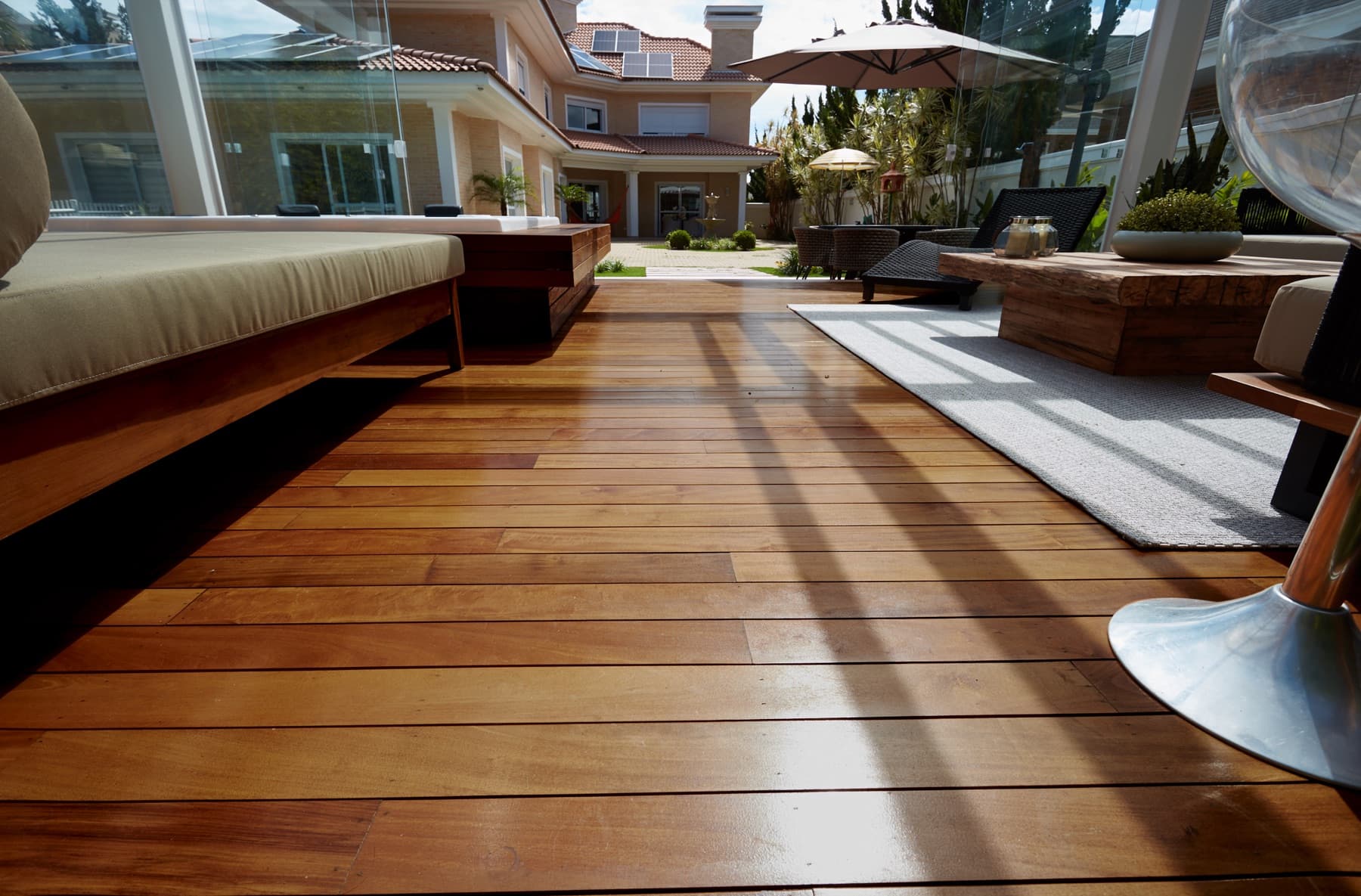
Its color ranges from reddish-brown to olive-brown. Ipe is often considered the benchmark for outdoor hardwoods due to its unmatched durability and minimal movement post-installation. It also carries a Class A fire rating, which can be a consideration for some projects.
It is also resistant to termites and weather changes, and like Ipe, it has a Class A fire resistance. Cumaru presents a slightly different aesthetic, with a warm, reddish-brown hue and a subtle cinnamon-vanilla scent when worked. While still incredibly robust, Cumaru can be a compelling option if you seek similar performance to Ipe with a different visual profile.
Both species, if left untreated, will weather to a silvery-gray patina. Applying a UV-blocking sealer can help preserve their original color.
Planning for Board Dimensions and Layout
Hardwood decking is available in various profiles and lengths. Common dimensions often range from 1x2 inches up to 6x6 inches, with lengths typically from 3 to 24 feet, though availability can vary. When planning your renovation, consider how these dimensions will integrate with your existing frame and desired aesthetic.
A common layout involves running boards perpendicular to the joists. For existing frames, measure the spacing of your joists to ensure compatibility with your chosen board width and thickness. If your joist spacing is wider than recommended for the hardwood thickness, you may need to add blocking or additional joists to meet structural requirements and prevent excessive deflection of the decking boards. Consider a picture-frame border for a finished look, which will also impact the required board lengths and cuts. Minimizing waste by planning cuts efficiently is important, especially with premium hardwoods.
Fastening Systems and Board Spacing
The density of hardwoods like Ipe and Cumaru requires specific fastening techniques. Face-fastening, using screws driven directly through the board into the joist, is a common and secure method. Pre-drilling pilot holes is essential to prevent splitting due to the wood's hardness. Stainless steel screws are recommended for their corrosion resistance, especially in outdoor environments.
Hidden fastening systems are also available, offering a cleaner, screw-free surface. These systems typically involve clips that attach to the sides of the boards and secure them to the joists. Consult the manufacturer's specific instructions for any chosen hidden fastener system, as compatibility and installation methods vary by product and wood species.
Proper board spacing is critical for drainage and to accommodate natural expansion and contraction of the wood. Hardwood decking typically requires a small gap between boards. Always refer to the specific product documentation for the recommended spacing, as this can vary based on board width, climate, and drying method (air-dried or kiln-dried).
A Hypothetical Renovation Example: The 12x16 Foot Deck
Let's consider a hypothetical deck renovation in Richmond, VA, for a rectangular deck measuring 12 feet by 16 feet. The homeowner prefers the rich, dark tones of Ipe and plans a simple, linear board layout with boards running the 16-foot length.
Using 5/4 x 6 inch (nominal) Ipe decking boards, which typically finish at approximately 1 inch x 5.5 inches, we can estimate material needs. Rounding up, you would need 26 boards. Since the deck is 16 feet long, and assuming boards are purchased in 16-foot lengths to minimize end-to-end seams, the total would be 26 boards x 16 feet = 416 linear feet.
For a picture-frame border, assume two 16-foot pieces for the long sides and two 12-foot pieces for the short sides (minus the width of the side boards). This adds approximately 2 x 16 ft + 2 x (12 ft - 2 x 5.5 in / 12 in/ft) = 32 ft + 2 x (12 ft - 0.917 ft) = 32 ft + 22.166 ft = ~54.16 linear feet. This example illustrates the importance of detailed measurements and considering board lengths to optimize material usage and minimize waste. Always confirm actual finished dimensions and available lengths when ordering.
Before you order
- Assess existing deck frame for structural integrity and suitability for heavier hardwood.
- Inspect for rot, insect damage, and secure connections; consult a professional if needed.
- Choose hardwood species (e.g., Ipe or Cumaru) based on desired appearance, durability, and budget.
- Verify available board profiles and lengths from your supplier.
- Measure joist spacing and plan board layout to ensure compatibility or identify frame modifications.
- Determine fastening method (face-fasten or hidden clips) and confirm required hardware.
- Obtain manufacturer's recommended board spacing for your chosen species and profile.
- Plan for any special features like picture-frame borders or stair integration.
- Consider the aesthetic of natural weathering vs. applying a UV-blocking sealer for color retention.
Confirm installation details, approved uses and warranty terms in the current instructions for the exact product and profile. Your installer should verify the substrate, structure and applicable project requirements.
This is a planning guide for projects in Richmond, VA. Ask our team to confirm availability, delivery to your ZIP code and which branch can support your order.
Questions to help you decide
How do I know if my existing deck frame can support hardwood decking?
You should have a qualified contractor or structural engineer inspect your existing frame. Hardwoods like Ipe and Cumaru are significantly denser and heavier than traditional decking materials, requiring a robust substructure. They will assess joist spacing, material condition, and overall structural integrity.
Does hardwood decking require more maintenance than composite decking?
Hardwood decking, particularly species like Ipe and Cumaru, is known for its low maintenance. An annual wash is generally sufficient. If you prefer to maintain the original brown color, an annual application of a UV-blocking oil is recommended. If left untreated, the wood will naturally weather to a silvery-gray patina with no structural difference. This can be less frequent or intensive than some composite options, which may require specific cleaning protocols to prevent mold or staining.
Can I install hardwood decking myself for a renovation project?
While it is possible for experienced DIYers, installing hardwood decking, especially dense species like Ipe and Cumaru, requires specialized tools and techniques. Pre-drilling pilot holes is essential to prevent splitting, and precise cuts are needed. Professional installation is often recommended to ensure proper fastening, spacing, and a lasting finish, particularly for a renovation where existing conditions need careful consideration.
Ready to Transform Your Richmond Deck?
Request a material quote today. Provide your project dimensions, desired hardwood profile, and ZIP code to confirm current availability and service options for your Richmond, VA, renovation.
Request a material quote →