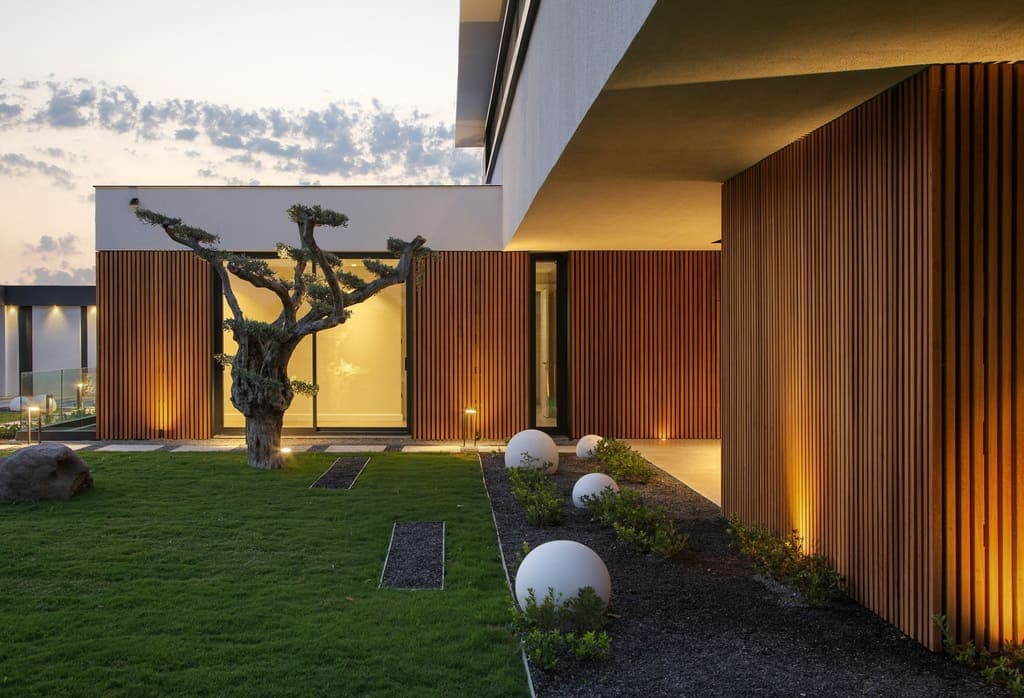
Understanding Thermally Modified Wood for Patio Applications
Thermally modified wood undergoes a high-temperature treatment process that alters its cellular structure. This process enhances the wood's dimensional stability, making it less prone to expansion and contraction due to changes in humidity. For covered patio walls in Jupiter, FL, where humidity can be consistently high, this stability is a key advantage.
The modification also reduces the wood's susceptibility to decay and insect infestation, which are common concerns in subtropical environments. While covered patio walls are protected from direct weather, the ambient conditions still benefit from these inherent properties of thermally modified wood. It provides a natural wood aesthetic without the same level of maintenance often associated with untreated wood in exterior applications.
Selecting the Right Profile and Species
The choice of profile significantly impacts the visual texture and shadow lines of your covered patio wall. Common profiles for thermally modified wood include tongue-and-groove, shiplap, and square edge boards. Tongue-and-groove profiles offer a tight, interlocking fit, creating a smooth, continuous surface. Shiplap provides a distinct overlap, casting subtle shadows that add depth.
For covered patio walls, consider the overall design aesthetic of your outdoor living space. A wider board profile can create a more rustic or contemporary feel, while narrower boards might lend a more refined look. The species of wood, such as thermally modified ash, spruce, or pine, will also influence the grain pattern and natural color tones. While the thermal modification process darkens the wood, each species retains its unique character.
Lumber Plus offers a range of thermally modified wood options, including NORX products. For specific profiles, explore our selection of siding and cladding materials that are suitable for vertical applications like covered patio walls. Remember to confirm that your chosen profile is approved for vertical wall installation.
Finishing and Appearance Considerations
Thermally modified wood can be left unfinished to gradually weather to a silvery-gray patina, or it can be finished with stains or sealers to retain or enhance its natural color. For covered patio walls in Jupiter, FL, deciding on a finish involves weighing aesthetic preference against maintenance.
If you choose to apply a finish, select a high-quality exterior-grade product designed for wood cladding. These finishes can offer UV protection, helping to slow the natural graying process and maintain the wood's original hue. Regular reapplication will be necessary to sustain the finish's appearance and protective qualities. Always follow the finish manufacturer's instructions for application and reapplication schedules.
An unfinished look offers a low-maintenance option for those who appreciate the natural aging of wood. The covered nature of the patio will protect the wood from the most intense UV exposure and direct rain, which can contribute to a more even weathering process compared to fully exposed exterior walls.
Installation Best Practices for Covered Patio Walls
Proper installation is crucial for the long-term performance and appearance of thermally modified wood on covered patio walls. Even in a covered setting, adequate ventilation behind the cladding is important to manage moisture. A rainscreen assembly, while often associated with fully exposed exteriors, can still offer benefits by creating an air gap that promotes drying.
Fastening should be done according to manufacturer guidelines, typically using corrosion-resistant fasteners. Consider hidden fastening systems for a clean, uninterrupted look. Ensure that there is appropriate spacing between boards to allow for minor natural movement, even with the enhanced stability of thermally modified wood. Always consult the specific product documentation for recommended gaps and fastening methods.
For a project in Jupiter, FL, attention to detail around any openings, such as windows or doorways on the patio wall, is essential to prevent moisture intrusion. Proper flashing and sealing techniques should be employed to protect the substructure.
Worked Example: Designing a Covered Patio Wall
Consider a hypothetical covered patio wall measuring 12 feet wide by 8 feet high. The homeowner desires a modern look with subtle shadow lines, opting for a thermally modified ash shiplap profile. Each shiplap board measures 5.5 inches wide (nominal, with 5 inches of exposed face) and is available in 8-foot and 12-foot lengths.
To cover the 12-foot wide wall with 5-inch exposed face boards, you would need 12 feet * 12 inches/foot = 144 inches / 5 inches/board = 28.8 boards. Rounding up to the nearest whole number, you would need 29 boards to cover the width. Since the wall is 8 feet high, using 8-foot long boards would be ideal, minimizing cuts and waste for the length. Therefore, you would purchase 29 pieces of 8-foot long thermally modified ash shiplap. This calculation does not account for potential waste from cuts around obstacles or for starter/end pieces, so it is often prudent to add a waste factor (e.g., 5-10%).
The project also specifies a clear, UV-protective finish to maintain the ash's rich brown tones.
Before you order
- Confirm the specific exposure conditions of your covered patio wall (e.g., indirect sun, humidity levels, proximity to rain splash).
- Select a thermally modified wood species and profile suitable for vertical wall applications.
- Decide on a finish: unfinished for natural graying, or a protective finish to retain original color.
- Verify manufacturer-recommended fastening methods and spacing for your chosen profile.
- Plan for adequate ventilation behind the cladding, even in a covered setting.
- Account for waste factor when calculating material quantities.
- Consider complementary materials for trim, corners, and transitions (e.g., Maximo Accoya for long-lasting trim).
Confirm installation details, approved uses and warranty terms in the current instructions for the exact product and profile. Your installer should verify the substrate, structure and applicable project requirements.
This is a planning guide for projects in Jupiter, FL. Ask our team to confirm availability, delivery to your ZIP code and which branch can support your order.
Questions to help you decide
Can thermally modified wood be used near water features on a patio?
Yes, thermally modified wood's enhanced stability and resistance to decay make it a suitable choice for covered patio walls even near water features. However, direct and constant water exposure should still be avoided, and proper drainage and ventilation behind the cladding remain important. The covered nature of the patio helps mitigate direct splashing.
Does thermally modified wood require a special type of fastener?
Generally, corrosion-resistant fasteners, such as stainless steel screws or nails, are recommended for installing thermally modified wood. This is particularly important for exterior applications, even in covered areas, to prevent staining of the wood and ensure long-term structural integrity. Always refer to the specific product's installation guidelines for fastener type and spacing.
How does the humidity in Jupiter, FL, affect thermally modified wood?
Thermally modified wood is engineered to have improved dimensional stability, meaning it is less prone to swelling and shrinking in response to humidity fluctuations. This makes it a good choice for the high humidity conditions often found in Jupiter, FL. While it offers superior performance compared to untreated wood, some minimal movement can still occur, which is why proper installation with appropriate spacing is always recommended.
Ready to Transform Your Covered Patio Walls?
Request a material quote for your project. Provide your project dimensions, desired thermally modified wood profile, and ZIP code to confirm current availability and service options.
Request a material quote →