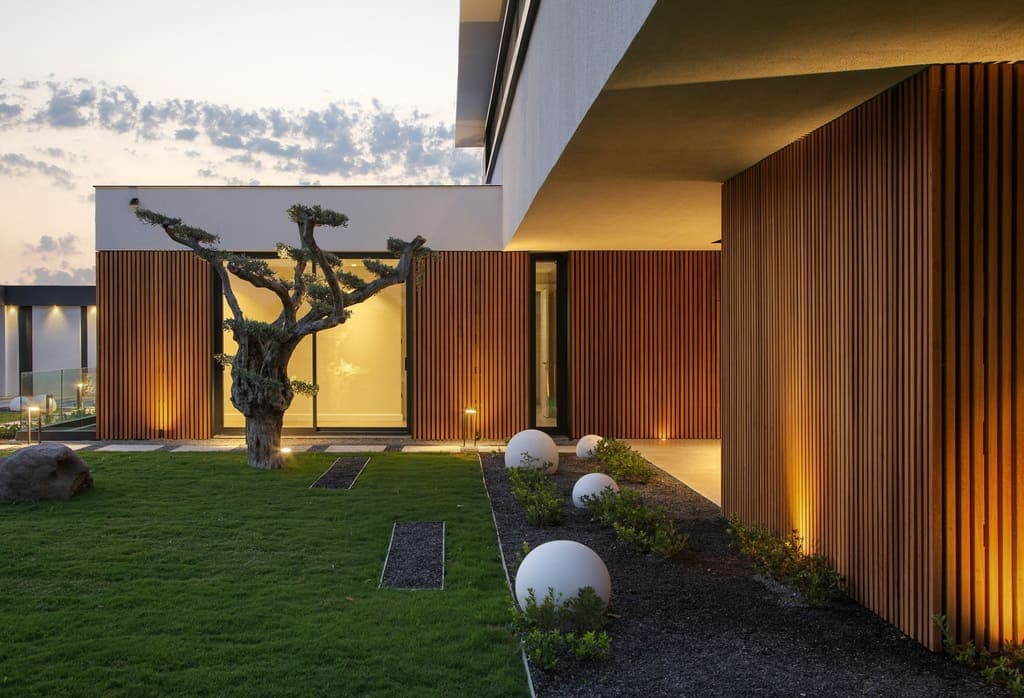
Understanding Thermally Modified Wood for Covered Walls
Thermally modified wood undergoes a high-temperature treatment process that alters its cellular structure. This process enhances the wood's stability, making it less prone to expansion and contraction due to changes in humidity. For covered patio walls, this stability is a significant advantage, helping to maintain the integrity and appearance of the installation over time. The treatment also typically results in a rich, darker tone that can be appealing for outdoor applications.
While covered patio walls offer protection from direct rain and intense sun, they are still exposed to ambient humidity and indirect moisture. Thermally modified wood's improved resistance to moisture absorption makes it a suitable choice for these conditions. It can help reduce concerns about warping or cupping that might arise with untreated wood in a humid environment. This material is distinct from chemical treatments, relying solely on heat and steam.
Selecting the Right Profile and Species
The profile of the thermally modified wood planks significantly influences the final aesthetic of your covered patio walls. Common profiles include tongue-and-groove, shiplap, and square-edge. Tongue-and-groove and shiplap profiles offer a cleaner, more finished look with concealed fasteners, which can be desirable for a premium patio space. Square-edge profiles, often installed with a visible gap, can create a more rustic or contemporary slat-wall effect, depending on spacing.
When considering species, thermally modified North American softwoods like pine and spruce are frequently available. These species, after thermal modification, offer improved dimensional stability and a consistent color throughout the wood. For a distinct look, consider options like the NORX thermally modified wood, which provides a durable and aesthetically pleasing material for various applications, including covered walls. Another premium option is Maximo Accoya, known for its exceptional stability and longevity, suitable for situations requiring the highest performance, even in covered outdoor settings.
Consider the desired shadow lines and overall texture. A wider board can create a sense of scale and fewer visual interruptions, while narrower boards might offer a more intricate pattern. The choice between smooth and textured finishes can also impact the visual depth and character of the wall.
Finishing Options for Covered Patio Walls
For covered patio walls, you have more flexibility with finishing than fully exposed siding. Many homeowners appreciate the natural, rich brown tones of thermally modified wood and choose to apply a clear sealant or UV inhibitor to maintain this appearance. This approach allows the wood's natural grain to remain visible.
Alternatively, stains can be used to alter the color, from lighter tones to darker, more dramatic hues. Paints are also an option for covered walls if a solid color is desired, offering full coverage and a uniform look. The key is to select finishes designed for exterior wood applications and to ensure proper surface preparation for optimal adhesion and longevity. Always follow the finish manufacturer's instructions for application and reapplication schedules.
In Clearwater's climate, even covered walls will experience humidity. A finish can help protect the wood from incidental moisture and slow the natural graying process that occurs with UV exposure. Regular inspection and reapplication of finishes, as recommended by the manufacturer, will help maintain the desired appearance and protection.
Installation Considerations and Substructure
Proper installation is crucial for the performance and appearance of thermally modified wood walls. Ensure the substructure, typically wood furring strips or metal framing, is plumb, level, and securely fastened to the main structure. For covered patio walls, a rainscreen gap behind the cladding is often recommended, even with some protection, to allow for air circulation and moisture drainage. This helps prevent moisture from getting trapped behind the panels.
Fastening methods will depend on the chosen profile. Concealed fasteners are common for tongue-and-groove or shiplap, while face-fastening might be used for square-edge profiles. Always use corrosion-resistant fasteners suitable for exterior use, especially in a coastal environment like Clearwater. Stainless steel fasteners are generally recommended.
Leave appropriate expansion gaps at corners, ends, and around openings as specified by the manufacturer. While thermally modified wood is dimensionally stable, some movement can still occur. Proper gapping allows for this without putting stress on the installation. Ensure that the bottom edge of the wall cladding has adequate clearance from any patio surface to prevent moisture wicking.
Worked Example: Covered Patio Wall in Clearwater
Consider a homeowner in Clearwater, FL, planning to clad a covered patio wall measuring 10 feet wide by 8 feet high. They desire a modern, clean look and select a thermally modified pine shiplap profile with a nominal face width of 5.5 inches (actual coverage 5 inches per board). They plan to apply a clear UV-inhibiting oil finish to maintain the natural wood tone.
First, calculate the total wall area: 10 ft x 8 ft = 80 sq ft. To determine the number of boards needed, we'll use the actual coverage width. For a 10-foot wide wall (120 inches), and boards covering 5 inches each, approximately 120 / 5 = 24 boards are needed horizontally. Since the boards are sold in standard lengths, let's assume 8-foot lengths are available. This means 24 boards, each 8 feet long, would cover the entire 8-foot height of the wall. This calculation suggests 24 boards are needed.
However, for vertical installation, if the boards are 8 feet long, one board covers the full height. For a 10-foot wide wall, you'd need 120 inches / 5 inches/board = 24 boards. Thus, 24 individual 8-foot long boards would be purchased. It is always wise to add 10-15% for cuts, waste, and future repairs. So, 24 boards * 1.15 = 27.6, rounded up to 28 boards. The substructure would consist of vertical furring strips, spaced according to manufacturer recommendations (e.g., 16 or 24 inches on center) to provide solid attachment points for the shiplap. The homeowner would also budget for stainless steel fasteners and the clear UV-inhibiting oil.
Maintenance for Longevity in a Humid Climate
While thermally modified wood offers enhanced durability, routine maintenance is still beneficial, especially in Clearwater's humid environment. Regularly clean the walls to remove dust, pollen, and any organic growth that may accumulate. A soft brush and mild soap with water can be effective. Avoid harsh chemicals or high-pressure washers, which can damage the wood or finish.
Periodically inspect the walls for any signs of wear on the finish, loose fasteners, or damage. Reapply the chosen finish according to the manufacturer's recommendations, typically every few years, to maintain protection against UV radiation and moisture. This proactive approach helps preserve the aesthetic appeal and structural integrity of your covered patio walls for years to come.
Even with a covered patio, ensuring good airflow around the wall can help mitigate moisture buildup. Address any issues with drainage or splash-back from the patio surface promptly.
Before you order
- Confirm the specific thermally modified wood species and profile (e.g., shiplap, tongue-and-groove, square-edge) for your aesthetic preference.
- Evaluate the intended finish: natural (clear sealant/UV inhibitor), stain, or paint, considering maintenance cycles.
- Plan the substructure, including furring strips and a rainscreen gap, ensuring it is appropriate for the climate.
- Select corrosion-resistant fasteners (e.g., stainless steel) suitable for exterior use in a humid, potentially coastal environment.
- Account for expansion gaps at edges and around openings as per manufacturer guidelines.
- Establish a maintenance plan for cleaning and finish reapplication to preserve the wall's appearance and protection.
- Verify local building codes or homeowner association guidelines that may apply to exterior wall cladding.
Confirm installation details, approved uses and warranty terms in the current instructions for the exact product and profile. Your installer should verify the substrate, structure and applicable project requirements.
This is a planning guide for projects in Clearwater, FL. Ask our team to confirm availability, delivery to your ZIP code and which branch can support your order.
Questions to help you decide
Can thermally modified wood be left unfinished on a covered patio wall?
While thermally modified wood is more stable than untreated wood, leaving it completely unfinished on a covered patio wall in Clearwater, FL, will likely result in it gradually graying and developing a weathered appearance due to UV exposure and ambient humidity. A clear UV-inhibiting sealant or oil is recommended to maintain its original color and offer better protection against the elements, even in a covered setting.
How does Clearwater's humidity affect thermally modified wood walls?
Thermally modified wood is dimensionally more stable and less prone to moisture absorption compared to untreated wood, making it well-suited for Clearwater's humid climate. This enhanced stability helps reduce the risk of warping, cupping, or swelling that might occur with other wood types. However, proper installation with a rainscreen gap and a suitable finish will further enhance its performance and longevity by managing incidental moisture and promoting airflow.
What is the best way to clean thermally modified wood walls?
For routine cleaning of thermally modified wood walls, use a soft brush or cloth with a mild soap solution and water. Rinse thoroughly with clean water. Avoid using abrasive cleaners, stiff brushes, or high-pressure washers, as these can damage the wood surface or compromise the finish. Regular cleaning helps prevent the buildup of dirt, pollen, and mildew, which can thrive in humid conditions.
Ready to Transform Your Covered Patio Walls?
Request a material quote for your project. Provide your project dimensions, desired thermally modified wood profile, and ZIP code to confirm current availability and service options for your Clearwater, FL location.
Request a material quote →