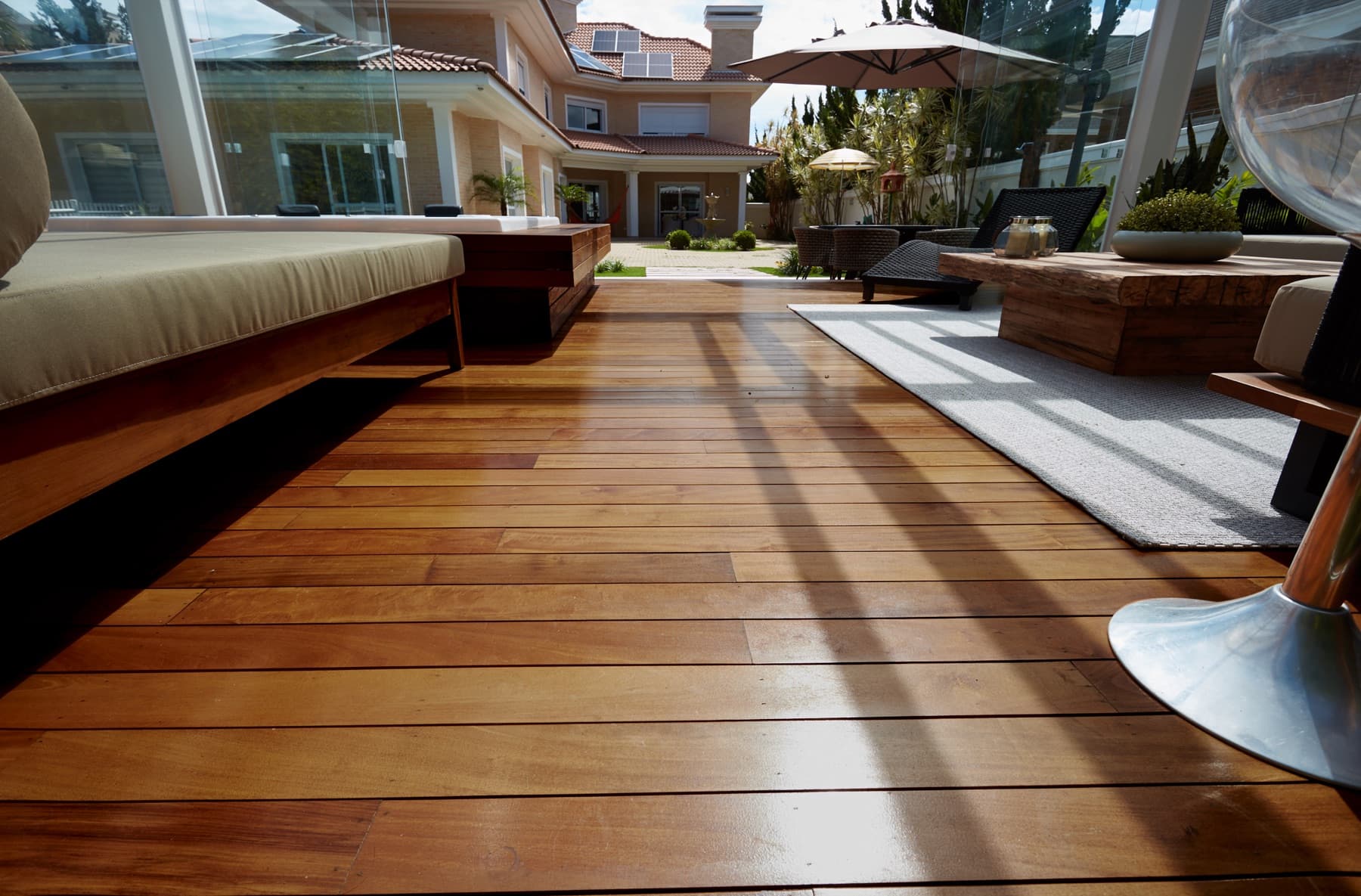
Evaluating Your Existing Deck Frame for Hardwood Decking
Before selecting your new hardwood decking, a comprehensive inspection of the existing deck frame is essential. The structural integrity of your current frame will determine whether it can support the weight and fastening requirements of dense hardwoods. Look for signs of rot, insect damage, or corrosion in joists, beams, and support posts. Even seemingly minor issues can compromise the long-term stability of your renovated deck.
Hardwood decking, particularly species like Ipe and Cumaru, is significantly denser and heavier than many common decking materials. Your existing joists must be adequately spaced and sized to handle this increased load without excessive deflection. If your current framing does not meet these requirements, adjustments or reinforcements may be necessary, impacting your project timeline and budget.
Also, consider the condition of your ledger board, which connects the deck to your house. Ensure it is securely fastened and properly flashed to prevent moisture intrusion into your home's structure. Any signs of deterioration here warrant immediate attention and repair or replacement.
Understanding Hardwood Options: Ipe and Cumaru for Coastal Florida
For coastal environments like Clearwater, selecting a decking material that can withstand salt air, humidity, and sun exposure is crucial. Brazilian hardwoods like Ipe and Cumaru are frequently specified for these conditions due to their inherent properties.
Ipe, also known as Brazilian walnut, is a benchmark for outdoor decking. It is known for its exceptional density and durability, offering natural resistance to rot, insects, and mold. Ipe's color ranges from reddish-brown to olive-brown, and it can be left untreated to weather to a silvery-gray patina or maintained with a UV-blocking sealer to preserve its original hue. Its minimal movement post-installation and resilience to weather changes make it a strong candidate for demanding applications.
Cumaru is another very durable tropical hardwood, often compared to Ipe. It is resistant to termites and weather changes, making it suitable for a wide variety of outdoor applications. It can also be allowed to weather naturally or be maintained to retain its color. Both Ipe and Cumaru are known for their ability to withstand the challenges of coastal environments.
For specific product details and characteristics, you can explore: [Ipe Hardwood Decking](/decking/hardwood/ipe) and [Hardwood Decking](/decking/hardwood).
Moisture Management and Ventilation in Clearwater
Clearwater's humid climate makes proper moisture management and ventilation critical for any deck, especially one using dense hardwoods. Hardwood decking requires adequate airflow underneath to prevent moisture buildup, which can lead to issues like mildew or cupping. Ensure that your deck design allows for cross-ventilation, particularly if your existing deck is low to the ground or enclosed on multiple sides.
Check that there is sufficient space between the bottom of your deck boards and the ground. If your existing deck sits very low, you might need to consider modifications to improve airflow, such as adding lattice or open skirting rather than solid enclosures. Proper spacing between individual deck boards is also important to allow for drainage and air circulation. Always follow the manufacturer's recommended gapping for your chosen hardwood species.
Fastening Systems and Board Profiles
The density of hardwoods like Ipe and Cumaru requires specific fastening methods. Standard deck screws may not be sufficient, and pre-drilling is often necessary to prevent splitting. Hidden fastening systems are popular for a clean, fastener-free surface appearance, but they must be compatible with the density and profile of your chosen hardwood. Alternatively, face-fastening with appropriate screws can provide a secure installation.
Hardwood decking is available in various profiles and lengths. Common dimensions for Ipe can range from 1"x2" to 6"x6" in lengths from 3 to 24 feet. Cumaru also comes in a range of profiles. The profile you choose can influence the overall look and feel of your deck, as well as installation considerations. Consider how board width and length will impact your layout, minimizing waste and ensuring a cohesive design. Always confirm current availability of profiles and lengths with your supplier.
Explore additional decking options, including [Composite Decking](/decking/composite) and [PVC Decking](/decking/pvc), if you are considering alternatives for your renovation.
Worked Example: Calculating Hardwood Decking for a Renovation
Let's consider a hypothetical deck renovation project in Clearwater, FL. You have an existing deck frame that measures 12 feet by 16 feet, totaling 192 square feet. You decide to use Ipe decking boards, which are typically available in standard widths, for example, 5.5 inches wide and in various lengths.
To calculate the number of Ipe boards needed, first, determine the linear footage required. For a 12-foot width, you'll need approximately (12 feet * 12 inches/foot) / 5.5 inches/board = 26.18 boards across the width. Since you can't use a fraction of a board for a full run, you'd plan for 27 boards. Each board needs to be 16 feet long.
So, you would need 27 boards x 16 feet/board = 432 linear feet of Ipe decking. To account for cuts, waste, and future repairs, it is standard practice to add a waste factor, typically 10-15%. For this example, let's add 10%: 432 linear feet * 1.10 = 475.2 linear feet. You would then round up to the nearest full length available from your supplier. If boards are sold in 16-foot lengths, you'd need 30 boards (475.2 / 16 = 29.7, rounded up to 30).
This calculation is a starting point. Always confirm exact board dimensions, available lengths, and waste factors with your supplier based on your specific layout and cutting plan. Remember that longer boards can minimize seams but may require more careful handling during installation.
Before you order
- Inspect existing deck frame for rot, insect damage, and corrosion.
- Verify joist spacing and sizing are adequate for hardwood decking's density and weight.
- Check ledger board condition and flashing for secure attachment and moisture protection.
- Assess current ventilation and plan for improved airflow if needed, especially in humid conditions.
- Choose hardwood species (e.g., Ipe, Cumaru) based on durability, appearance, and resistance to local conditions.
- Select appropriate fastening system (hidden or face-fastening) compatible with hardwood density.
- Confirm desired board profile and length availability with your supplier.
- Calculate material quantities, including a waste factor, and plan for efficient board layout.
- Consider professional installation due to hardwood density and specialized techniques.
Confirm installation details, approved uses and warranty terms in the current instructions for the exact product and profile. Your installer should verify the substrate, structure and applicable project requirements.
This is a planning guide for projects in Clearwater, FL. Ask our team to confirm availability, delivery to your ZIP code and which branch can support your order.
Questions to help you decide
How do I know if my existing deck frame can support hardwood decking?
The best way is to have a professional inspection.
Will hardwood decking withstand the Clearwater, FL climate?
Yes, tropical hardwoods like Ipe and Cumaru are highly suitable for coastal Florida. They possess natural resistance to rot, insects, and moisture, and can withstand salt air and strong sun exposure. Proper ventilation and occasional maintenance will further enhance their longevity.
What maintenance does hardwood decking require in a coastal environment?
Hardwood decking is relatively low maintenance. A yearly wash is generally sufficient. If you prefer to maintain the wood's original color, an annual application of a UV-blocking oil or sealer is recommended. Without it, the wood will naturally weather to a silvery-gray patina, which does not affect its structural integrity.
Ready to Transform Your Deck?
Request a material quote today with your project dimensions, desired hardwood profile, and ZIP code. We can help you confirm current availability and service options for your Clearwater, FL renovation project.
Request a material quote →