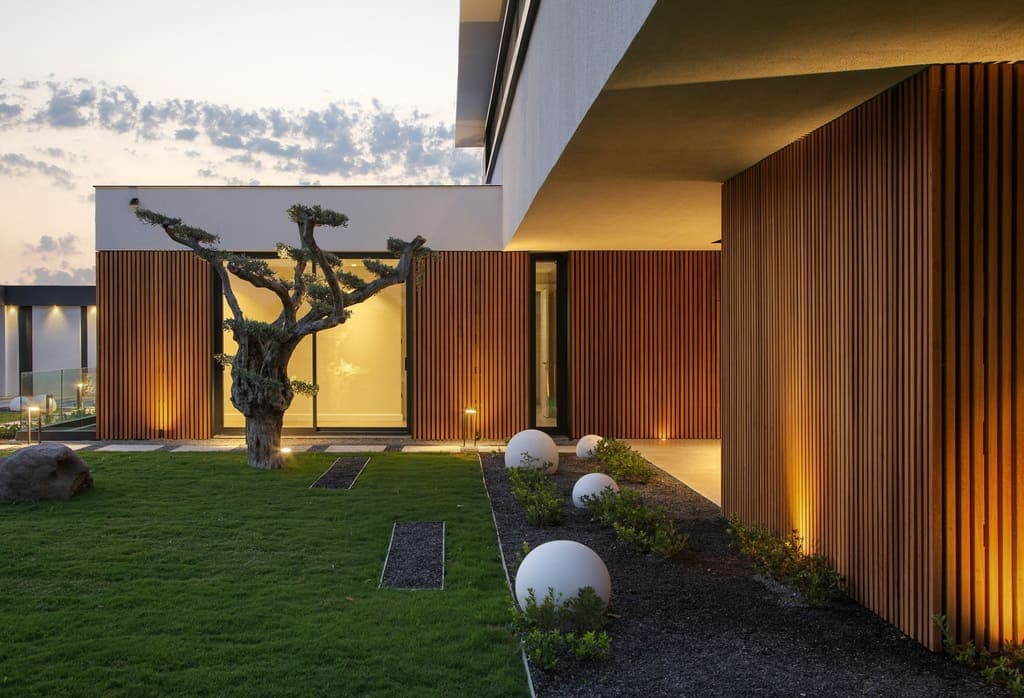
Why Thermally Modified Wood for Covered Patio Walls?
Thermally modified wood undergoes a high-temperature treatment process that alters its cellular structure. This process aims to enhance several key properties, making it a candidate for exterior applications like covered patio walls. The primary benefits include improved dimensional stability, which means the wood is less prone to expanding and contracting with changes in humidity. This characteristic is particularly valuable in environments like Breckenridge, where seasonal shifts can be significant.
Additionally, thermal modification generally reduces the wood's equilibrium moisture content and makes it less susceptible to certain types of decay. While covered patio walls offer protection from direct precipitation, they are still exposed to ambient humidity and temperature swings. The enhanced stability of thermally modified wood can contribute to a more consistent appearance over time, reducing the likelihood of cupping or warping that might occur with untreated wood in similar conditions. It also offers a natural wood aesthetic without the need for chemical preservatives.
Selecting the Right Profile and Species
For covered patio walls, the choice of profile influences both the aesthetic and the installation method. Common profiles for wall applications include Tongue & Groove (T&G), Shiplap, and Square Edge boards. Each offers a distinct visual effect and attachment strategy.
Tongue & Groove profiles create a continuous surface with minimal gaps, ideal for a sleek, finished look. Shiplap provides a more defined shadow line between boards, offering a contemporary or rustic appeal depending on the reveal. Square Edge boards require precise spacing for a consistent gap and can be installed with visible or concealed fasteners. For covered walls, where direct water shedding is less critical than on fully exposed siding, a broader range of profiles can be considered. The specific species of wood, such as NORX Thermally Modified Spruce, also impacts the final appearance, grain pattern, and inherent characteristics. Always confirm that your chosen profile and species are approved for vertical wall applications.
Product link: /thermally-modified-wood
Finishing Options and Maintenance for Breckenridge Conditions
While thermally modified wood offers enhanced stability, applying a finish can provide additional protection against UV degradation and help maintain its original color. In Breckenridge, where UV exposure can be intense due to altitude, a quality finish is a key consideration. Finishes range from clear sealers that allow the wood to silver naturally over time, to semi-transparent stains that add color while still revealing the wood grain, or opaque paints for a solid color.
If left unfinished, thermally modified wood will gradually transition to a silvery-gray patina when exposed to sunlight, similar to other wood species. This natural aging process is often desired for certain aesthetics. If maintaining the initial color is important, periodic reapplication of a UV-protective finish will be necessary. For covered patio walls, maintenance frequency may be less than for fully exposed siding, but regular cleaning to remove dust and debris is still recommended to preserve the appearance and integrity of the finish.
Attachment and Substructure Considerations
Proper attachment is crucial for the longevity of any wall cladding. For covered patio walls, the substructure typically consists of furring strips or a plywood sheathing, providing a stable base for fastening. Depending on the profile, fastening can be visible (face-fastened) or concealed. Concealed fastening systems are often preferred for a cleaner aesthetic, but require careful installation to ensure secure attachment.
Consider the local building practices in Breckenridge for exterior wall assemblies, even for covered areas. Ensure adequate ventilation behind the cladding, especially if the patio wall is enclosed on multiple sides. This helps prevent moisture accumulation and promotes air circulation. Use corrosion-resistant fasteners, such as stainless steel, to avoid staining the wood and ensure long-term holding power, particularly given potential moisture exposure and temperature fluctuations.
Project Planning Example: A Covered Patio Wall
Consider a covered patio in Breckenridge with a back wall measuring 12 feet wide by 8 feet tall. The homeowner desires a Shiplap profile for a contemporary look. They select NORX Thermally Modified Spruce in a 5.5-inch face width. The wall will be fastened to vertical furring strips.
First, calculate the total wall area: 12 feet * 8 feet = 96 square feet. To determine the number of boards needed, divide the total height by the face width of the board. An 8-foot height divided by 5.5 inches (0.458 feet) means approximately 17.47 courses of boards. Since boards are typically sold in fixed lengths, and assuming 12-foot lengths are available to match the wall width, you would need 18 boards (rounding up to ensure full coverage). Always account for potential waste from cuts and defects, typically adding 5-10% to the material estimate. For this example, 18 boards * 12 feet/board = 216 linear feet. Adding 10% waste: 216 * 1.10 = 237.6 linear feet. For a more precise order, you would purchase 20 boards of 12-foot length.
This project would also require furring strips, fasteners, and a chosen finish. The homeowner opts for a semi-transparent stain to maintain some of the wood's natural color while providing UV protection, requiring application after installation and periodic reapplication.
Complementary Materials and Design
Thermally modified wood on covered patio walls can be beautifully integrated with other materials common in Breckenridge architecture. Pairing it with natural stone, stucco, or metal accents can create a cohesive and visually appealing outdoor living space. For instance, a thermally modified wood wall can serve as a warm backdrop to a stone fireplace or complement metal railing systems.
Consider the overall design aesthetic of your home and the surrounding landscape. The natural tones of thermally modified wood can harmonize with the mountain environment. For ceiling applications in the same covered patio, consider using thermally modified wood soffit panels for a unified look. Explore options like NORX Siding and Cladding or Maximo Accoya for other exterior elements if a similar aesthetic and performance are desired across different parts of your property. These materials offer diverse profiles and species that can complement your covered patio walls.
Product link: /siding-and-cladding
Product link: /brands/norx
Product link: /products/maximo-accoya
Before you order
- Confirm the specific exposure conditions: Is the patio truly covered and protected from direct rain/snow?
- Select a thermally modified wood species and profile suitable for vertical wall applications.
- Choose a finish (or decide to let it weather) based on desired appearance and UV protection needs in Breckenridge's altitude.
- Plan for a robust substructure and appropriate fasteners (corrosion-resistant).
- Calculate material quantities, including waste factor, based on accurate measurements.
- Consider ventilation behind the cladding, especially in enclosed patio designs.
- Coordinate with complementary materials and design elements for a cohesive outdoor space.
Confirm installation details, approved uses and warranty terms in the current instructions for the exact product and profile. Your installer should verify the substrate, structure and applicable project requirements.
This is a planning guide for projects in Breckenridge, CO. Ask our team to confirm availability, delivery to your ZIP code and which branch can support your order.
Questions to help you decide
Does thermally modified wood require a finish on a covered patio wall?
While thermally modified wood is dimensionally stable, a finish provides additional UV protection and can help maintain its original color. Without a finish, the wood will naturally weather to a silvery-gray patina over time due to sun exposure. In Breckenridge's high-UV environment, a finish is often recommended if color retention is a priority.
Can thermally modified wood be used for structural purposes on a patio?
Thermally modified wood is primarily intended for non-structural applications such as cladding, decking, and decorative elements. It should not be used as a primary structural component for a patio or any other construction. Always ensure structural elements are designed and built using appropriate structural lumber and engineering.
How do Breckenridge's climate conditions affect thermally modified wood?
Breckenridge's high altitude means intense UV radiation and significant temperature fluctuations. Thermally modified wood's enhanced dimensional stability helps it resist warping and cracking from these temperature shifts. While covered patio walls are protected from direct precipitation, the material will still be exposed to ambient humidity and UV, making finish selection and proper installation important for long-term performance.
Ready to Plan Your Covered Patio Walls?
Request a material quote with your project dimensions, exact profile, and ZIP code. We can help confirm current availability and service options for your Breckenridge, CO project.
Request a material quote →