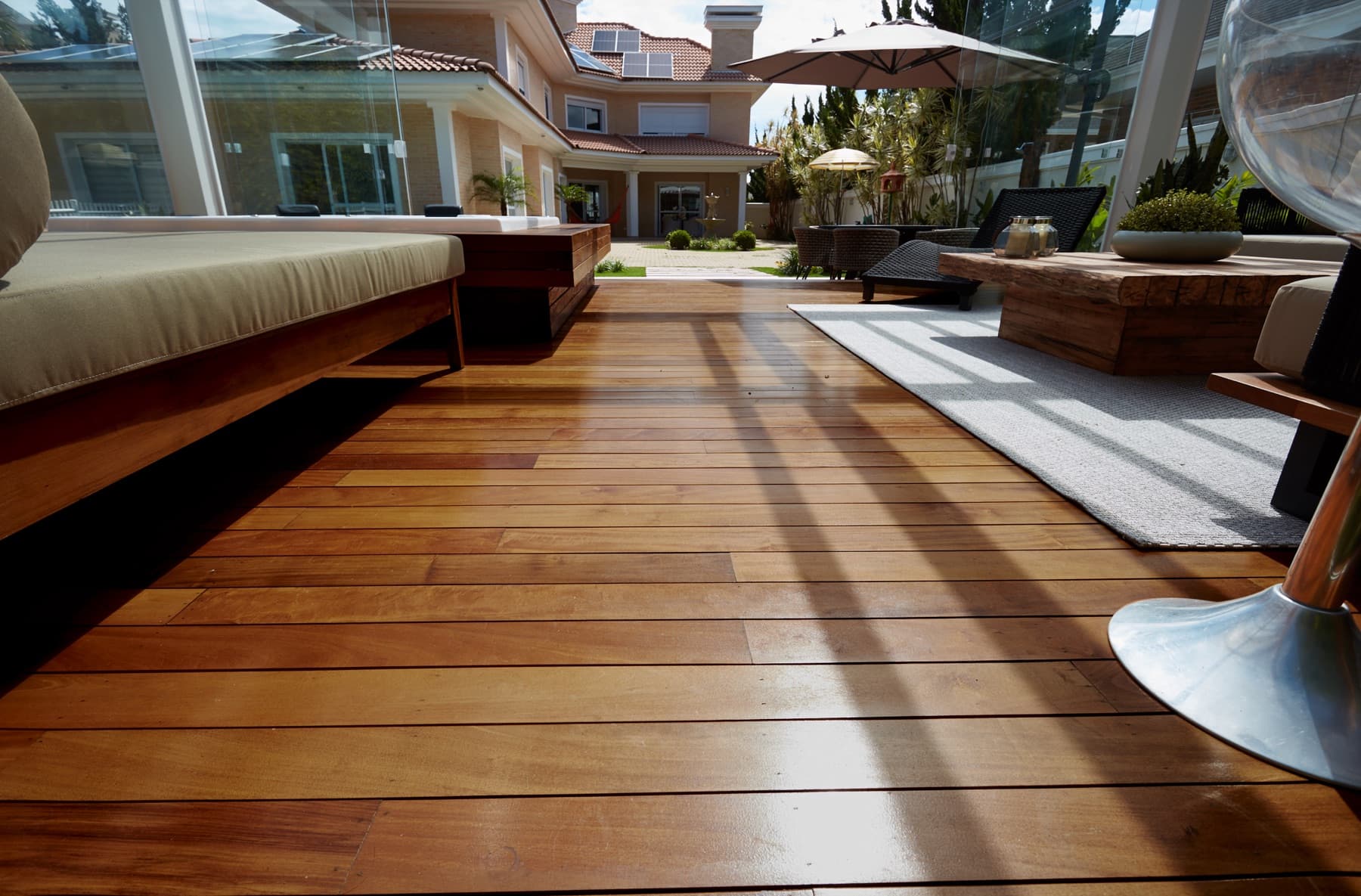
Assessing Your Existing Deck Frame for Hardwood
Before selecting new decking material, a thorough inspection of your existing deck frame is crucial. Hardwood decking, particularly dense species like Ipe or Cumaru, can be heavier than many common decking materials. Your frame must be structurally sound and capable of supporting the increased load, especially considering potential snow loads in Breckenridge.
Inspect all joists, beams, and support posts for signs of rot, insect damage, or excessive deflection. Pay close attention to connections and fasteners. Any compromised elements should be repaired or replaced before new decking is installed. Consult with a qualified builder or engineer to confirm the frame's integrity and load-bearing capacity, particularly if you are unsure or planning a significant material change.
Why Hardwood for Your Breckenridge Deck Renovation?
Hardwood decking offers distinct advantages for renovation projects, especially in environments like Breckenridge. Its inherent density provides natural resistance to rot, insects, and fungi without chemical treatments. This resilience contributes to a longer lifespan compared to many other decking options.
Species like Ipe and Cumaru are known for their exceptional durability and stability, which can be beneficial in areas experiencing temperature fluctuations. While requiring an initial investment, the longevity and reduced need for frequent replacement can make hardwood a cost-effective choice over the life of the deck.
The natural beauty of hardwood, with its rich colors and varied grain patterns, also adds a premium aesthetic that can enhance the overall value and appeal of your property.
Comparing Hardwood Species: Ipe vs. Cumaru
When considering hardwood for your Breckenridge deck, Ipe and Cumaru are two prominent choices, each offering robust performance.
Ipe, also known as Brazilian walnut, is often considered a benchmark for hardwood decking. Its color ranges from reddish-brown to olive-brown. Ipe has a minimal movement post-installation, making it a stable choice for outdoor environments. With proper care, Ipe decking can last for decades. For more details, explore our Ipe decking options.
It is also very resistant to termites and weather changes. Cumaru typically presents in a range of reddish-brown tones, often with a subtle cinnamon-vanilla scent when worked. It offers stiffness and strength, suitable for demanding applications. You can find more information on Cumaru decking here.
Both species can be left untreated to weather to a silvery-gray patina or maintained with a UV-blocking sealer to preserve their original color. Your choice may depend on specific aesthetic preferences and budget considerations.
Planning Your Decking Layout and Fasteners
Once your frame is deemed suitable and your hardwood species is chosen, planning the decking layout is the next step. Consider board widths and lengths to minimize waste and optimize visual flow. Common hardwood decking profiles are available in various dimensions, such as 1"x4" or 5/4"x6".
Face-fastening involves screwing directly through the face of the board into the joists, which is very secure but leaves visible fasteners. Hidden fastening systems create a clean, unblemished surface by attaching boards from the sides or underside. The choice depends on your aesthetic preference and installation method. Always follow the manufacturer's specific guidelines for board spacing and fastener type to ensure proper ventilation and dimensional stability, especially in changing weather conditions.
Worked Example: Deck Renovation Material Takeoff
Let's consider a hypothetical deck renovation project in Breckenridge. The client wishes to replace the old decking with Ipe 1"x6" (nominal) boards, which typically have an actual dimension of 0.75 inches thick by 5.5 inches wide. They prefer a straight lay pattern.
First, calculate the total deck area: 10 ft * 12 ft = 120 square feet.
Next, determine the number of board feet needed. A 1"x6" board has a cross-sectional area of (1/12 ft) * (6/12 ft) = 0.0417 square feet. To cover 120 sq ft, you'd need approximately 120 / 0.0417 = 2880 linear feet of 1"x6" material, but this does not account for waste or specific board lengths. A more practical approach for decking is to calculate linear feet based on board width.
Each 5.5-inch wide board covers 0.458 feet of width. For a 10-foot width, you'd need 10 ft / 0.458 ft/board = approximately 21.8 boards. Round up to 22 boards. For the 12-foot length, this means 22 boards * 12 ft/board = 264 linear feet of 1"x6" material. For the full 120 sq ft, accounting for typical 15-20% waste for cuts, defects, and end trimming, you would take 264 linear feet * 1.15 (for 15% waste) = 303.6 linear feet. Since Ipe boards are often available in random lengths from 3 to 24 feet, you would order a quantity of boards that sum to at least this linear footage.
For a 12-foot long deck, ordering 12-foot boards minimizes waste. You would need 22 boards * 12 linear feet/board = 264 linear feet. Adding 15% for waste and cuts for end-to-end alignment (if cutting boards to fit) would mean ordering approximately 304 linear feet. If available in 20-foot lengths, you might order 16 boards (16 * 20 = 320 linear feet) to allow for cuts and maximize efficiency for the 12-foot deck length, with some offcuts for potential use in shorter sections or future repairs.
This example simplifies the process; actual ordering will depend on available lengths, specific layout (e.g., picture framing, diagonal patterns), and professional recommendations to account for waste and cuts.
Before you order
- Assess the structural integrity and load-bearing capacity of your existing deck frame.
- Determine your aesthetic preference for wood color (e.g., reddish-brown of Ipe/Cumaru, or silvery-gray patina).
- Consider the maintenance commitment: annual washing and optional oiling to retain color.
- Choose between visible face-fasteners or hidden fastening systems for your desired finish.
- Measure your deck dimensions accurately and calculate linear footage, accounting for waste.
- Consult with a builder or Lumber Plus representative for specific product availability and installation guidance.
Confirm installation details, approved uses and warranty terms in the current instructions for the exact product and profile. Your installer should verify the substrate, structure and applicable project requirements.
This is a planning guide for projects in Breckenridge, CO. Ask our team to confirm availability, delivery to your ZIP code and which branch can support your order.
Questions to help you decide
Can I install hardwood decking over my existing deck boards?
No, it is generally not recommended to install new decking directly over existing deck boards. For a hardwood deck renovation, the old decking should be removed, and the underlying frame inspected and prepared. This ensures proper fastening, ventilation, and structural integrity for the new hardwood material.
How do I maintain the original color of my hardwood deck in Breckenridge?
To maintain the original rich color of hardwood decking like Ipe or Cumaru, you will need to apply a UV-blocking sealer or deck oil periodically, typically once a year. If left untreated, the wood will naturally weather to a beautiful silvery-gray patina. Regular cleaning with a mild deck cleaner is also recommended to remove dirt and debris, regardless of whether you choose to oil it.
Are specific tools needed to work with hardwood decking?
Yes, due to the density of tropical hardwoods like Ipe and Cumaru, specialized tools may be required. This can include carbide-tipped saw blades, pre-drilling tools for fasteners (even with self-tapping screws), and potentially specialized fastening systems. Professional installation is often recommended due to these material characteristics and the specific techniques involved.
Ready to Transform Your Breckenridge Deck?
Request a material quote today. Provide your project dimensions, desired hardwood profile (e.g., Ipe 1x6), and your ZIP code. Our team can confirm current availability and service options to help plan your deck renovation.
Request a material quote →