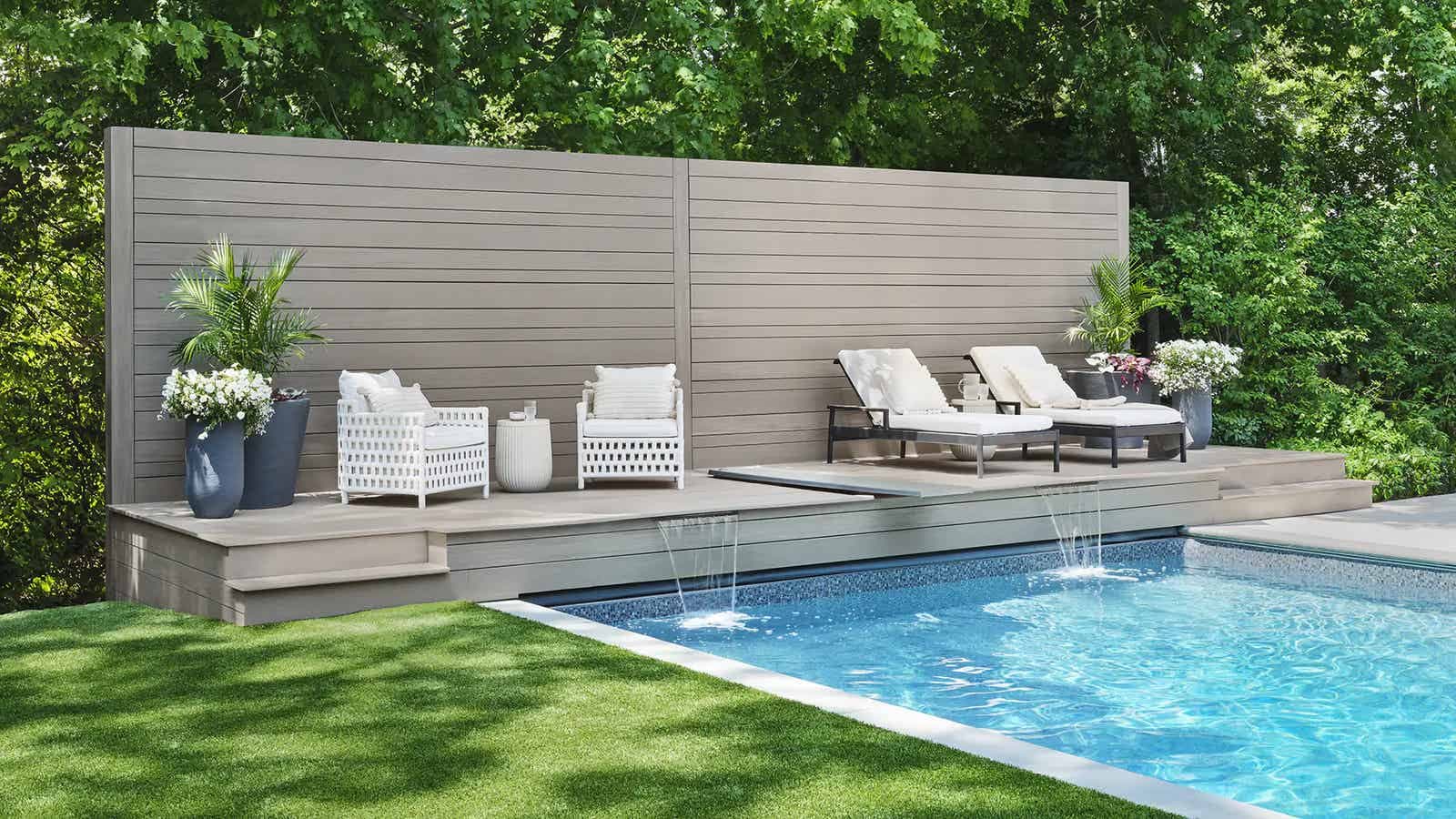
Why PVC Decking for a Pool Terrace?
PVC decking is a "capped polymer" product, meaning it's composed entirely of synthetic materials without any wood fibers. This fundamental difference makes it inherently resistant to moisture-related issues that can affect traditional wood or even wood-composite decking. For a pool terrace, this translates into several key benefits.
The 100% synthetic composition means PVC decking is waterproof to the core. Standing water, splash zones, and even salt spray (if applicable in other contexts) will not cause the material to swell, stain, or rot. This makes it a reliable choice for areas constantly exposed to water. It's often considered a default specification where boards are frequently wet, such as pool surrounds and docks. Additionally, PVC decking is generally lighter than hardwood and some composite options, which can simplify handling and installation, particularly for projects with access challenges.
Many PVC decking lines, such as TimberTech Azek, feature advanced capping, designed to shed grease and wine, making cleanup straightforward with just soap and water. These products also offer various color options, some of which are designed with heat-mitigating properties, a consideration for sun-exposed areas around a pool. The material is also 100% recyclable, contributing to a reduced environmental impact when boards are eventually removed.
It's important to note that while PVC is moisture-resistant, proper installation with adequate ventilation is still crucial to ensure the overall longevity of the deck structure and prevent moisture buildup in surrounding areas or the substructure.
Key Considerations for Poolside PVC Decking
When planning a PVC decking pool terrace, several factors unique to poolside environments should guide your decisions.
First, consider the constant exposure to water. While PVC is waterproof, ensuring proper drainage away from the pool edge and the deck surface is vital for safety and to prevent water pooling. The substructure underneath the PVC decking must also be designed to handle moisture and allow for adequate airflow. Second, sunlight exposure, especially at higher altitudes like Breckenridge, can be intense. While PVC decking offers fade and stain coverage, choosing lighter colors or options with heat-mitigating technology can help keep the deck surface cooler underfoot during peak summer hours. Third, the texture of the decking boards is important for slip resistance when wet. Examine product samples to assess their surface texture and confirm suitability for walking with wet feet.
Fourth, the aesthetic integration with your home and landscape is crucial. PVC decking comes in various collections, such as TimberTech Azek's Vintage, Landmark, and Harvest lines, which offer deep wood looks. Selecting a color and grain pattern that complements your Breckenridge home's architectural style and the surrounding natural environment will enhance the overall appeal of your outdoor space. Finally, consider the edge finishes and fascia boards. These components provide a finished look and protect the substructure, ensuring a cohesive and durable pool terrace.
Planning Your Pool Terrace: A Hypothetical Example
Let's consider a hypothetical pool terrace project in Breckenridge, CO, for a 15-foot by 20-foot rectangular pool. The client desires a PVC deck surround that is 4 feet wide on all four sides of the pool.
First, calculate the total deck area. The pool dimensions are 15 ft x 20 ft. Adding a 4-foot surround on all sides means the overall footprint of the deck and pool combined will be (15 + 4 + 4) ft x (20 + 4 + 4) ft = 23 ft x 28 ft. The total area of this larger rectangle is 23 ft * 28 ft = 644 sq ft. The pool's area is 15 ft * 20 ft = 300 sq ft. Therefore, the total decking area needed is 644 sq ft - 300 sq ft = 344 sq ft.
Next, consider board lengths. If using standard 16-foot and 20-foot PVC decking boards, a layout plan would be essential to minimize waste. For the 4-foot wide sections, boards could be cut to 4-foot lengths. However, longer runs along the 20-foot side of the pool would benefit from 20-foot boards to reduce seams. For instance, the 20-foot length sections would require 20-foot boards for the primary runs. The 15-foot sections would also use 20-foot boards, with a 5-foot offcut that might be reusable for smaller sections or trim, depending on the layout. This highlights the need for precise board width and spacing measurements from the manufacturer's installation guide. For accurate material takeoffs, always consult the specific product's available lengths and actual coverage per board.
For a project like this, a detailed drawing showing board placement, cuts, and any picture-framing or border details will be crucial for an accurate material list. Remember to account for waste factor, typically 5-10%, especially with custom cuts around a pool.
Surface Appearance and Maintenance for Poolside Decks
PVC decking offers a range of aesthetic choices, from deep wood looks to more contemporary finishes. The TimberTech Azek line, for example, provides collections like Vintage, Landmark, and Harvest, which mimic natural wood grains and colors. For a Breckenridge pool terrace, you might consider finishes that complement the surrounding natural stone, timber accents, or the color palette of your home.
Maintaining PVC decking around a pool is generally straightforward. Its capped polymer surface is designed to shed common stains like grease and wine. Typically, cleaning involves soap and water. Always refer to the specific manufacturer's cleaning guidelines to ensure compatibility with cleaning products and to maintain the warranty. Regular cleaning helps prevent the buildup of dirt, pool chemicals, and organic matter, which can otherwise make the surface slippery or detract from its appearance over time. Unlike wood, PVC decking does not require sanding, staining, or sealing, significantly reducing long-term maintenance tasks.
Compatible Products for a Complete Pool Terrace
Creating a cohesive pool terrace involves more than just the decking boards. Consider integrating complementary products to enhance both functionality and aesthetics.
For the deck substructure, pressure-treated lumber or steel framing can provide a durable and long-lasting foundation, especially important in moisture-prone areas around a pool. If your design includes steps leading to the pool area, ensure the PVC decking is matched with appropriate stair treads and risers. Fascia and trim boards made from the same PVC material or a coordinating color will provide a clean, finished edge around the deck perimeter and pool coping.
Finally, think about lighting. Integrated deck lighting or post cap lights can enhance safety and ambiance for evening use. While not a decking product, a well-chosen outdoor furniture set designed for wet environments will complete the pool terrace, creating a functional and inviting space.
Before you order
- Confirm the specific PVC decking product's wet-use suitability and slip resistance data.
- Evaluate color options for heat mitigation, particularly for sun-exposed areas.
- Plan for adequate drainage from the deck surface and proper ventilation beneath the deck.
- Select fascia and trim boards that complement the main decking and pool coping.
- Verify manufacturer's cleaning and maintenance recommendations for poolside environments.
- Consider compatible substructure materials that can withstand moisture exposure.
- Factor in board lengths and widths to optimize material use and minimize waste during installation.
Confirm installation details, approved uses and warranty terms in the current instructions for the exact product and profile. Your installer should verify the substrate, structure and applicable project requirements.
This is a planning guide for projects in Breckenridge, CO. Ask our team to confirm availability, delivery to your ZIP code and which branch can support your order.
Questions to help you decide
Is PVC decking slippery when wet?
It's crucial to review the specific product's wet-use data and, if possible, examine samples to assess their surface texture before making a final decision for a pool terrace. Regular cleaning also helps maintain the intended surface properties.
Does PVC decking get hot in the sun?
All decking materials can absorb heat from the sun. However, many PVC decking manufacturers offer lighter color options or boards engineered with heat-mitigating technology to help keep the surface cooler underfoot. For a pool terrace that sees significant sun exposure, especially in a high-altitude location like Breckenridge, selecting a lighter color or a product with these features can be beneficial. Always check manufacturer specifications for heat performance.
How do I clean pool chemicals or sunscreen spills from PVC decking?
PVC decking is generally easy to clean. For most spills, including pool chemicals or sunscreen, a solution of mild soap and water is usually sufficient. It's important to clean spills promptly to prevent potential staining, although PVC's capped surface is highly stain-resistant. Always refer to the specific PVC decking manufacturer's cleaning and maintenance guidelines for approved products and methods to avoid voiding any warranty.
Request a Quote for Your PVC Decking Pool Terrace
Ready to transform your Breckenridge pool area with durable and low-maintenance PVC decking? Contact us with your project dimensions, desired PVC decking profile, and ZIP code to receive a material quote. We can also confirm current availability and service options for your location.
Request a material quote →