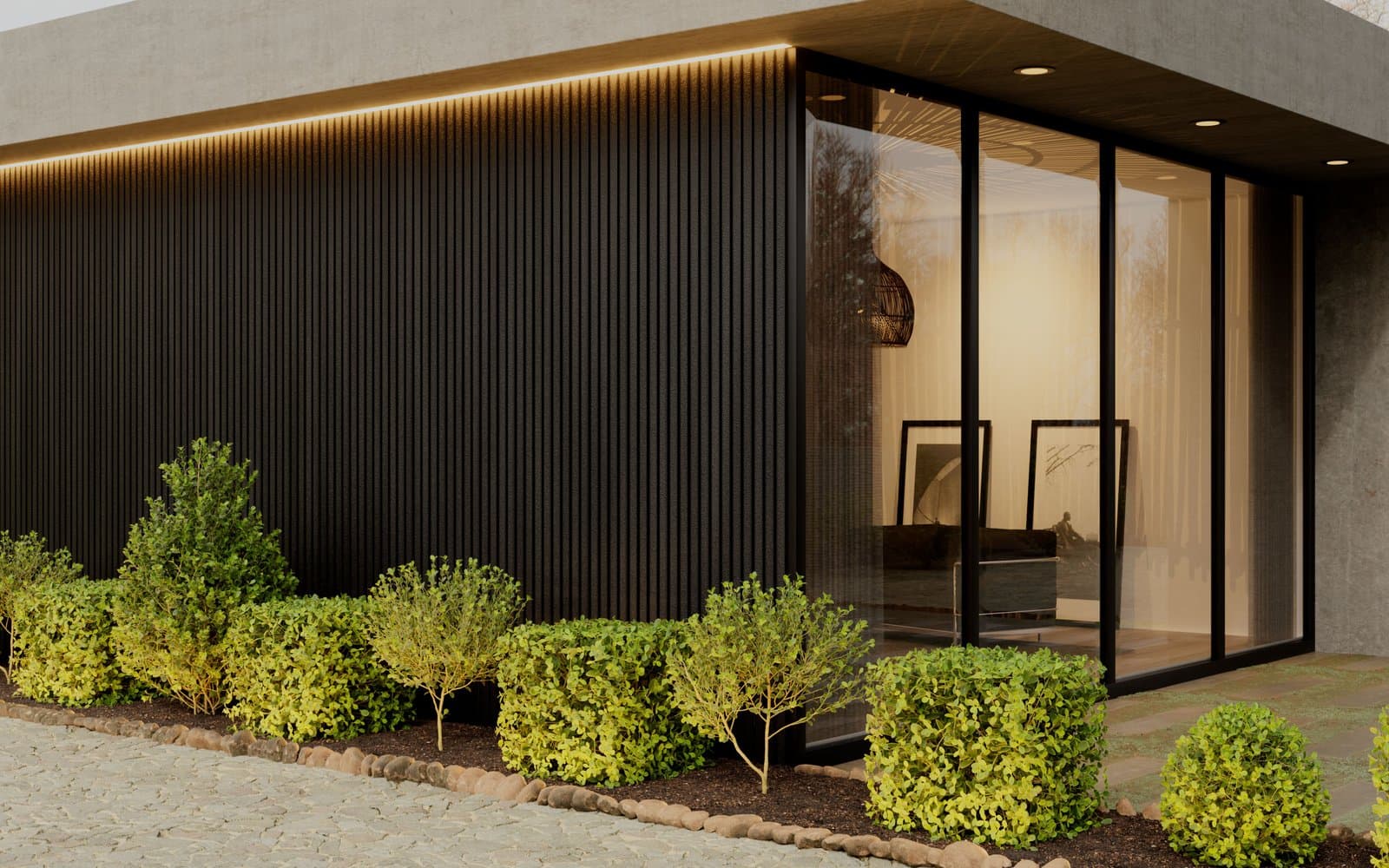
Assessing Existing Wall Conditions
Before selecting any new siding or cladding, a comprehensive assessment of the existing wall structure is paramount. This involves inspecting for any signs of moisture damage, rot, pest infestation, or structural deficiencies. The condition of the sheathing, framing, and existing weather resistive barrier (WRB) will dictate the necessary preparation work and potential repairs.
For coastal areas like Jupiter, FL, particular attention should be paid to salt exposure and humidity. Existing fasteners, flashing, and sealants should be checked for corrosion or degradation. Documentation of the original construction, if available, can provide valuable insights into the wall assembly and any previous renovations.
Understanding Siding and Cladding Options
Lumber Plus offers a range of siding and cladding materials suitable for facade renovations. These include thermally modified wood, Maximo Accoya, Brazilian hardwood, and Norx composite cladding.
Thermally modified wood, such as Scandinavian Thermally Modified Wood, is engineered for stability and may be a consideration for coastal environments. Maximo Accoya is acetylated wood, known for its dimensional stability. Brazilian hardwoods like Ipe, Cumaru, Garapa, Angelim, Jatoba, and Tigerwood offer distinct aesthetics and inherent durability. Norx composite cladding provides a low-maintenance option with various profiles. Each material has specific profiles and installation guidelines that must be adhered to for proper performance.
It is crucial to review the specific documentation for your chosen material, as installation methods, fastener types, and required clearances can vary significantly. For example, some materials may require a rainscreen assembly to ensure proper ventilation and drainage, which is particularly relevant in humid climates.
Planning for the Jupiter, FL Climate
Jupiter, FL, experiences a humid subtropical climate with high temperatures, significant rainfall, and the potential for strong winds and salt spray. These environmental factors must influence your material and installation choices.
Materials should be selected for their resistance to moisture, UV radiation, and potential for mold or mildew growth. Proper ventilation within the wall assembly is critical to prevent moisture entrapment. For wood products, consider how the material will perform and age in high humidity and sun exposure, as appearance changes can occur over time.
Ensure that the chosen installation system, including flashing details around windows and doors, is designed to manage water effectively and protect the underlying structure from moisture intrusion. This is especially important for renovation projects where existing conditions may have vulnerabilities.
Integration with Existing Architectural Elements
A facade renovation isn't just about replacing materials; it's about integrating the new with the old. Consider how new siding and cladding will interact with existing windows, doors, soffits, and foundation elements. Proper detailing around these interfaces is crucial for weatherproofing and a cohesive aesthetic.
For example, maintaining appropriate clearances between the bottom edge of the siding and the grade or hardscape is vital for drainage and preventing moisture wicking. Similarly, ensuring proper flashing and trim integration around openings will protect against water penetration.
If the renovation involves a partial re-clad, consider how the new material will transition to any existing facade elements that are being retained. This may involve specific trim profiles or transition details to achieve a clean and functional finish.
Worked Example: Facade Renovation on a Jupiter Home
Consider a hypothetical single-story home in Jupiter, FL, with an existing stucco facade showing signs of hairline cracks and mildew. The homeowner wishes to replace the stucco with a modern, low-maintenance Norx composite cladding with a horizontal profile.
The first step involves a thorough inspection of the existing stucco and underlying sheathing. Assume the inspection reveals intact plywood sheathing but a degraded existing house wrap. The renovation plan would include carefully removing the stucco, repairing any minor sheathing imperfections, and installing a new, high-performance weather-resistive barrier (WRB) directly over the sheathing.
Next, a furring strip system would be installed vertically over the WRB to create a ventilated rainscreen cavity, essential for moisture management in the humid climate. This system ensures that any moisture that penetrates the cladding can drain away and the wall can dry. Special attention would be given to flashing details around windows and doors, ensuring all laps shed water away from the structure. This approach addresses both aesthetic goals and long-term performance in the local climate.
Before you order
- Have I thoroughly inspected the existing facade for damage or structural issues?
- Is the existing weather-resistive barrier (WRB) in good condition, or does it need replacement?
- Does the chosen siding/cladding material require a rainscreen assembly, and is there space for one?
- Are the specific installation requirements for the chosen material understood and planned for?
- How will the new material perform in Jupiter's humid, coastal climate (UV, moisture, salt exposure)?
- Are all flashing details around windows, doors, and other penetrations accounted for?
- What are the required clearances for the new siding/cladding from grade and adjacent surfaces?
- Have I obtained all necessary product documentation for installation and maintenance?
- Have I considered how the new material will integrate with existing architectural features?
- Are the fasteners specified appropriate for the material and the local environmental conditions?
Confirm installation details, approved uses and warranty terms in the current instructions for the exact product and profile. Your installer should verify the substrate, structure and applicable project requirements.
This is a planning guide for projects in Jupiter, FL. Ask our team to confirm availability, delivery to your ZIP code and which branch can support your order.
Questions to help you decide
What is the most important consideration when renovating a facade in Jupiter, FL?
The most important consideration is a thorough assessment of the existing wall conditions and selecting materials and installation methods that are suitable for Jupiter's humid, coastal climate. Proper moisture management, including a robust weather-resistive barrier and potentially a rainscreen system, is critical.
Do I need a rainscreen system for my facade renovation?
While not always strictly mandated for all materials, a rainscreen system is highly recommended for facade renovations in humid climates like Jupiter, FL. It provides a drainage plane and ventilation behind the cladding, significantly improving the wall's ability to manage moisture and dry out, which can extend the lifespan of the facade.
How do I choose between wood and composite cladding for my renovation?
The choice between wood and composite cladding depends on your aesthetic preference, maintenance expectations, and budget. Wood options like thermally modified wood or Brazilian hardwoods offer natural beauty but may require more regular maintenance. Composite cladding, such as Norx, often provides a lower-maintenance alternative with consistent appearance. Both can be suitable for coastal environments if properly installed and maintained according to manufacturer guidelines.
Ready to Transform Your Facade?
Request a material quote with your project dimensions, exact profile, and ZIP code to confirm current availability and service options for your Jupiter, FL, facade renovation project.
Request a material quote →