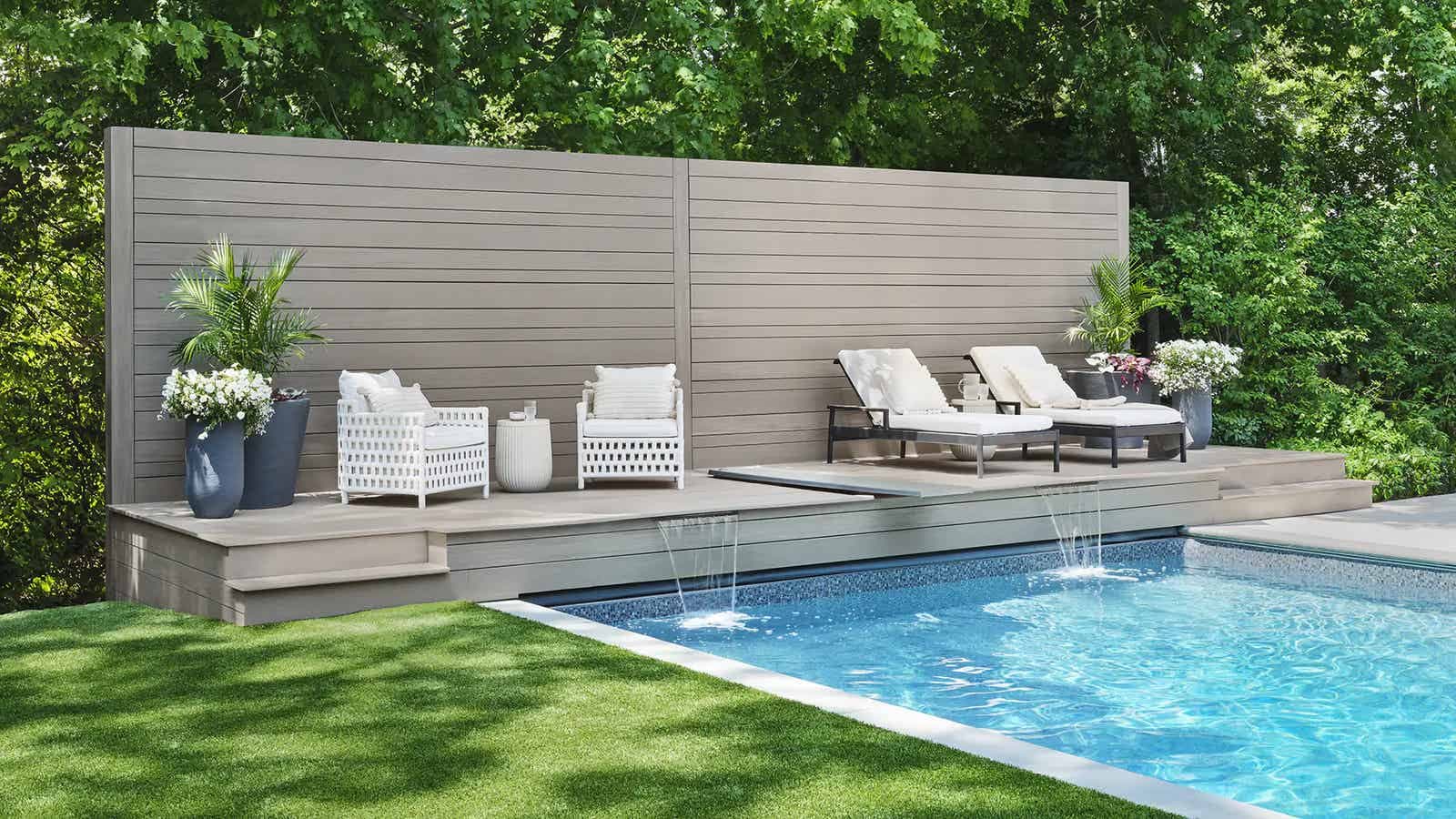
Why Consider PVC Decking for a Naples Pool Terrace?
PVC (polyvinyl chloride) decking is a 100% synthetic material, meaning it contains no wood fibers. This composition is a primary factor in its suitability for environments like a pool terrace, where constant moisture is a given. Unlike wood or composite materials that may absorb water, PVC is designed to be waterproof to the core.
For a pool area in Naples, this waterproof characteristic is particularly beneficial. Standing water from splashes, high humidity, and even salt spray from nearby coastal influences do not cause the material to swell, stain, or rot. This inherent resistance contributes to the long-term stability and appearance of the deck.
Manufacturers like TimberTech Azek offer PVC decking known for its advanced capping, which contributes to stain and fade resistance. This means that common poolside spills, such as suntan lotion or beverages, can be wiped clean with soap and water, and the deck's color is designed to resist fading from the strong Florida sun.
Understanding PVC Decking Profiles and Appearance
PVC decking is available in various collections, such as TimberTech Azek's Vintage, Landmark, and Harvest lines. These collections offer different aesthetics, often designed to mimic the look of natural wood with varied grain patterns and color palettes. For a pool terrace, selecting a color that complements your home's exterior and landscaping is key.
Beyond aesthetics, the practical profiles of PVC boards are important. While specific profiles vary by manufacturer and collection, they are generally engineered for consistent dimensions and ease of installation. Standard board widths and lengths are available, which can influence your deck layout and the number of seams. Fascia and trim boards are also part of the PVC decking system, allowing for a finished edge around the perimeter of the deck and stair risers.
Planning for Water Management and Drainage
Even with a waterproof material like PVC, proper water management and drainage beneath and around the deck remain crucial for the overall health of your outdoor space.
Ensure the deck design includes adequate spacing between boards to allow water to drain through to the ground or a sub-deck drainage system. The substructure, typically wood or steel, must be designed with appropriate slopes to direct water away from the house foundation and into proper drainage. For Naples, where heavy rains are common, this planning step is particularly important to prevent standing water.
Consider the surrounding landscaping. Paved areas or garden beds adjacent to the pool terrace should also be graded to direct water away from the deck's foundation.
Installation Considerations and Substructure Requirements
PVC decking can be installed using hidden fastening systems or face fasteners, depending on the desired aesthetic and manufacturer recommendations. Hidden fasteners create a smooth, uninterrupted surface, while face fasteners are visible on the deck surface. Always follow the manufacturer's specific installation guidelines for board spacing, fastening methods, and substructure requirements.
The substructure for a PVC deck must be sound and properly constructed. While PVC decking itself is lighter than some hardwood options, the structural integrity of the framing is paramount. Ensure joist spacing meets the manufacturer's specifications for your chosen PVC board, as this directly impacts the deck's stability and prevents sagging.
For a pool terrace, consider using pressure-treated lumber or steel for the substructure to resist moisture and insect damage. In Naples' humid climate, protecting the substructure is as important as selecting a durable decking surface.
Maintenance and Cleaning for a Poolside Environment
One of the advantages of PVC decking for a pool terrace is its low-maintenance profile. The capped polymer surface is designed to shed common stains like grease and wine, making cleanup straightforward. Routine cleaning typically involves soap and water.
For pool areas, regular rinsing of the deck surface with a hose can help remove chlorine residue, sunscreen, and other debris that accumulates. While PVC is resistant to staining, promptly cleaning spills is always recommended to maintain the deck's appearance. Always refer to the specific manufacturer's cleaning instructions for your PVC decking product, as recommended cleaning agents can vary.
Avoid abrasive cleaners or harsh chemicals not approved by the manufacturer, as these can damage the surface of the decking. Periodic inspection for any debris lodged between boards or in fastening channels can also help maintain proper drainage and prevent potential issues.
Worked Example: Planning a Rectangular Pool Terrace
Let's consider a hypothetical rectangular pool terrace project in Naples, FL, measuring 20 feet by 15 feet. The homeowner wants to use TimberTech Azek PVC decking boards, which are typically available in 12-foot, 16-foot, and 20-foot lengths, and a standard width of 5.5 inches (0.458 feet).
For a 20-foot length, using 20-foot boards minimizes end seams. The 15-foot width means we will lay boards across this dimension. To calculate the number of boards needed for the width: 15 feet / 0.458 feet/board = approximately 32.75 boards. Since you cannot purchase fractions of boards, you would need to purchase 33 boards for the main deck area.
If we assume the 20-foot boards are used, the total linear footage would be 33 boards * 20 feet/board = 660 linear feet. This calculation is for the main decking surface only. Remember to account for waste due to cuts, especially if there are irregular shapes, stairs, or a picture-frame border. A typical waste factor of 5-10% is often added. For this example, adding 10% waste: 660 linear feet * 1.10 = 726 linear feet. This would mean purchasing 37 (726/20) 20-foot boards.
For fascia boards around the perimeter, a 20x15-foot deck has a perimeter of 2*(20+15) = 70 feet. If using 12-foot fascia boards, you'd need 70 / 12 = 5.83, so 6 boards. Always round up to the nearest whole board and consider extra for mitered corners or potential errors. This example provides a baseline; always verify exact board dimensions and consult with a professional for precise project takeoffs.
Before you order
- Verify manufacturer's specific recommendations for poolside applications and wet zones.
- Confirm desired aesthetic (color, grain pattern) from available PVC decking collections.
- Plan for proper substructure materials (e.g., pressure-treated wood or steel) suitable for humid, wet conditions.
- Design adequate drainage and ventilation beneath the deck to prevent water pooling.
- Select appropriate fastening system (hidden or face-fastened) based on aesthetic and installation requirements.
- Review manufacturer's cleaning and maintenance guidelines for poolside chemicals and common spills.
- Calculate main decking boards, fascia, and any trim pieces, factoring in waste and cuts.
Confirm installation details, approved uses and warranty terms in the current instructions for the exact product and profile. Your installer should verify the substrate, structure and applicable project requirements.
This is a planning guide for projects in Naples, FL. Ask our team to confirm availability, delivery to your ZIP code and which branch can support your order.
Questions to help you decide
Is PVC decking slippery when wet, especially around a pool?
The degree of slip resistance can vary by manufacturer and specific product line. It's always advisable to check the manufacturer's specifications for their slip resistance ratings if this is a primary concern for your pool terrace project. General safety practices around a pool, such as walking carefully, should always be followed.
How does PVC decking withstand the intense sun in Naples, FL?
PVC decking from manufacturers like TimberTech Azek is engineered with advanced capping that includes UV inhibitors. This design helps the material resist fading and degradation from prolonged exposure to intense sunlight, a common challenge in climates like Naples, FL.
Can PVC decking be installed directly on concrete around a pool?
Installing PVC decking typically requires a substructure (joists) to support the boards and allow for proper drainage and ventilation. While it's possible to build a substructure over an existing concrete slab, the PVC boards themselves are not designed to be laid directly onto concrete. A gap for air circulation and water runoff is essential. Consult manufacturer installation guides for specific substructure requirements and approved methods for installation over concrete or other solid surfaces.
Ready to Plan Your PVC Pool Terrace in Naples, FL?
Request a material quote today. Provide your project dimensions, desired PVC decking profile, and ZIP code to confirm current availability and service options for your Naples, FL project. Our team can assist with material selection and quantity estimates.
Request a material quote →