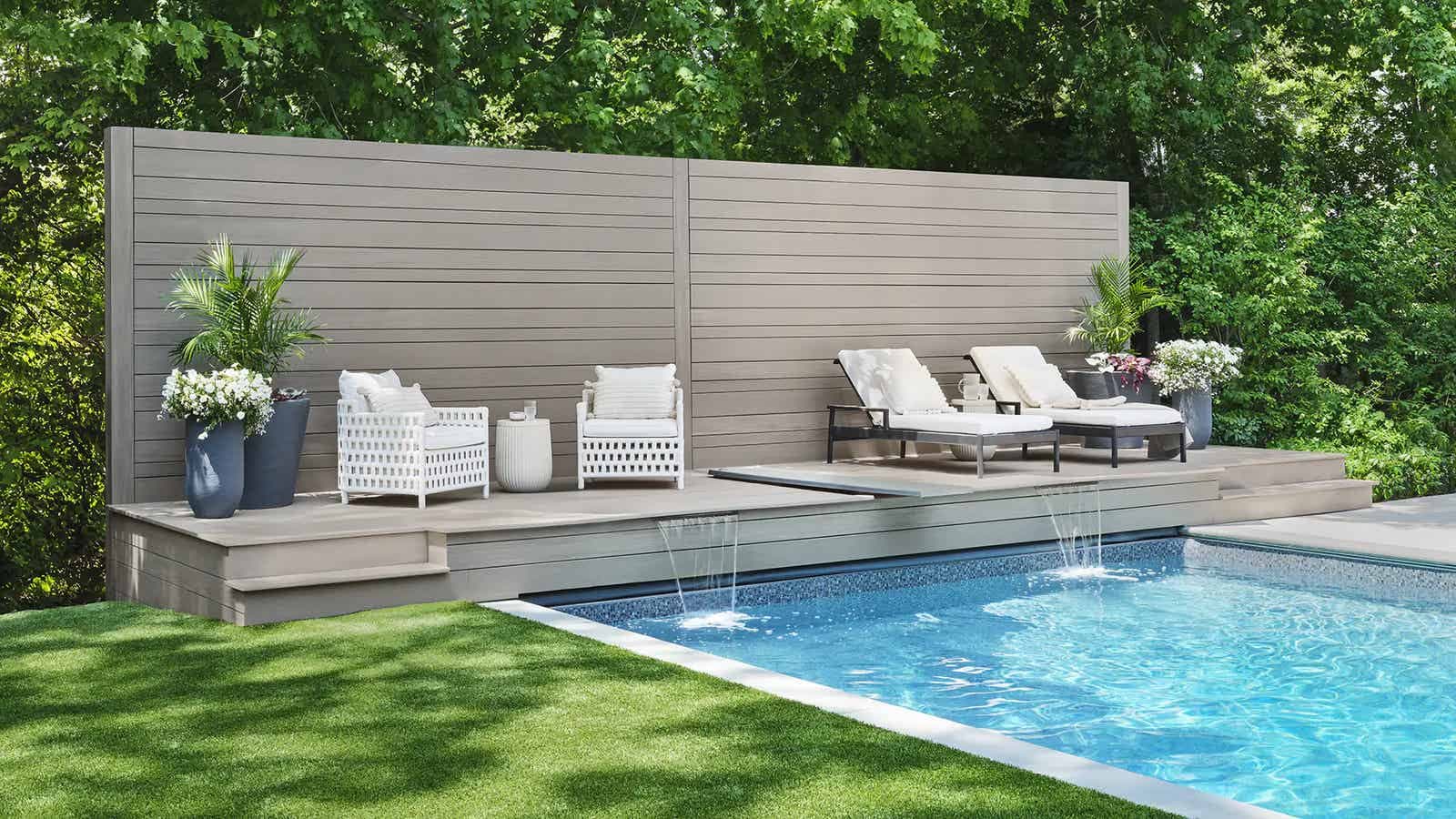
Why PVC Decking is Suited for Pool Terraces
PVC decking is engineered to perform in environments where moisture is a constant factor. Its 100% synthetic composition means it is waterproof to the core, making it a suitable choice for pool surrounds, splash zones, and other areas that experience frequent water exposure.
The advanced capping on many PVC boards provides a surface that resists stains from common poolside spills like grease or wine, and these can typically be cleaned with soap and water. This material characteristic contributes to a lower maintenance routine compared to traditional wood options, which often require regular sealing or staining to protect against water damage and fungal growth.
Additionally, PVC decking is known for being lighter than hardwood and some composite options, which can facilitate easier handling during installation. This can be a practical benefit for projects with specific access challenges or when working on elevated structures around the pool area.
Some PVC decking lines, such as TimberTech Azek, offer heat-mitigating color options, which can be an important consideration for pool decks that receive significant sun exposure, helping to keep the surface more comfortable underfoot. These boards are also often backed by manufacturer warranties that include fade and stain coverage, providing long-term assurance for your investment.
The material's resistance to rot and swelling makes it a strong candidate for pool terraces, where boards frequently live wet and are exposed to chlorinated or treated water. This inherent durability helps maintain the deck's appearance and structural integrity over time.
Key Planning Considerations for a Pool Terrace
When planning your PVC decking pool terrace in Helena, MT, several factors beyond material choice are crucial. Consider the overall design aesthetic, ensuring the decking complements your home and landscaping. Think about board widths and lengths to minimize seams and optimize visual flow.
Drainage is paramount around a pool. Ensure your deck design incorporates proper slope for water runoff away from the house and pool structure. Adequate ventilation beneath the deck is also important to prevent moisture buildup and maintain the longevity of the substructure, even with waterproof PVC boards.
Edge finishes and fascia boards are vital for a polished look and to conceal the substructure. PVC decking systems often offer matching fascia boards that provide a cohesive appearance. Plan for these details early to ensure all components are ordered together.
Finally, think about safety. While PVC decking offers some heat-mitigating options, always confirm the specific product's characteristics for wet traction and comfort underfoot, especially in direct sunlight. Consider the placement of pool equipment, landscaping, and pathways to create a functional and safe outdoor living space.
Worked Example: Designing a 12x20 Foot Pool Terrace
Let's consider a hypothetical pool terrace project in Helena, MT, measuring 12 feet by 20 feet. The homeowner wants to use TimberTech Azek Vintage Collection PVC decking in a 'Coastline' color for its modern aesthetic and heat-mitigating properties, laid perpendicular to the 20-foot dimension.
The total area is 12 feet * 20 feet = 240 square feet. Assuming a standard board width of 5.5 inches (approximately 0.458 feet), and planning for 20-foot long boards to run the full length of the deck, we would need 12 feet / 0.458 feet per board = approximately 26.2 boards. Since boards are purchased in full lengths, we'd need 27 boards, each 20 feet long. This calculation does not account for waste from cuts around obstacles or for end cuts, which should be factored in with a small percentage (e.g., 5-10%) for safety.
For fascia, let's assume a picture-frame border around the 12x20 foot deck. This would require two 20-foot fascia boards and two 12-foot fascia boards. If fascia boards are typically available in 12-foot or 20-foot lengths, we would purchase two 20-foot boards and two 12-foot boards. If only 20-foot lengths are available, we'd purchase four 20-foot boards and cut two down to 12 feet, creating some offcut material.
Hidden fasteners are generally recommended for a clean, seamless look with PVC decking.
Finally, consider the substructure. Even with waterproof PVC boards, the underlying framing (joists, beams, posts) must be designed to withstand the local climate conditions and support the deck's intended load, including furniture and people. Local building codes in Helena, MT, would dictate specific requirements for lumber treatment and structural design.
Maintaining Your PVC Decking Pool Terrace
One of the primary advantages of PVC decking for a pool terrace is its low maintenance profile. Regular cleaning typically involves sweeping or blowing off debris to prevent accumulation. For more thorough cleaning, especially after pool season or heavy use, a mild soap and water solution is often sufficient.
Always refer to the manufacturer's specific cleaning instructions for your chosen PVC decking product. While PVC is highly stain-resistant, prompt cleanup of spills, particularly those containing chemicals or dyes, is advisable. Avoid abrasive cleaners or high-pressure washers that could potentially damage the surface.
Unlike wood decks, PVC decking does not require sanding, staining, or sealing. This eliminates significant annual maintenance tasks, allowing more time to enjoy your pool terrace. Inspect your deck periodically for any loose fasteners or damage, and address these promptly to maintain the deck's integrity and safety.
Complementary Products for Your Pool Terrace
Beyond the decking boards themselves, consider other products that enhance the functionality and aesthetics of your pool terrace. For instance, a well-designed railing system can provide safety and define the space. Options range from low-maintenance composite railings to sleek aluminum designs.
Outdoor lighting, such as post cap lights or stair riser lights, can extend the usability of your pool terrace into the evening hours, enhancing ambiance and safety. Consider integrated lighting solutions that complement your decking material.
For areas around the pool not covered by decking, permeable pavers or decorative gravel can offer excellent drainage and a cohesive aesthetic. These materials can help manage water runoff and integrate the deck seamlessly with surrounding landscaping.
Finally, consider the right outdoor furniture. Choose pieces that are weather-resistant and comfortable, complementing the low-maintenance nature of your PVC deck. Ensure furniture has appropriate feet to avoid scratching or damaging the deck surface.
Before you order
- Confirm the specific PVC decking product is rated for wet-use and pool surrounds.
- Verify manufacturer installation guidelines for joist spacing and fastening around pools.
- Plan for adequate drainage and ventilation beneath the deck to prevent moisture issues.
- Select heat-mitigating color options if the deck will be in direct, prolonged sun.
- Factor in fascia boards and edge finishes for a complete, integrated look.
- Review local Helena, MT building codes for deck construction, especially around water features.
- Consider the weight of the PVC decking for rooftop or elevated pool deck applications.
- Plan for easy access for cleaning and maintenance around the pool area.
- Account for a waste factor (e.g., 5-10%) when calculating board quantities.
Confirm installation details, approved uses and warranty terms in the current instructions for the exact product and profile. Your installer should verify the substrate, structure and applicable project requirements.
This is a planning guide for projects in Helena, MT. Ask our team to confirm availability, delivery to your ZIP code and which branch can support your order.
Questions to help you decide
Is PVC decking slippery when wet around a pool?
While PVC decking is designed for wet environments, its slip resistance can vary by product and finish. Many manufacturers engineer their boards with textured surfaces to improve traction. It is always recommended to check the specific product specifications for slip resistance ratings and consider heat-mitigating color options, as cooler surfaces may also feel less slick. Maintaining a clean deck surface also helps.
Can PVC decking be installed directly over a concrete pool deck?
Installing PVC decking directly over concrete often requires a specific sleeper system or a raised substructure to allow for proper drainage and ventilation. Direct contact without an air gap can trap moisture and lead to issues. Always consult the manufacturer's installation guidelines for approved methods over concrete or existing surfaces to ensure proper performance and warranty validity.
How do I clean chlorine or pool chemical spills from PVC decking?
PVC decking is generally resistant to many common chemicals. For chlorine or pool chemical spills, it is best to rinse the area immediately with plenty of fresh water. For any residue, a mild soap and water solution, followed by a thorough rinse, is usually effective. Always refer to the specific PVC decking manufacturer's cleaning recommendations, as some chemicals might react differently with various capping formulations. Avoid harsh solvents or abrasive cleaners.
Ready to Plan Your PVC Decking Pool Terrace?
Request a material quote with your project dimensions, exact profile, and ZIP code. We can confirm current availability and service options for your Helena, MT project. Explore our PVC decking options to find the perfect fit for your pool area.
Request a material quote →