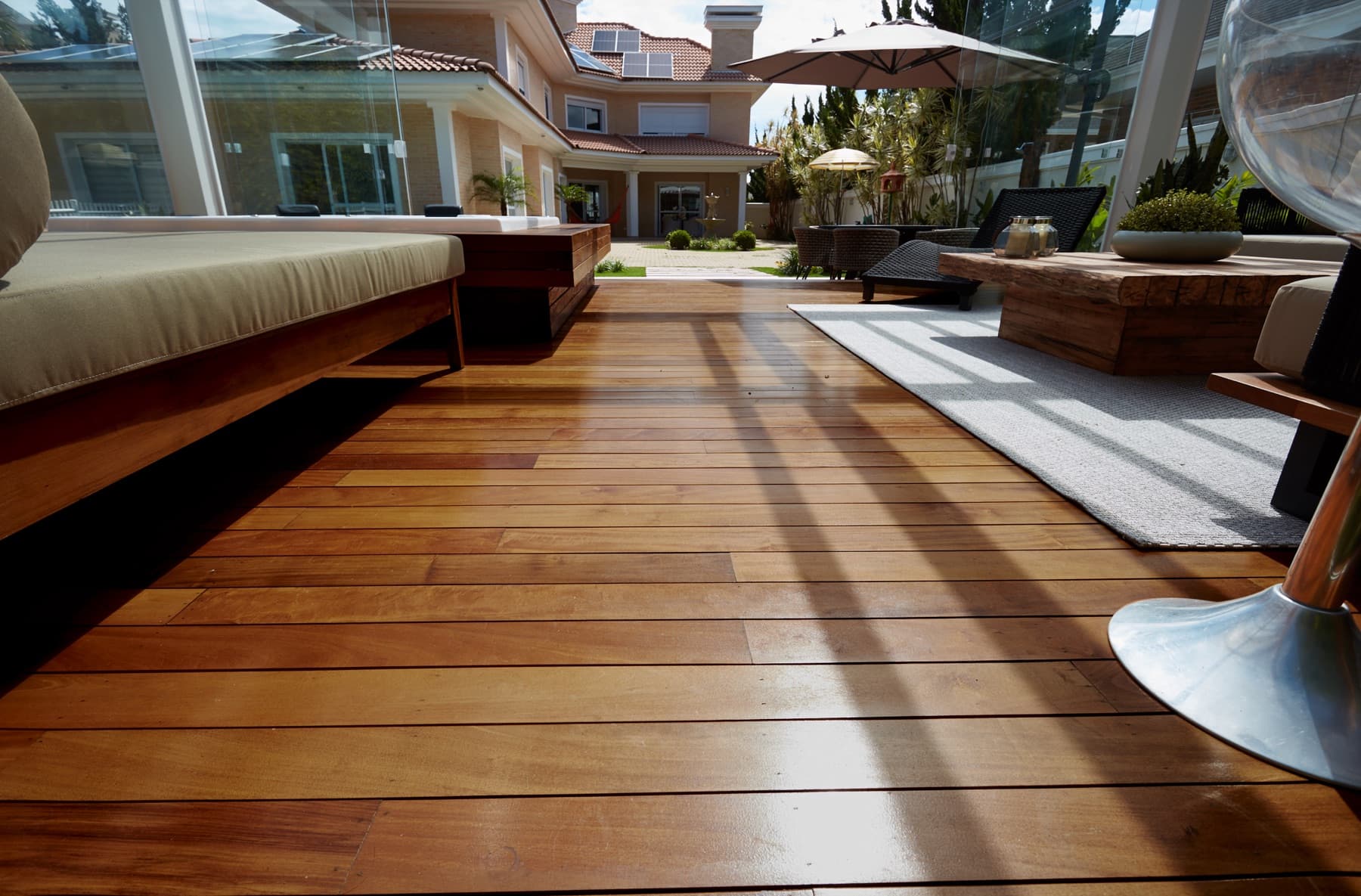
Evaluating Your Existing Deck Frame for Hardwood Decking
Before considering hardwood decking, a thorough inspection of your existing deck frame is essential. Hardwood, especially dense species like Ipe and Cumaru, is heavier than many common decking materials. Your frame must be structurally sound and capable of supporting the increased load.
Inspect all joists, beams, and support posts for signs of rot, insect damage, or excessive deflection. Pay close attention to areas where the frame connects to your house and where posts meet the ground. Any compromised structural elements will need repair or replacement before new decking can be installed. Consider consulting a local structural engineer or experienced contractor in Helena, MT, to assess the frame's integrity and ensure it meets current building standards for the intended load.
Understanding Hardwood Species for Decking Renovations
Lumber Plus offers a range of hardwood decking species, each with distinct characteristics. For renovation projects, Ipe and Cumaru are popular choices due to their durability and aesthetic appeal.
Ipe, also known as Brazilian walnut, is a dense hardwood known for its reddish-brown to olive-brown tones. It boasts minimal movement post-installation and natural resistance to weather changes, mold, and termites. Ipe is often considered a benchmark for outdoor decking due to its longevity and resilience. Its density and inherent properties make it a robust choice for demanding outdoor conditions.
Cumaru is another very durable tropical hardwood, resistant to termites and weather changes. It offers stiffness, strength, and extreme hardness. Cumaru shares many of Ipe's desirable qualities, providing a durable option for various applications. Both Ipe and Cumaru can be left untreated to weather to a silvery-gray patina or can be maintained with a UV-blocking sealer to preserve their original color.
Considering Helena's Climate: Winter Exposure and Sun
Helena, MT, experiences significant seasonal changes, including cold winters and warm, often sunny summers. Hardwood decking's natural properties can be advantageous in these conditions.
Ipe and Cumaru are known for their resistance to weather changes, including their ability to resist warping after moisture exposure. Their natural oils help protect them from cracking, which can be a benefit in areas with freeze-thaw cycles. For decks exposed to strong sun, these hardwoods can be maintained with an annual oil application to retain their color or allowed to silver naturally without impacting their structural integrity. When planning your renovation, consider the specific exposure of your deck to sun, snow, and rain.
Decking Profiles and Dimensions for Renovation
When renovating, the choice of decking profile and length is important. Hardwood decking is available in various dimensions. For instance, Ipe can be found in profiles from 1"x2" through 6"x6" and lengths from 3 to 24 feet. These options allow for flexibility in design and minimizing seams, depending on your deck's dimensions.
Consider how the new hardwood boards will integrate with your existing frame's joist spacing. Standard joist spacing may accommodate most hardwood decking profiles, but verifying compatibility is crucial. Planning your layout to optimize board lengths can also reduce waste and simplify installation.
Worked Example: Calculating Hardwood Decking for a Renovation
Let's consider a hypothetical deck renovation project in Helena, MT. Suppose your existing deck measures 12 feet by 16 feet, and the frame is confirmed to be sound. You've decided on Ipe decking in a standard 1x6 (nominal) profile, which typically measures approximately 0.75 inches thick by 5.5 inches wide (actual dimensions).
First, calculate the total deck area: 12 feet * 16 feet = 192 square feet. The area covered by one linear foot of a 5.5-inch wide board is 5.5 inches / 12 inches/foot = 0.4583 square feet. Therefore, to cover one square foot, you need approximately 1 / 0.4583 = 2.18 linear feet of board.
For 192 square feet, you would need 192 square feet * 2.18 linear feet/square foot = 418.56 linear feet. However, this is a theoretical minimum. You must account for cuts, waste, and potential board selection. Typically, adding 10-15% for waste is recommended. For this example, let's use 10% waste: 418.56 * 1.10 = 460.42 linear feet.
If you plan to use 16-foot long boards to minimize end-to-end seams across the 16-foot dimension of your deck, you would need approximately 460.42 linear feet / 16 feet/board = 28.77 boards. You would round this up to 29 full 16-foot boards. This calculation assumes a straightforward parallel layout. Complex patterns or diagonal layouts will require more waste material.
Before you order
- Have I thoroughly inspected my existing deck frame for structural integrity (joists, beams, posts, ledger board)?
- Have I consulted with a local professional if unsure about the frame's condition or load-bearing capacity?
- Which hardwood species best suits my aesthetic preference and budget (e.g., Ipe, Cumaru, Garapa, Tigerwood)?
- What are the actual dimensions (thickness and width) of the chosen hardwood decking profile?
- What is the total square footage of my deck surface?
- How will the chosen board lengths minimize waste and optimize the layout on my existing frame?
- Do I prefer the hardwood to weather naturally to a silvery-gray, or will I commit to annual oiling to retain its original color?
- Have I considered the specific exposure of my deck to sun, snow, and moisture in Helena, MT?
- Have I accounted for necessary waste when calculating the quantity of decking boards needed?
- What fastening method will I use (hidden fasteners or face-fastening), and is it compatible with the hardwood species and installation guidelines?
- Have I planned for proper ventilation beneath the deck to ensure longevity of both the frame and new decking?
Confirm installation details, approved uses and warranty terms in the current instructions for the exact product and profile. Your installer should verify the substrate, structure and applicable project requirements.
This is a planning guide for projects in Helena, MT. Ask our team to confirm availability, delivery to your ZIP code and which branch can support your order.
Questions to help you decide
How long can I expect hardwood decking like Ipe or Cumaru to last in Helena, MT?
With proper installation and care, Ipe decking can last up to 75 years, and Cumaru decking can last over 25 years. These lifespans are significantly longer than many other decking materials, making them a durable choice for Helena's climate. Regular cleaning and optional oiling can help maintain their appearance and extend their life.
Does hardwood decking require special tools for installation during a renovation?
Due to their density, hardwoods like Ipe and Cumaru often require specialized tools for cutting and fastening, such as carbide-tipped saw blades and pre-drilling for screws, especially if face-fastening. Professional installation is often recommended to ensure proper techniques are used and to achieve the best results.
Can I leave my hardwood deck untreated, or is sealing necessary in Helena's climate?
You can leave hardwoods like Ipe and Cumaru untreated, and they will naturally weather to a beautiful silvery-gray patina over time. This process does not compromise their structural integrity. If you prefer to maintain the wood's original reddish-brown or olive-brown color, applying a UV-blocking sealer annually is recommended to protect it from the sun and retain its vibrant tones.
Plan Your Hardwood Decking Renovation
Ready to upgrade your Helena, MT, deck with the lasting beauty of hardwood? Request a material quote with your project dimensions, exact profile preferences, and ZIP code to confirm current availability and service options. Explore our full range of hardwood decking at /decking/hardwood.
Request a material quote →