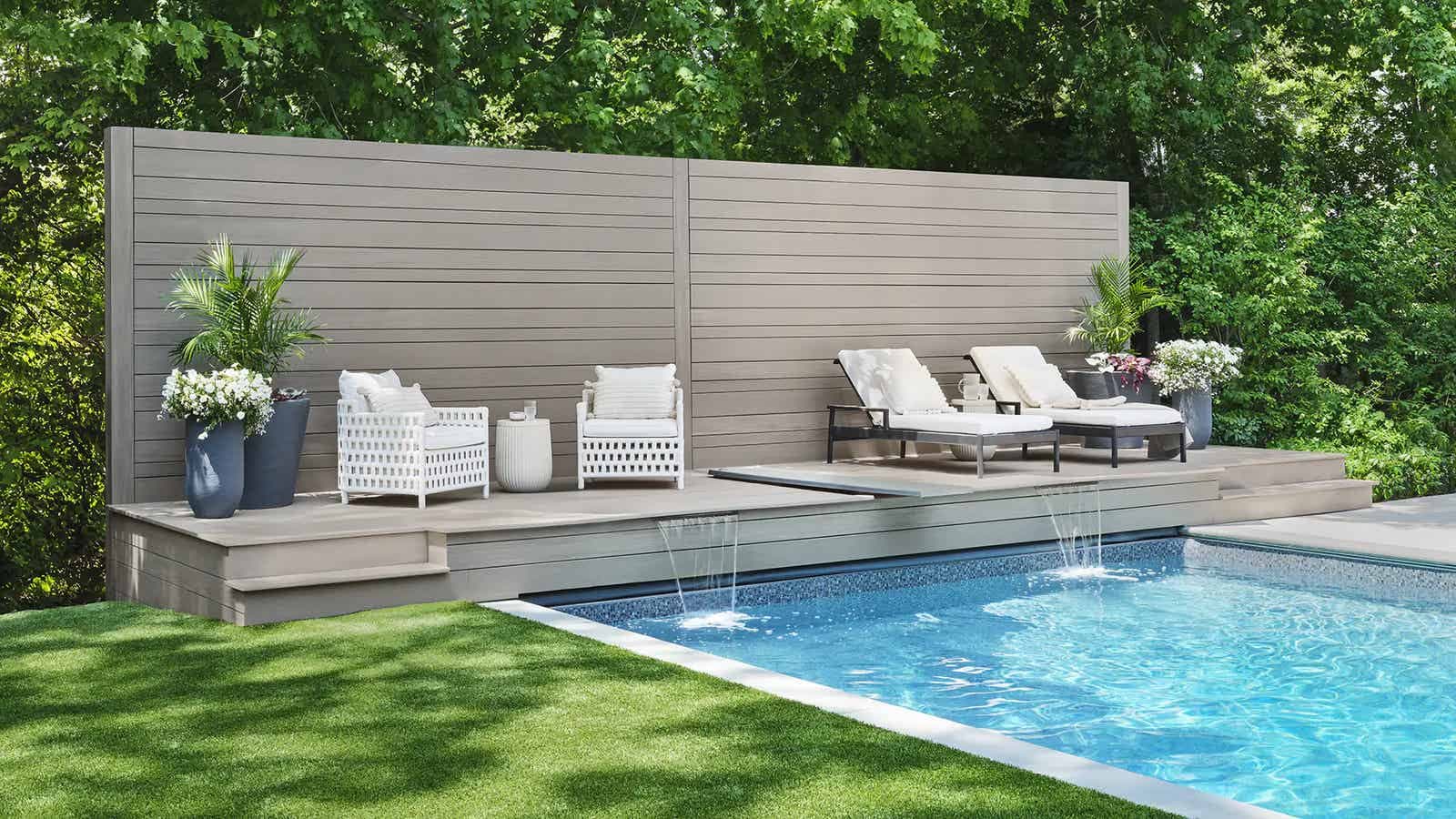
Why PVC Decking for a Pool Terrace?
PVC (polyvinyl chloride) decking is a 100% synthetic material, meaning it contains no wood fibers. This fundamental difference is key to its performance in wet applications like pool terraces. Where wood and even some wood-composite materials can be susceptible to swelling, staining, or rot when constantly exposed to moisture, PVC remains stable.
For pool surrounds, splash zones, and even areas exposed to salt spray, PVC decking is designed to withstand continuous wet conditions without degradation. This makes it a frequently specified material for areas where boards are expected to be wet for extended periods, providing a durable and long-lasting surface around your pool. The material's capped polymer surface also helps it shed grease and wine, allowing for cleaning with soap and water.
Furthermore, PVC decking is often lighter than comparable hardwood or composite options. This can translate to easier handling during installation and potentially faster project completion, which can be an advantage for both DIY enthusiasts and professional installers.
Understanding PVC Decking Profiles and Appearance
PVC decking is available in various collections, offering a range of aesthetics to complement your home and landscape. Manufacturers like TimberTech Azek produce full PVC boards with advanced capping, designed to mimic the look of natural wood with deep grain patterns and varied color options. Collections such as Vintage, Landmark, and Harvest provide a selection of finishes that can achieve a sophisticated appearance.
When selecting PVC decking, consider the desired aesthetic for your pool area. Do you prefer a classic wood-like appearance or a more contemporary solid color? The color and finish of the decking can significantly impact the overall feel of your outdoor space. Some PVC options also offer heat-mitigating color choices, which can be a consideration for surfaces exposed to direct sunlight.
Planning for Water Management and Drainage
Even with a waterproof material like PVC decking, proper water management and drainage beneath the deck surface remain crucial.
Your deck design should incorporate appropriate spacing between boards to allow water to drain through and away from the substructure. Consult the specific manufacturer's installation guidelines for recommended board spacing. Additionally, consider the slope of the ground beneath the deck to direct water away from your home's foundation and other structures.
Installation Considerations for Pool Terraces
The installation of PVC decking around a pool requires careful attention to detail. Ensure the substructure is sound, level, and built to withstand the specific loads anticipated for a pool area, including foot traffic and potential furniture or planters. While PVC decking is a low-maintenance surface, the structural integrity beneath it is paramount.
Fastening methods are also important. Many PVC decking systems are compatible with hidden fasteners, which create a clean, seamless surface without visible screws. This can be particularly desirable around a pool where bare feet are common. Always follow the manufacturer's specific instructions for fastening to ensure proper board stability and performance.
Edge finishing is another key aspect. Planning for fascia boards or other trim elements that complement the decking material will provide a polished look and help protect the edges of your deck. Confirm the availability of matching trim pieces when selecting your main decking boards.
Hypothetical Project Example: Frankfort Pool Terrace
Consider a hypothetical pool terrace project in Frankfort, KY, where the homeowner desires a 20-foot by 15-foot rectangular deck surrounding one side of their inground pool. They choose TimberTech Azek Vintage Collection PVC decking, with boards measuring 12 feet long and 5.5 inches wide, and a complementary fascia board.
To calculate the number of decking boards needed for the 20-foot length, assuming a standard perpendicular layout, each 12-foot board would cover 12 feet. For a 20-foot run, boards would need to be cut or joined. If using 12-foot boards, two boards would be needed for the 20-foot length (12 feet + 8 feet from another board). Since boards are sold in full lengths, a purchase of 33 boards at 12 feet each would provide 396 linear feet. This would cover 181.5 square feet (33 boards * 12 feet/board * 5.5 inches/board / 12 inches/foot) which is slightly more than the 300 square feet (20 feet x 15 feet) needed. Therefore, for a 20x15 area, you would need to plan for cuts and waste. A more precise calculation for a 20x15 area with 12-foot boards and a 5.5-inch width, laid perpendicular to the 15-foot dimension, would involve 33 boards for the 15-foot width. For the 20-foot length, you'd need 20 feet / 12 feet per board = 1.67 lengths. So, you'd need to buy 2 full 12-foot boards per 5.5-inch strip. Total boards: 33 strips * 2 boards/strip = 66 boards of 12 feet each. This would yield significant offcuts, some of which might be reusable for shorter sections or a picture frame border. Always factor in waste for cuts and potential future repairs.
For fascia, if the deck has exposed edges on all four sides, the perimeter is (20 + 15) * 2 = 70 linear feet. If fascia boards are 12 feet long, you would need 70 / 12 = approximately 6 boards. It is always recommended to add a few extra boards for cuts and potential damage during installation. This example highlights the importance of detailed measurements and a cutting plan before ordering materials.
Maintenance for PVC Decking Pool Terraces
One of the significant advantages of PVC decking for pool areas is its low maintenance. The material is designed to resist staining and fading, and its non-porous surface makes it easy to clean. Regular cleaning with soap and water is typically sufficient to remove dirt, pool chemicals, and general debris. For more stubborn stains, consult the manufacturer's specific cleaning recommendations to ensure compatibility with the decking material.
Avoid using harsh abrasive cleaners or pressure washers at high settings, as these could potentially damage the surface finish. While PVC decking is durable, proper care helps preserve its appearance and longevity. Regularly sweep or rinse the deck to prevent the buildup of leaves and other organic matter, which can lead to superficial stains if left for extended periods.
Before you order
- Assess your pool area's specific exposure to water, sun, and chemicals.
- Review PVC decking product lines for desired aesthetics (color, grain pattern).
- Confirm manufacturer's guidelines for board spacing and substructure requirements.
- Plan for proper drainage and ventilation beneath the deck surface.
- Determine preferred fastening method (hidden or face-fastened).
- Account for matching fascia and trim pieces in your material order.
- Calculate material quantities accurately, including waste factor for cuts.
- Understand the recommended cleaning and maintenance procedures for your chosen PVC decking.
Confirm installation details, approved uses and warranty terms in the current instructions for the exact product and profile. Your installer should verify the substrate, structure and applicable project requirements.
This is a planning guide for projects in Frankfort, KY. Ask our team to confirm availability, delivery to your ZIP code and which branch can support your order.
Questions to help you decide
Is PVC decking slippery when wet?
However, any wet surface can be slippery. It is important to exercise caution around pool areas. Some manufacturers offer specific surface treatments or textures designed to enhance slip resistance, which can be explored during material selection.
How does PVC decking withstand chlorine or saltwater?
PVC decking's 100% synthetic composition makes it highly resistant to the corrosive effects of chlorine and saltwater. Unlike wood-based materials that can degrade or show wear from chemical exposure, PVC is designed to maintain its integrity in these environments, making it a suitable choice for pool surrounds.
Can PVC decking get hot in direct sunlight?
Like many outdoor materials, PVC decking can absorb heat from direct sunlight. However, some manufacturers offer heat-mitigating color options or lighter shades that are designed to remain cooler to the touch. When selecting your decking, consider the sun exposure of your pool terrace and explore these options if surface temperature is a concern.
Request a Material Quote for Your Pool Terrace Project
Ready to plan your PVC decking pool terrace in Frankfort, KY? Contact us with your project dimensions, desired PVC decking profile, and ZIP code. We can help you confirm current availability and service options for your materials. Get a quote and take the next step towards your new pool deck.
Request a material quote →