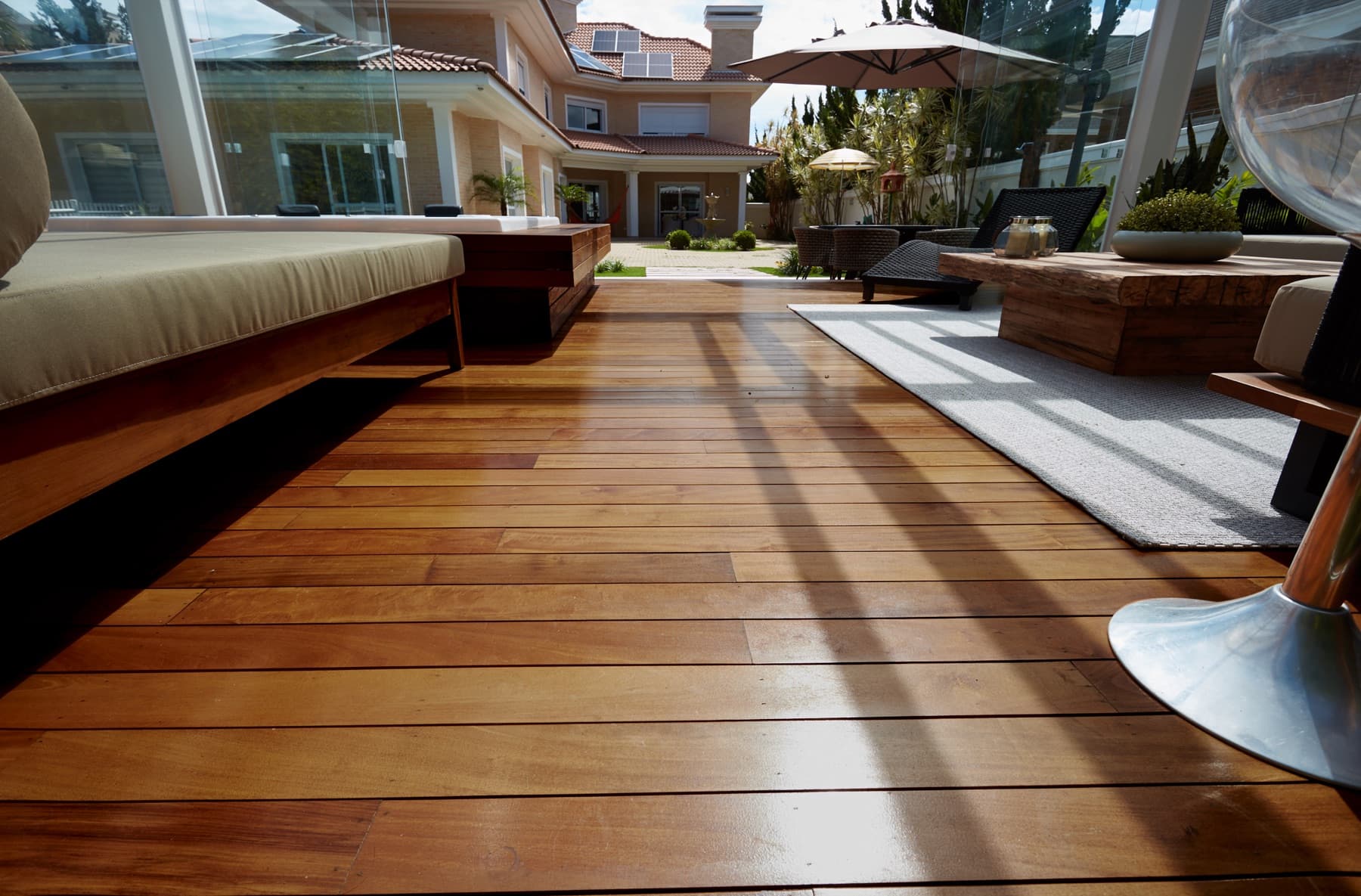
Evaluating Your Existing Deck Frame
Before considering any new decking material, a thorough inspection of your existing deck frame is essential. This includes checking the condition of joists, beams, posts, and ledger boards. Look for signs of rot, insect damage, cracks, or excessive sagging. Even if the surface decking appears worn, the underlying structure might be sound enough for reuse, provided it meets current building standards.
In Frankfort, KY, where seasonal weather variations can impact wood, pay close attention to areas exposed to moisture, such as post bases and ledger board connections. Any compromised structural elements must be repaired or replaced to ensure the safety and longevity of your renovated deck. Consulting a local structural engineer or experienced contractor can provide a professional assessment and confirm the frame's suitability for new hardwood decking.
Hardwood Species for Deck Renovations
Lumber Plus offers a selection of Brazilian hardwood species known for their exceptional durability and aesthetic appeal, ideal for renovation projects. Two prominent options are Ipe and Cumaru.
It exhibits minimal movement post-installation and offers natural resistance to weather changes, mold, and termites. Its color ranges from reddish-brown to olive-brown, developing a silvery-gray patina if left untreated.
It is also resistant to termites and weather changes and offers stiffness, strength, and extreme hardness. Like Ipe, it can be left untreated to weather to a silvery-gray or maintained with a UV-blocking sealer to retain its original color. (S1)
Considering the Deck's Exposure and Climate
Frankfort, KY, experiences a range of weather conditions throughout the year, from humid summers to cold winters. These conditions play a significant role in how your decking material performs. Hardwood species like Ipe and Cumaru are well-suited for such environments due to their natural density and resistance to rot, insects, and warping. (S1)
For decks with significant sun exposure, both Ipe and Cumaru will naturally weather to a silvery-gray if not regularly oiled with a UV-blocking sealer. In shaded areas, this weathering process might be slower or appear slightly different. The inherent properties of these hardwoods mean they resist structural degradation regardless of whether they are oiled or allowed to patina. (S2)
Planning for Ventilation and Drainage
Proper ventilation and drainage are crucial for any deck, especially when renovating with dense hardwoods. Adequate airflow beneath the deck helps prevent moisture buildup, which can lead to issues for both the decking and the underlying frame. Ensure that your deck design allows for sufficient air circulation and that water can drain away freely from the structure.
If your existing deck design has poor ventilation, a renovation is an ideal time to address these issues. This might involve clearing obstructions, ensuring proper spacing between deck boards, or even modifying the skirting to improve airflow. These measures contribute to the long-term health of your hardwood deck.
Worked Example: Replacing Decking on an Existing Frame
Let's consider a hypothetical deck renovation project in Frankfort, KY. Imagine you have an existing deck frame that measures 12 feet by 16 feet, and after inspection, it's deemed structurally sound for new decking. You've chosen Ipe hardwood decking in a 1x6 (nominal) profile, which typically measures 3/4 inch thick by 5.5 inches wide. The project requires replacing all deck boards.
First, calculate the total deck area: 12 feet * 16 feet = 192 square feet. For a typical installation, assume a small gap between boards for drainage and expansion. To estimate the number of 1x6 boards needed, we'll calculate linear footage. Each 12-foot length of a 5.5-inch wide board covers 5.5 inches / 12 inches/foot = 0.458 feet of width. So, 16 feet (deck length) / 0.458 feet/board = approximately 34.9 boards. Since boards are typically sold in even lengths, and to account for cuts and waste, you would round up and add a waste factor (e.g., 10-15%).
At 5.5 inches per board, 12 feet * 12 inches/foot = 144 inches. 144 inches / 5.5 inches/board = 26.18 boards. You would likely order 27 or 28 boards of 16-foot length, plus a waste factor. If using shorter lengths with staggered seams, the calculation becomes more complex. Always confirm available lengths and profiles when requesting a quote. For this example, let's assume 16-foot lengths are available and you order 30 boards to account for cuts and any minor defects. This provides approximately 30 * 16 = 480 linear feet of decking. Always consult with a supplier for exact quantities based on your specific layout and chosen board lengths.
Complementary products could include hidden fastening systems compatible with hardwood, appropriate sealers or oils if maintaining the original color, and hardwood-specific cleaning solutions. Consider coordinating your decking order with fascia boards or stair treads if your renovation includes these elements.
Before you order
- Inspect existing deck frame for structural integrity (joists, beams, posts, ledger board).
- Identify any signs of rot, insect damage, or structural weakness.
- Consult a local professional for a structural assessment if unsure.
- Determine if the existing frame can support the weight and fastening requirements of hardwood.
- Choose a hardwood species (e.g., Ipe, Cumaru) based on desired appearance, durability, and budget.
- Consider the deck's exposure to sun, rain, and humidity in Frankfort, KY.
- Plan for adequate ventilation and drainage beneath the deck.
- Measure the deck dimensions accurately for material estimation.
- Account for waste factor (10-15%) when calculating board quantities.
- Select appropriate fastening methods (hidden or face-fastened) compatible with hardwood.
- Decide on a finish (oiled for color retention or natural gray patina).
- Identify complementary products like fascia, stair treads, and cleaning supplies.
Confirm installation details, approved uses and warranty terms in the current instructions for the exact product and profile. Your installer should verify the substrate, structure and applicable project requirements.
This is a planning guide for projects in Frankfort, KY. Ask our team to confirm availability, delivery to your ZIP code and which branch can support your order.
Questions to help you decide
Can I use my existing deck frame for hardwood decking?
It depends on the condition and structural integrity of your current frame. A professional inspection is highly recommended to check for rot, insect damage, or any weaknesses. Hardwood decking is dense and durable, so the frame must be robust enough to support its weight and provide a stable foundation.
What maintenance does hardwood decking require in Frankfort, KY?
Hardwood decking, like Ipe or Cumaru, requires relatively low maintenance. A wash once a year is typically sufficient. If you wish to preserve the original rich color, an annual application of a UV-blocking oil is recommended. If left untreated, the wood will naturally weather to a beautiful silvery-gray patina with no structural difference. (S2)
How do I choose between Ipe and Cumaru for my renovation?
Both Ipe and Cumaru are excellent choices for durability. Ipe is often considered the benchmark for extreme longevity and hardness, with a slightly higher Janka rating. Cumaru offers similar resilience at a different price point and is also highly resistant to rot and insects. Your choice may come down to specific color preferences, budget, and desired lifespan. (S1, S2)
Ready to Transform Your Frankfort Deck?
Request a material quote today. Provide your project dimensions, desired hardwood profile, and ZIP code to confirm current availability and service options for your Frankfort, KY, deck renovation.
Request a material quote →