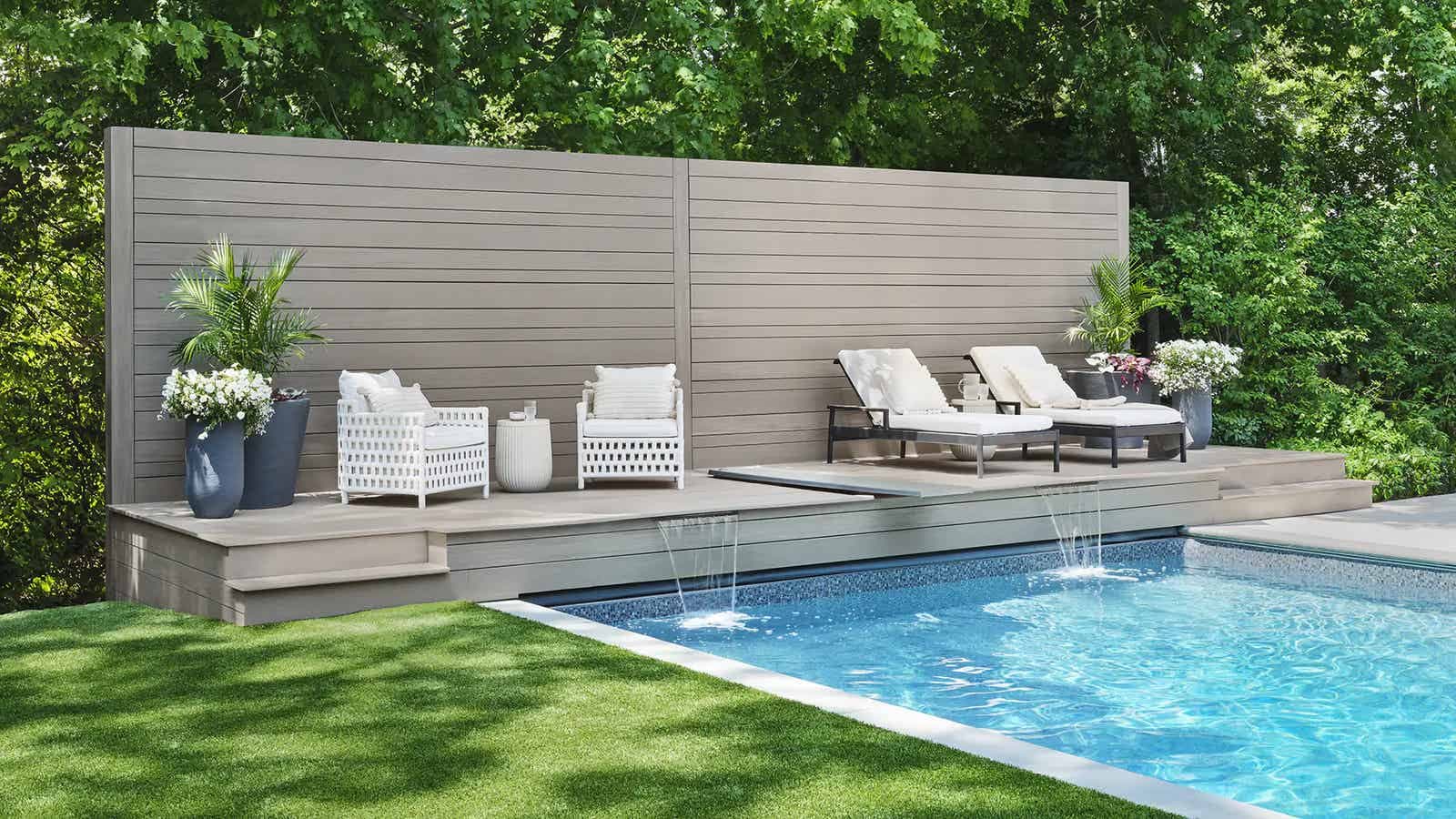
Why Consider PVC Decking for a Pool Terrace?
A pool terrace experiences constant exposure to water, chlorine, and direct sunlight. These conditions can challenge many decking materials. PVC decking, being 100% synthetic, is engineered to resist moisture absorption, which is a key advantage in splash zones.
Unlike wood or some composite materials that contain wood fibers, PVC boards do not swell, rot, or splinter due to water exposure. This makes them a candidate for areas where boards frequently get wet, such as around a pool. The material is also designed to shed grease and wine, which can be useful in an area prone to spills during outdoor entertaining. Many PVC products are also capped polymers, which means they have an advanced outer layer designed for enhanced performance.
The lighter weight of PVC compared to some hardwoods and composites can also make handling and installation potentially faster, which might be a factor for certain project logistics.
Key Characteristics of PVC Decking for Wet Environments
When planning a pool terrace, understanding the specific properties of PVC decking is crucial. One significant feature is its waterproof core. This means the boards themselves are not susceptible to water damage, making them suitable for areas with standing water or frequent splashing.
Another aspect to consider is the surface's ability to shed liquids. Capped polymer PVC boards are designed to be easy to clean, often requiring just soap and water for common spills. This can be a practical benefit around a pool where sunscreen, drinks, and food might be present.
Some PVC decking lines, such as TimberTech Azek's Vintage, Landmark, and Harvest collections, are noted for their deep wood-look aesthetics. These options allow for a desired visual style while retaining the functional benefits of PVC in a wet environment.
It is important to note that while PVC is resistant to moisture, proper drainage and ventilation beneath the deck are still essential to prevent water from pooling and to maintain the integrity of the substructure.
Planning Your Pool Terrace Layout and Dimensions
Before ordering materials, accurate measurements of your pool terrace area are critical. Consider the overall dimensions of the space, including any irregular shapes around the pool itself. A simple rectangular area is straightforward, but curves or custom cut-outs will require precise planning.
For a hypothetical 10-foot by 15-foot rectangular pool terrace, you would need 150 square feet of decking. If using 12-foot long PVC boards that are 5.5 inches wide (a common size), each board covers approximately 5.5 square feet. Dividing 150 by 5.5 suggests about 27-28 boards. However, this is an area-equivalent calculation. You must account for cuts and potential waste. For instance, if you lay boards perpendicular to the 10-foot side, each 12-foot board can yield one 10-foot section with a 2-foot offcut. It is always recommended to add 10-15% for waste and future repairs.
Consider the direction of the boards. Running them parallel to the longest side can minimize seams, while running them perpendicular might create a different visual effect or simplify drainage. Also, plan for fascia boards or edge finishes around the perimeter of the deck to create a clean, finished look. These will be separate purchases from the main deck boards.
Selecting Edge Finishes and Fasteners
The edges of your pool terrace will be visible and often come into contact with bare feet. Therefore, selecting appropriate edge finishes is important. PVC decking systems typically offer matching fascia boards or trim pieces that can be used to cover the rim joists and create a cohesive look around the perimeter.
For fastening, hidden fastener systems are frequently used with PVC decking to create a smooth, uninterrupted surface. These systems typically involve clips that secure the boards to the joists from the side, leaving no visible screws on the deck surface. If face-fastening is chosen, ensure the screws are specifically designed for PVC and installed according to manufacturer guidelines to avoid splitting or buckling.
Always confirm compatibility between your chosen PVC decking boards and the fastening system. Incorrect fasteners can compromise the stability and appearance of your deck.
Maintenance Considerations for Poolside PVC Decking
While PVC decking is considered low-maintenance, a pool terrace environment still requires attention. Regular cleaning with soap and water is generally recommended to remove dirt, pool chemicals, and any spills. Promptly cleaning spills, especially those containing oils or strong dyes, can help maintain the appearance of the deck.
It is crucial to verify the compatibility of any cleaning products with your specific PVC decking product. Abrasive cleaners or harsh chemicals not approved by the manufacturer could potentially damage the surface finish. Always test a small, inconspicuous area first.
Although PVC resists moisture, ensuring good ventilation under the deck helps prevent moisture buildup that could affect the substructure. Regularly clear any debris from between boards and around the deck perimeter to facilitate drainage and airflow.
Before you order
- Confirm the exact dimensions of your pool terrace area, including any curves or cut-outs.
- Review available PVC decking profiles and colors, considering how they complement your home and pool area.
- Determine the desired board layout (e.g., parallel, perpendicular, diagonal) and calculate material needs, adding for waste.
- Select appropriate fascia or trim for the deck edges.
- Choose a compatible fastening system (hidden or face-fastened) and confirm quantities.
- Plan for adequate ventilation and drainage beneath the deck.
- Familiarize yourself with the manufacturer's specific cleaning and maintenance recommendations for your chosen PVC product.
- Consider the overall project timeline and consult with any installers regarding lead times and installation specifics.
Confirm installation details, approved uses and warranty terms in the current instructions for the exact product and profile. Your installer should verify the substrate, structure and applicable project requirements.
This is a planning guide for projects in Cheyenne, WY. Ask our team to confirm availability, delivery to your ZIP code and which branch can support your order.
Questions to help you decide
Is PVC decking slippery when wet, especially around a pool?
However, any wet surface can present a slip risk. It is always prudent to exercise caution around wet areas, especially a pool terrace. Some manufacturers offer specific surfaces or finishes that might provide additional grip; check product specifications.
Can PVC decking get hot in the sun, particularly in a sunny location like Cheyenne, WY?
Like many outdoor materials, PVC decking can absorb heat from direct sunlight. The degree of heat retention can vary by color and specific product formulation. Lighter colors generally tend to be cooler than darker colors. Some manufacturers offer 'heat-mitigating color options' in their PVC lines, which are designed to reduce surface temperature. It is advisable to consider lighter shades if heat absorption is a primary concern for your pool terrace.
How do I clean my PVC pool terrace deck?
Most PVC decking can be cleaned with a soft-bristle brush, mild soap, and water. For specific stains, consult the manufacturer's cleaning guide for your particular product, as recommended cleaning agents can vary. Avoid using harsh chemicals, abrasive cleaners, or high-pressure washers that could damage the surface. Regular cleaning helps prevent the buildup of dirt, pool chemicals, and organic matter.
Ready to Plan Your PVC Pool Terrace Deck?
Request a material quote today. Provide your project dimensions, desired PVC decking profile, and ZIP code to confirm current availability and service options. Explore our full range of <a href="/decking/pvc">PVC decking</a>, <a href="/decking">all decking options</a>, <a href="/decking/hardwood">hardwood decking</a>, <a href="/decking/hardwood/ipe">IPE decking</a>, and <a href="/decking/composite">composite decking</a>.
Request a material quote →