Assess Your Existing Deck Frame and Substructure
Before selecting any new decking material, a thorough inspection of your existing deck frame is essential. The structural integrity of joists, beams, and ledger boards must be confirmed. Hardwood decking, particularly dense species like Ipe or Cumaru, is heavier than many common decking materials. Your frame must be capable of supporting this additional weight, along with anticipated live loads from furniture, snow, and occupants.
Check for any signs of rot, insect damage, or excessive deflection in the current framing. Ensure all fasteners are secure and that the frame is level and plumb. Any compromised components should be repaired or replaced before new decking is installed. This foundational assessment is critical for the safety and longevity of your renovated deck.
Understanding Hardwood Decking: Ipe and Cumaru
When considering hardwood for your Cheyenne deck renovation, two species frequently stand out for their durability and performance: Ipe and Cumaru. Both are tropical hardwoods known for their density and natural resistance to environmental challenges.
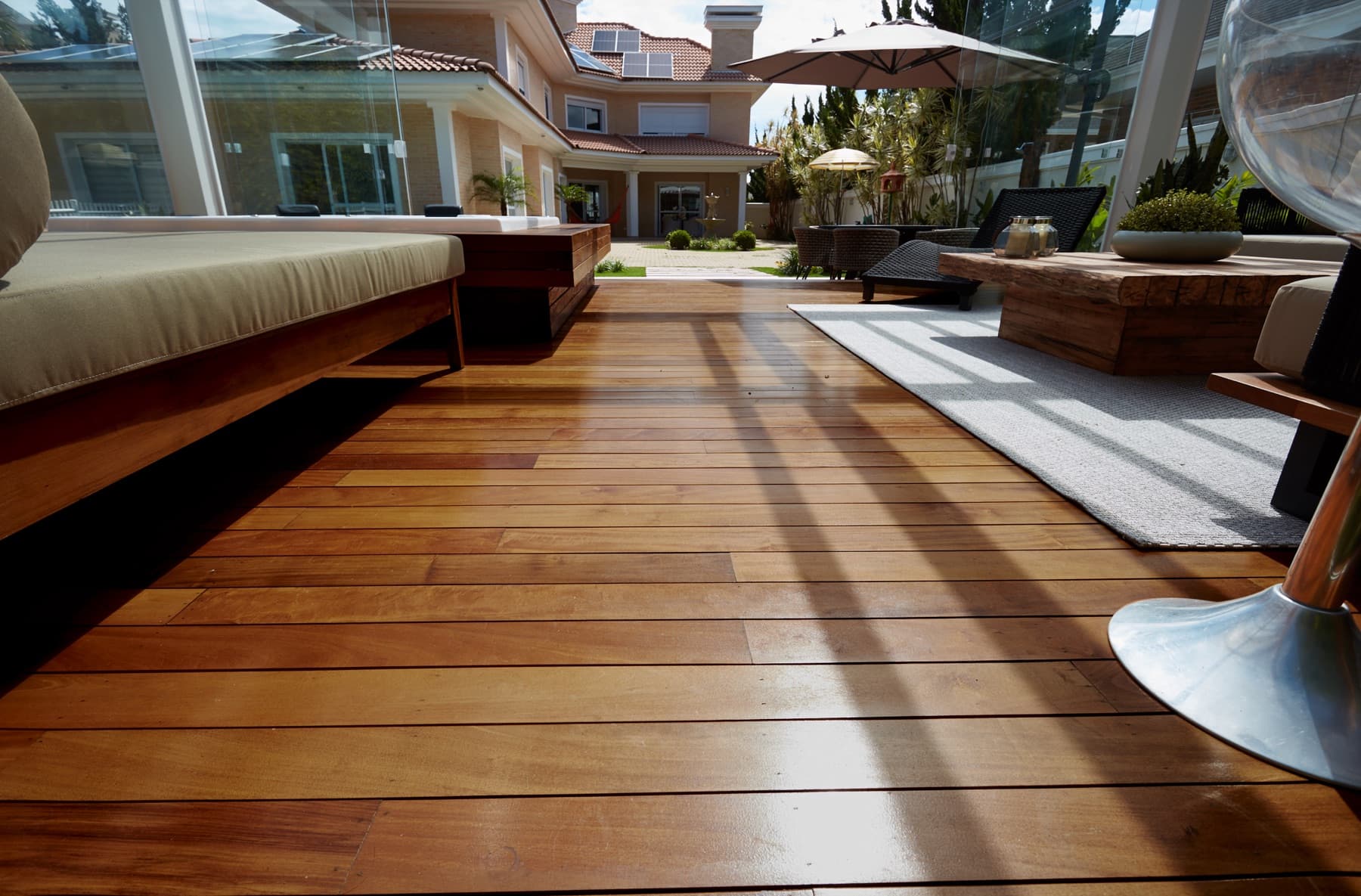
Ipe, also known as Brazilian walnut, is a dense, durable hardwood native to South America. It ranges from reddish-brown to olive-brown. Ipe is recognized for its minimal movement post-installation and natural resistance to weather changes, mold, and termites. It is considered a benchmark for outdoor hardwood decking.
Cumaru, another tropical hardwood from Brazil, is also very durable and resistant to termites and weather changes. It offers stiffness, strength, and extreme hardness. Cumaru has a natural resistance to insects, rot, and fungi. When worked, Cumaru can emit a scent of cinnamon and vanilla.
Both Ipe and Cumaru are known for their ability to withstand harsh conditions, making them suitable for outdoor applications in various climates, including areas with significant temperature fluctuations or winter exposure.
Considering Cheyenne's Climate and Hardwood Performance
Cheyenne, Wyoming, experiences distinct seasons, including cold winters with snow and hot, often dry summers. These conditions require decking materials that can withstand thermal expansion and contraction, moisture cycles, and UV exposure.
Hardwood species like Ipe and Cumaru are inherently dense, which contributes to their stability and resistance to warping or cracking under varied weather conditions. Their natural oils and cellular structure help protect them from moisture absorption and subsequent damage, a key factor for durability in a climate with freeze-thaw cycles. While they can be left untreated to weather to a silvery-gray patina, applying a UV-blocking sealer can help preserve their original color.
Choosing Board Profiles and Lengths
Hardwood decking is available in various profiles and lengths. Common profiles for Ipe and Cumaru typically range from 1"x2" to 6"x6" dimensions, with lengths available from 3 to 24 feet. The choice of board width can influence the aesthetic of your deck and the number of seams.
When renovating, consider how new board dimensions will integrate with your existing subframe. Wider boards may require fewer fasteners and less installation time but might also highlight any inconsistencies in the frame. Longer boards can reduce the number of butt joints, creating a more continuous appearance. Plan your layout carefully to minimize waste and optimize the visual flow of the deck surface.
Worked Example: Renovating a 10x12-foot Deck in Cheyenne
Let's consider a hypothetical renovation of an existing 10-foot by 12-foot deck in Cheyenne, assuming the existing pressure-treated pine frame is in good condition and can support the weight of hardwood. The homeowner wants to replace the old decking with new Ipe boards.
**Assumptions:**
1. Deck dimensions: 10 feet (width) x 12 feet (length) = 120 square feet.
2. Decking material: Ipe, 1x6 (nominal) profile, actual dimensions approximately 0.75 inches thick by 5.5 inches wide.
3. Board lengths: Available in various lengths; for this example, we'll assume 12-foot boards are preferred to run the full length of the deck, minimizing butt joints.
4.
**Calculation Steps:**
1. **Determine number of boards across the width:** The deck is 10 feet (120 inches) wide. Each 1x6 board is 5.5 inches wide.
2. **Number of boards:** 120 inches / 5.625 inches per board = approximately 21.33 boards. Since you can't have a fraction of a board, you'll need 22 full boards to cover the width, with the last board potentially ripped to fit.
3. **Total linear footage:** 22 boards x 12 feet/board = 264 linear feet.
4. **Order Quantity:** To account for cuts, waste, and potential future repairs, it's prudent to order 10-15% extra. For 264 linear feet, an additional 10% would be 26.4 linear feet, bringing the total to approximately 290.4 linear feet. Round up to the nearest full board length, so 25 boards of 12 feet (300 linear feet) would be a reasonable order.
This example provides a starting point. Always measure your specific deck precisely and consult with a professional for exact material takeoff, considering specific board lengths, desired layout patterns (e.g., diagonal, picture frame borders), and any required trim or fascia boards.
Before you order
- Inspect existing deck frame for structural integrity, rot, and insect damage.
- Confirm the frame can support the weight of hardwood decking.
- Choose between Ipe, Cumaru, or other hardwoods based on durability, appearance, and budget.
- Consider Cheyenne's climate (winter exposure, sun, moisture) when selecting materials.
- Determine preferred board profile (width) and length to optimize layout and minimize waste.
- Plan for proper board spacing for ventilation and drainage.
- Account for waste (10-15% extra) in material calculations.
- Decide on finishing (e.g., UV-blocking sealer) or allowing wood to silver naturally.
- Confirm current product availability and delivery options for your ZIP code.
Confirm installation details, approved uses and warranty terms in the current instructions for the exact product and profile. Your installer should verify the substrate, structure and applicable project requirements.
This is a planning guide for projects in Cheyenne, WY. Ask our team to confirm availability, delivery to your ZIP code and which branch can support your order.
Questions to help you decide
How long does hardwood decking last in Cheyenne's climate?
With proper installation and maintenance, dense hardwoods like Ipe and Cumaru are known for exceptional longevity. Ipe can last up to 75 years, while Cumaru can last over 25 years. Their natural resistance to rot, insects, and weather changes makes them well-suited for Cheyenne's varied climate, including cold winters and hot summers. Occasional cleaning and optional sealing will help preserve their appearance and lifespan.
Does hardwood decking require special maintenance in winter conditions?
Hardwood decking, particularly species like Ipe and Cumaru, is naturally resistant to extreme weather. While no special winter maintenance is typically required for structural integrity, clearing heavy snow can help prevent prolonged moisture exposure. If you choose to maintain the original color, apply a UV-blocking sealer before winter to help protect against weathering. Otherwise, the wood will naturally weather to a silvery-gray patina without structural impact.
Can I install hardwood decking over my existing deck frame?
It is possible, but a thorough inspection of your existing frame is critical. The frame must be structurally sound, free of rot or damage, and capable of supporting the increased weight of hardwood decking. Hardwoods like Ipe and Cumaru are denser than many other decking materials. If the frame is deemed suitable, proper installation techniques, including appropriate fastening and spacing, are essential for a successful renovation.
Ready to Transform Your Cheyenne Deck?
Request a material quote for your hardwood decking renovation project. Provide your project dimensions, desired hardwood profile, and ZIP code to confirm current availability and service options.
Request a material quote →