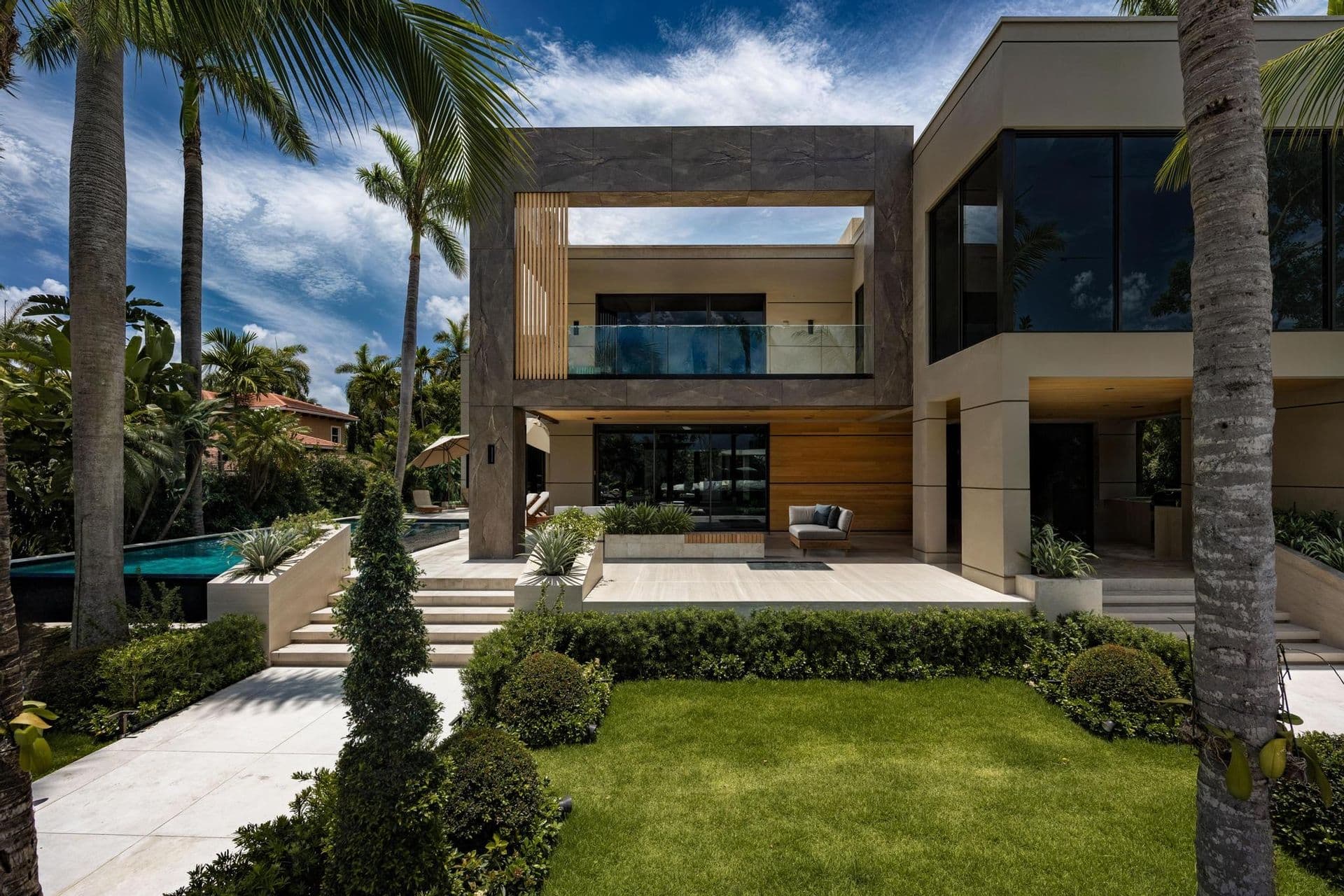
The Impact of Solar Exposure on Hardwood Siding
Direct sunlight delivers ultraviolet (UV) radiation and heat to the surface of hardwood siding. UV radiation is a primary driver of lignin degradation, which typically leads to a silvery-gray patina over time. While this natural weathering is often desired, its rate can accelerate on highly exposed elevations. Heat, on the other hand, causes expansion and contraction of the wood, known as thermal movement. Over time, repeated cycles of heating and cooling can stress fasteners, joints, and the wood itself.
The intensity and duration of solar exposure vary significantly depending on the orientation of the wall (e.g., south-facing vs. east-facing), local climate, and any shading elements. These factors influence both the rate of color change and the extent of thermal movement. Planning for these effects from the outset helps manage expectations and select the most suitable hardwood material and finish.
Material Selection for Sun-Exposed Hardwood Siding
Certain hardwood species and modified wood products are inherently better suited for sun-exposed applications due to their stability and resistance to weathering. When selecting materials, consider their natural density, porosity, and how they have been processed.
Thermally modified wood, such as Scandinavian thermally modified wood or thermally modified Ash, offers enhanced dimensional stability. The thermal modification process alters the wood's cellular structure, reducing its ability to absorb and release moisture, which in turn minimizes swelling and shrinking. This stability is particularly beneficial on elevations subject to significant temperature fluctuations.
Maximo Accoya is another option engineered for stability. Accoya is acetylated wood, a process that modifies the wood on a molecular level to improve its dimensional stability and durability. This makes it highly resistant to warping, cupping, and checking, even under intense solar exposure. Maximo Accoya is a distinct product from thermally modified wood.
Brazilian hardwoods like Ipe, Cumaru, Garapa, Angelim, Jatoba, and Tigerwood are known for their natural density and durability. While they will still undergo color changes when exposed to UV radiation, their inherent strength can contribute to longevity in challenging conditions. The rate and appearance of weathering can vary by species, with some developing a deeper patina than others.
For those considering composite cladding, Norx composite cladding offers a manufactured solution designed to resist the effects of UV and moisture. These products are engineered for consistent color retention and minimal thermal movement compared to natural wood, providing a low-maintenance alternative for sun-exposed walls.
Explore options such as <a href="/siding-and-cladding">Siding & Cladding</a>, <a href="/thermally-modified-wood">Thermally Modified Wood</a>, <a href="/brands/norx">Norx</a>, and <a href="/products/maximo-accoya">Maximo Accoya</a> to compare characteristics.
Color and Finish Considerations
The choice of finish significantly impacts how hardwood siding weathers on a sun-exposed elevation. Unfinished hardwood will naturally gray over time due to UV exposure. This process is generally uniform across a given board but can vary in speed depending on the specific species and the intensity of sunlight.
Applying a UV-inhibiting finish can slow down the graying process and help maintain the wood's original color longer. However, even the most robust finishes will require periodic reapplication, especially on high-exposure walls. Pigmented finishes offer more protection against UV degradation than clear finishes, as the pigments block some of the UV rays. Darker pigments tend to absorb more heat, which can increase thermal movement.
It is crucial to understand that no finish can completely stop the natural weathering of wood. The goal is to manage the process and protect the wood's structural integrity. Regular cleaning and reapplication of appropriate finishes are part of maintaining the desired appearance on sun-exposed walls.
Installation Techniques for Sun-Exposed Walls
Proper installation is vital for managing the effects of solar exposure. A rainscreen assembly is highly recommended for hardwood siding on any exterior wall, but especially for sun-exposed elevations. This system creates a ventilated air gap behind the siding, allowing moisture to drain and air to circulate. This circulation helps to equalize temperature and moisture content across the siding, reducing thermal stress and preventing moisture accumulation.
When installing, ensure adequate spacing between boards to allow for expansion and contraction. Even with stable materials, some movement will occur. Following manufacturer-recommended spacing guidelines is essential. Fasteners should be corrosion-resistant and appropriate for the wood species and expected movement. Consider concealed fastening systems where possible to minimize exposure of fasteners to UV and moisture.
Careful detailing around windows, doors, and corners is also critical. These areas are often points of increased stress and moisture entry. Proper flashing and sealing are necessary to prevent water infiltration, which can exacerbate the effects of solar exposure by introducing moisture cycles into the thermal movement equation.
Worked Example: South-Facing Siding Project
Consider a hypothetical project for a residential facade with a dominant south-facing wall, measuring 20 feet wide by 10 feet high, receiving direct sunlight for most of the day. The homeowner desires a natural wood appearance but is concerned about rapid graying and potential warping. They are considering a 1x6 (nominal) hardwood siding profile.
Given the high solar exposure, we would recommend a dimensionally stable product like Maximo Accoya or Scandinavian Thermally Modified Ash. For this example, let's assume Maximo Accoya siding with a finished face width of 5.5 inches (0.458 feet).
The wall area is 20 feet * 10 feet = 200 square feet. To cover this, we need to calculate the linear footage of siding. Each board covers 0.458 feet in width. Therefore, 200 sq ft / 0.458 ft = approximately 436.68 linear feet.
However, this is just the coverage. We must account for waste from cuts, especially around windows or doors (if present, though omitted for this simplified example). A common waste factor is 10-15%. Let's use 12%. So, 436.68 linear feet * 1.12 = 489.08 linear feet. If the siding comes in 12-foot lengths, we would need 489.08 / 12 = 40.75 boards, rounding up to 41 boards.
For installation, a rainscreen system would be specified, including furring strips to create the necessary air gap. A UV-resistant clear finish would be applied, with a plan for reapplication every 2-3 years, or as recommended by the finish manufacturer, to slow the graying process while still allowing the natural wood character to emerge.
Before you order
- Assess wall orientation and typical sun exposure duration.
- Consider local climate for temperature extremes and humidity.
- Evaluate material stability: Thermally modified wood, Accoya, dense hardwoods, or composites.
- Decide on desired weathering: Natural graying vs. color retention.
- Select finish type: UV-inhibiting, pigmented, or none.
- Plan for a rainscreen assembly with adequate ventilation.
- Specify appropriate board spacing for thermal movement.
- Choose corrosion-resistant fasteners suitable for the material.
- Detail flashing and sealing around openings.
- Establish a maintenance plan for cleaning and finish reapplication.
Confirm installation details, approved uses and warranty terms in the current instructions for the exact product and profile. Your installer should verify the substrate, structure and applicable project requirements.
Questions to help you decide
Will hardwood siding always gray in the sun?
Yes, all hardwood siding exposed to direct sunlight will eventually develop a silvery-gray patina due to UV radiation degrading the lignin in the wood. This is a natural weathering process. While UV-inhibiting finishes can slow this process, they cannot stop it entirely and require regular reapplication.
What is the best hardwood for a south-facing wall?
For south-facing walls, which receive the most intense and prolonged solar exposure, materials with high dimensional stability are recommended. Options include Maximo Accoya and thermally modified woods like Ash or Ayous. Dense Brazilian hardwoods such as Ipe or Cumaru are also durable choices, though they will still weather naturally.
How does thermal movement affect siding, and how can it be managed?
Thermal movement refers to the expansion and contraction of wood due to temperature changes. On sun-exposed walls, this movement can be significant, potentially leading to warping, cupping, or stressing fasteners. It can be managed by using dimensionally stable materials, installing a ventilated rainscreen system, and leaving appropriate gaps between siding boards to allow for movement.
Plan Your Sun-Exposed Hardwood Siding Project
Ready to select the right hardwood siding for your sun-exposed elevation? Request a material quote with your project dimensions, exact profile preferences, and ZIP code to confirm current availability and service options. Our team can help guide your material selection.
Request a material quote →