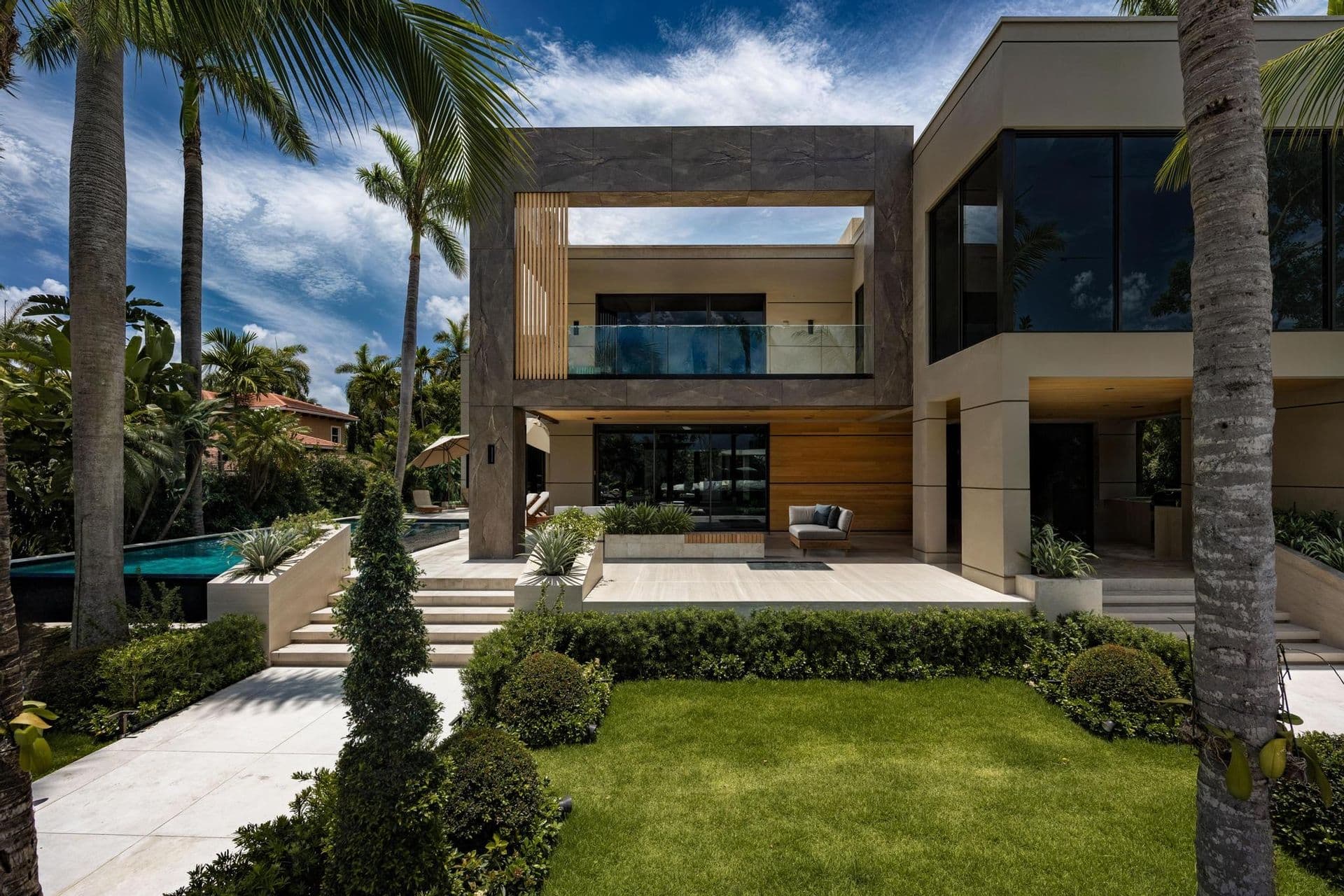
Understanding Natural Hardwood Tones
Hardwood siding comes in a spectrum of natural colors, each offering a distinct character to an elevation. For example, Brazilian hardwoods like Ipe and Cumaru typically present rich, deep brown tones, while Garapa often features a golden hue. Jatoba, sometimes called Brazilian Cherry, can display deep red undertones, and Tigerwood is known for its dramatic striped figure. These natural variations are inherent to the wood and contribute to its unique appeal.
Thermally modified woods, such as Ayous, Ash, or Clear Radiata, undergo a heat treatment process that can deepen their natural color, often resulting in richer browns. This process also enhances stability. While the modification changes the wood's properties, the underlying species still dictates the initial color palette.
It's essential to recognize that these natural tones will evolve over time, especially when exposed to UV radiation and weather. Unfinished hardwoods will typically silver or gray out, developing a weathered patina. This natural aging process is often desired for certain architectural styles, but it's a key consideration when planning your long-term aesthetic.
The Impact of Finish on Appearance
The finish applied to hardwood siding profoundly alters its final appearance and how it interacts with light. Finishes can range from clear sealers that enhance the natural color to stains that introduce new hues or intensify existing ones. A clear oil finish, for instance, can bring out the depth and richness of a wood's grain, making it appear more vibrant.
Some finishes offer UV protection, which can slow down the natural graying process, helping the wood retain its initial color longer. Other finishes might be pigmented, effectively changing the wood's color to a desired shade, such as a darker brown or even a black. When choosing a finish, consider not only the immediate aesthetic but also the maintenance requirements and how it will age alongside the wood.
For specific products like Maximo Accoya, which is acetylated wood, the finish choice can be particularly important for maintaining its appearance. Similarly, Norx composite cladding offers pre-finished options that provide consistent color without the need for additional stains or sealers, presenting a different set of considerations for color stability.
Daylight Observation: Your Most Important Tool
The single most effective way to choose hardwood siding colors and finishes is to observe large product samples under real-world conditions. This means taking samples to your project site and viewing them at different times of day and under various weather conditions. Direct sunlight, overcast skies, and even the angle of the sun at sunrise and sunset will dramatically change how the color appears.
A sample that looks warm and inviting in morning light might appear cooler or more muted in the late afternoon. Shadows cast by adjacent trees or buildings will also affect the perceived color. Ideally, position your samples on the actual elevation where the siding will be installed, allowing you to see how the color interacts with your property's unique lighting and surroundings.
Consider how the chosen color will harmonize with other exterior elements like roofing, window frames, trim, and landscaping. The goal is to achieve a cohesive look that complements the overall architectural style and environment.
Worked Example: Evaluating Hardwood Siding for a North-Facing Wall
Imagine you are planning to clad a north-facing wall of a hypothetical 20-foot by 10-foot structure with hardwood siding. North-facing walls typically receive less direct sunlight, resulting in cooler, more consistent light throughout the day, which can make colors appear darker or more subdued.
You've narrowed your choices to two options: an unfinished Ipe siding and a thermally modified Ash with a clear oil finish. You obtain two large samples, approximately 4 feet long each, representing several boards.
**Day 1 (Sunny):** You place both samples against the north wall. The unfinished Ipe, with its deep brown tones, appears quite dark and rich, almost black in some shaded areas, but its grain is still visible. The thermally modified Ash with the clear oil finish looks a warm medium brown, and the oil finish enhances its grain pattern, giving it a subtle sheen.
**Day 2 (Overcast):** Under an overcast sky, the light is diffused and even. The Ipe still looks dark, but the nuances of its deep brown become more apparent without direct sun glare. The thermally modified Ash appears slightly flatter, with the sheen of the oil finish less pronounced, but its warm tone remains consistent.
**Observation:** You note that while the Ipe offers a dramatic, rich appearance, its darkness on the north wall might be too imposing for your design preference, especially on overcast days. The thermally modified Ash, while still substantial, maintains a warmer and slightly lighter presence, which you decide is more suitable for the cooler light conditions of the north elevation. This real-world comparison helps confirm the choice beyond a small swatch.
Considering Profile and Shadow Lines
The profile of your hardwood siding also influences how color and light are perceived. Different profiles create varying shadow lines, which can make a wall appear darker or lighter depending on the depth and spacing of the boards. For example, a board-and-batten profile creates deep shadows that can accentuate vertical lines and add texture, potentially making a lighter color appear more dynamic.
Conversely, a flush-mount profile will present a more uniform surface, allowing the color to dominate without significant shadow interruption. The angle of the sun will interact differently with each profile, creating changing patterns of light and shadow throughout the day. When evaluating samples, ensure they represent the actual profile you intend to use for a realistic assessment of the final look.
Long-Term Appearance and Maintenance
Beyond the initial color and finish, consider how your hardwood siding will age. If you choose an unfinished hardwood, it will naturally weather to a silver-gray patina. This process is gradual and can take several months to a few years, depending on exposure. If a consistent color is desired, regular application of a UV-inhibiting finish will be necessary.
Different finishes have different maintenance schedules. Some oil-based finishes may require reapplication every one to two years, while others might last longer. Understanding these commitments upfront is crucial for managing expectations and ensuring the long-term aesthetic of your project. For materials like composite cladding, the color stability is generally higher, requiring less frequent intervention to maintain its initial appearance.
Before you order
- Obtain large samples of your preferred hardwood siding species and finishes.
- Place samples on the actual project elevation, particularly considering different orientations (north, south, east, west).
- Observe samples at various times of day: morning, midday, and late afternoon.
- Note how the color appears under different weather conditions: sunny, overcast, and potentially after rain.
- Consider how the chosen color and finish interact with existing or planned architectural elements (roof, windows, trim).
- Evaluate the impact of the siding profile on shadow lines and overall texture.
- Research the long-term aging characteristics of the wood and finish, including maintenance requirements.
Confirm installation details, approved uses and warranty terms in the current instructions for the exact product and profile. Your installer should verify the substrate, structure and applicable project requirements.
Questions to help you decide
How large should my hardwood siding samples be for color selection?
For accurate color and finish evaluation, aim for samples that are at least 3-4 feet long and represent multiple boards. Smaller swatches can be misleading as they don't fully capture the natural variations in grain and tone, or how light interacts with the material over a larger area.
Will direct sunlight make my hardwood siding appear lighter or darker?
Direct sunlight typically makes colors appear lighter and can reveal more of the wood's grain and figure. However, intense sun can also create glare, which might wash out some nuances. Conversely, shaded areas or overcast conditions tend to make colors appear darker and more saturated. It's important to observe samples in both direct and indirect light.
Does the orientation of the wall (e.g., north-facing vs. south-facing) affect color choice?
Yes, wall orientation significantly affects how colors are perceived. North-facing walls receive less direct sun, resulting in cooler, more consistent light where colors may appear darker. South-facing walls receive the most direct and intense sunlight, which can make colors appear brighter and more washed out at midday. East-facing walls get morning sun, and west-facing walls get afternoon sun, creating different lighting dynamics. Always test samples on the specific wall orientation for a realistic assessment.
Ready to Select Your Hardwood Siding?
Request a material quote with your project dimensions, desired profile, and ZIP code. Confirm current availability and service options for all your hardwood siding needs. Explore our full range of siding and cladding materials, including Thermally Modified Wood, Maximo Accoya, and Norx composite options.
Request a material quote →