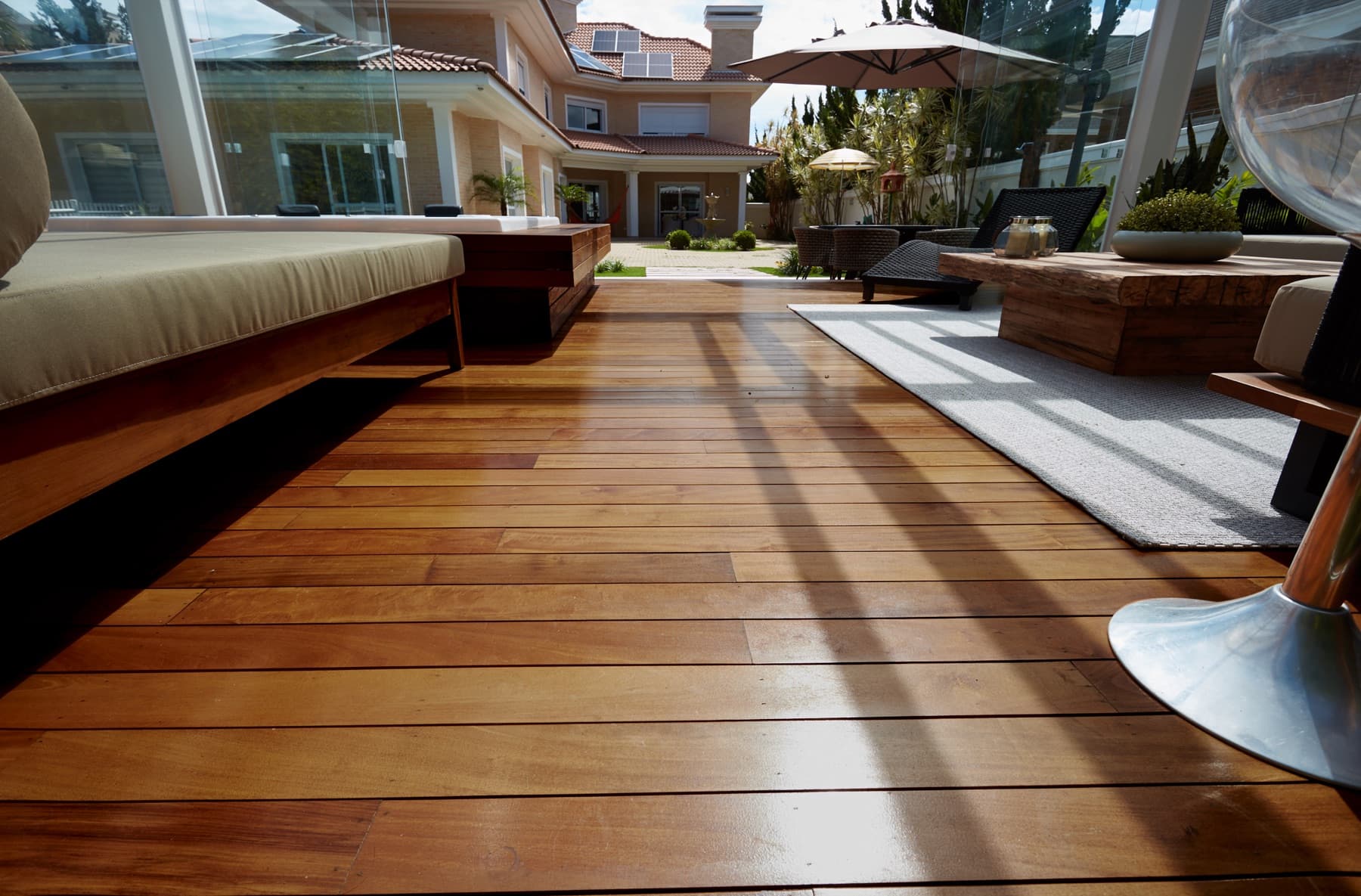
Assessing Your Existing Deck Frame for Hardwood Decking
Before selecting any new decking material, a thorough inspection of your existing deck frame is crucial. Hardwood decking, particularly dense species like Ipe and Cumaru, is heavier than many common decking materials. This means your current joists and beams must be robust enough to support the increased load. Look for any signs of rot, insect damage, or structural fatigue in the existing lumber.
Verify that joist spacing is appropriate for the hardwood decking boards you plan to use. Consult with a qualified professional to confirm your frame's capacity and condition, especially if you're upgrading from a lighter material or if the deck is older.
Choosing Hardwood Species: Ipe vs. Cumaru for Portland Projects
For outdoor applications in Portland, two popular hardwood decking options are Ipe and Cumaru, both known for their exceptional durability and natural resistance to the elements.
Ipe, also known as Brazilian walnut, is a benchmark for hardwood decking. It offers a rich reddish-brown to olive-brown color and is renowned for its density and resistance to rot, insects, and weather changes. It can last for decades with proper care. Ipe also has minimal post-installation movement, contributing to a stable deck surface.
Cumaru, another tropical hardwood, shares many of Ipe's advantages, including resistance to termites and weather. It presents a slightly lighter, warm brown tone and is also very durable. Cumaru is often considered a strong alternative to Ipe, providing similar performance characteristics at a different price point. Both species will weather to a silvery-gray patina if left untreated, or maintain their original color with regular application of a UV-blocking sealer.
Consider the specific aesthetic you desire and the long-term maintenance commitment when choosing between these two species.
Planning for Local Weather and Exposure in Portland, ME
Portland, ME experiences a range of weather conditions, from humid summers to snowy winters and coastal exposure. Hardwood decking like Ipe and Cumaru are well-suited for these conditions due to their natural density and oil content.
These hardwoods are recognized for their resistance to warping after moisture exposure and their ability to withstand salt air and spray, making them suitable for coastal properties. When planning your renovation, consider the deck's exposure to direct sunlight, rain, and snow. Ensure proper ventilation beneath the deck to prevent moisture buildup, which is crucial for the longevity of both the decking and the subframe.
While these woods are naturally resistant, thoughtful design and installation practices, such as appropriate board spacing for drainage and ventilation, will optimize their performance in the local climate.
Understanding Decking Profiles and Dimensions
Hardwood decking is available in various profiles and lengths. Common profiles include standard rectangular boards, which can be face-fastened or installed with hidden fasteners. The choice of profile often depends on the desired aesthetic and installation method.
Dimension availability can vary, with species like Ipe offered in dimensions from 1"x2" up to 6"x6" and lengths ranging from 3 to 24 feet. When planning your renovation, measure your deck's dimensions carefully to minimize waste and optimize board layout. Longer boards can reduce the number of butt joints, creating a cleaner, more continuous look. However, shorter lengths might be easier to handle and install in confined spaces or for intricate patterns.
Always confirm the exact profiles and lengths available for your chosen species before finalizing your design. This ensures compatibility with your renovation plans and helps with accurate material takeoffs.
Worked Example: Renovating a 12'x10' Deck with Ipe Decking
Let's consider a hypothetical deck renovation project in Portland, ME: replacing the decking on an existing 12-foot by 10-foot rectangular deck frame. We've chosen Ipe decking in a nominal 1x6 (actual ~3/4" x 5.5") profile.
First, inspect the existing frame. Assuming it's in good condition and adequately supports the weight of Ipe, we proceed. For a 12-foot length, we'll need boards that are 12 feet long. For the 10-foot width, we'll calculate the number of boards. A 10-foot width is 120 inches. Dividing by the actual board width (5.5 inches) gives approximately 21.8 boards. So, 120 inches / 5.625 inches per board + space = approximately 21.3 boards. We'll round up to 22 boards to ensure full coverage and account for any edge cuts or slight variations. Therefore, you would need 22 pieces of 12-foot long Ipe decking.
This calculation assumes a straight lay. For more complex patterns, like diagonal layouts or picture-frame borders, the material requirements would increase due to more cuts and potential waste. Always add a percentage for waste, typically 5-10%, depending on the complexity of the installation and installer experience. This example provides a baseline for planning and material estimation for your renovation.
Before you order
- Assess existing deck frame for rot, damage, and structural integrity.
- Evaluate the overall structural capacity of the frame for denser hardwood materials.
- Choose between Ipe, Cumaru, or other hardwoods based on desired color, durability, and budget.
- Consider the long-term maintenance plan (oiling for color retention vs. silvering patina).
- Plan for proper ventilation beneath the deck, especially in Portland's varied climate.
- Measure deck dimensions accurately to determine required board lengths and quantities.
- Account for waste factor (typically 5-10%) in material calculations.
- Confirm availability of specific profiles and lengths with a supplier.
- Review local building codes or consult a professional for installation guidance.
Confirm installation details, approved uses and warranty terms in the current instructions for the exact product and profile. Your installer should verify the substrate, structure and applicable project requirements.
This is a planning guide for projects in Portland, ME. Ask our team to confirm availability, delivery to your ZIP code and which branch can support your order.
Questions to help you decide
Can I install hardwood decking over an existing composite or pressure-treated frame?
Yes, in many cases, you can install hardwood decking over an existing frame, provided the frame is structurally sound and can support the increased weight of hardwood. It's essential to inspect the frame for any damage, rot, or weakness. Consult a structural engineer or experienced contractor to confirm its suitability, especially if the original decking was significantly lighter.
How do I maintain the original color of my hardwood deck in Portland's climate?
To maintain the original rich color of hardwood decking like Ipe or Cumaru, you will need to apply a UV-blocking oil or sealer annually. If left untreated, the wood will naturally weather to a beautiful silvery-gray patina over time. Regular cleaning to remove dirt and mildew is also recommended, regardless of whether you choose to oil the deck.
Is hardwood decking resistant to the salty air near the coast in Maine?
Yes, species like Ipe and Cumaru are highly resistant to salt air and spray, making them excellent choices for coastal properties in Maine. Their natural density and inherent oils provide protection against the corrosive effects of marine environments, which is why they are often used in boardwalks and marine applications.
Ready to Transform Your Portland Deck?
Request a material quote for your hardwood decking renovation project. Provide your project dimensions, desired profile, and ZIP code to confirm current availability and service options for Ipe, Cumaru, or other hardwood species.
Request a material quote →