Assessing Your Existing Deck Frame
Before selecting any new decking material, a thorough inspection of your existing deck frame is crucial. This is particularly important for hardwood decking due to its weight and density. Check for any signs of rot, insect damage, or structural instability in joists, beams, and ledger boards. Ensure all fasteners are secure and that the frame is level and plumb.
The condition of your existing frame will dictate whether it can safely support the weight of new hardwood decking. If significant structural issues are found, these must be addressed, potentially involving repairs or even partial replacement of the substructure. It's recommended to consult with a qualified builder or inspector to confirm the frame's integrity, especially if you plan to upgrade to a heavier decking material.
Choosing Hardwood Species for Durability and Appearance
Lumber Plus offers several Brazilian hardwood decking species, each with distinct characteristics suitable for renovation projects. Two popular choices for their durability and natural resistance are Ipe and Cumaru.
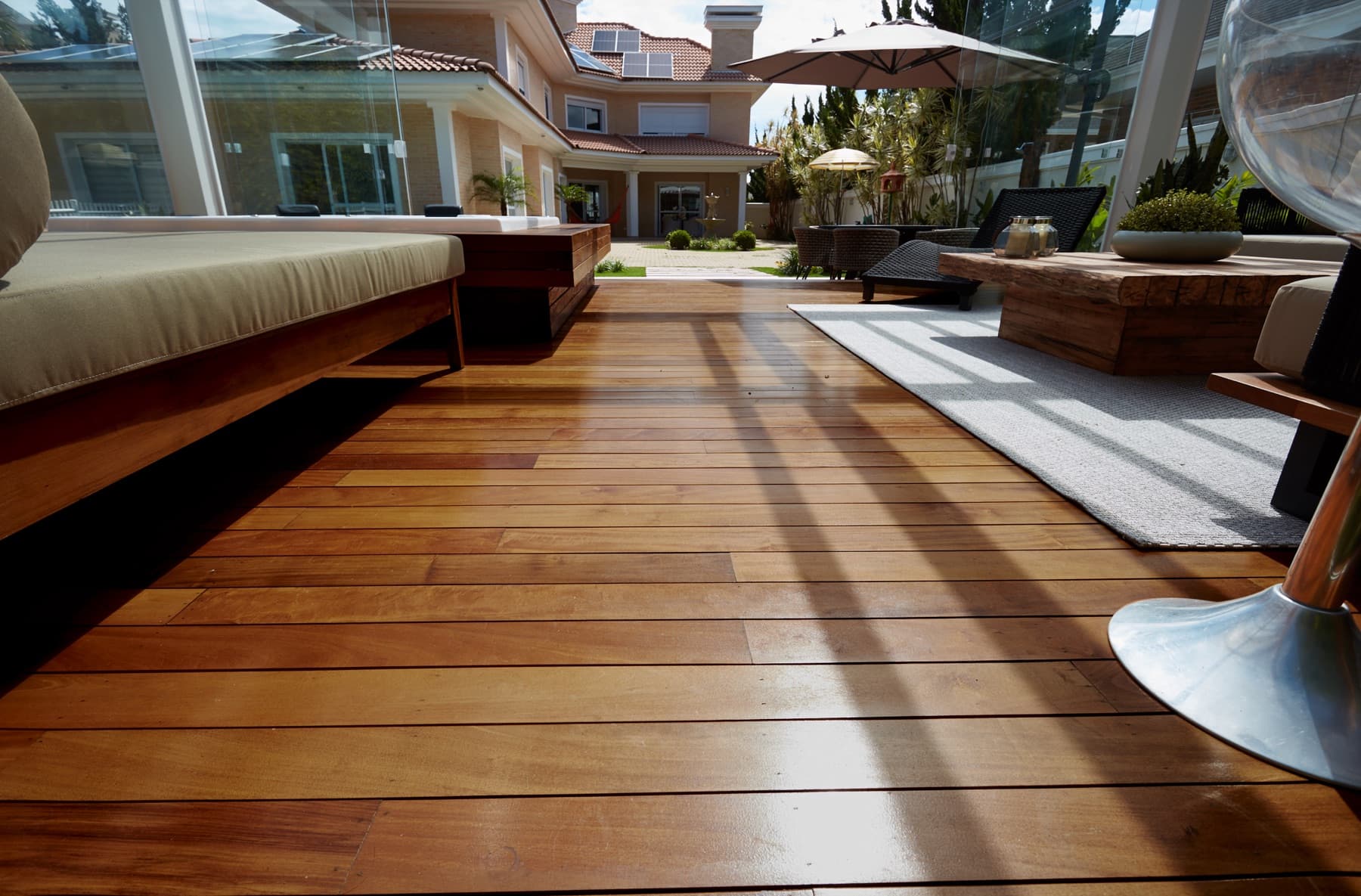
Ipe, also known as Brazilian walnut, is a benchmark hardwood. It is dense, durable, and naturally resistant to rot, insects, and mold. Its color ranges from reddish-brown to olive-brown. Ipe is known for minimal post-installation movement and can last for decades with proper care. Many suppliers, including Lumber Plus, source Ipe from environmentally responsible practices.
Cumaru is another very durable tropical hardwood. It is resistant to termites and weather changes, offering stiffness, strength, and extreme hardness. It also shares Ipe's natural resistance to insects, rot, and fungi, and carries a Class A fire resistance rating.
Both Ipe and Cumaru are excellent choices for outdoor applications due to their inherent strength and natural properties, which reduce the need for chemical treatments. They can be left untreated to weather to a silvery-gray patina or sealed to maintain their original color.
Considering Board Profiles and Lengths
Hardwood decking is available in various profiles and lengths. For renovation projects, matching the dimensions of your new decking to the existing joist spacing and layout is important. Standard profiles like 1x4 (nominal) and 5/4x6 (nominal) are common, but other dimensions may be available. Longer boards can reduce the number of end joints, creating a more continuous appearance.
Ipe, for example, is available in dimensions ranging from 1"x2" through 6"x6" and lengths from 3 to 24 feet. Cumaru also offers similar versatility. When planning your renovation, consider how different board widths and lengths will impact your deck's aesthetic and minimize waste during installation. It is always recommended to confirm current profile and length availability.
Installation Considerations for Hardwood Decking
Installing hardwood decking, especially dense species like Ipe and Cumaru, requires specific tools and techniques. These materials are very hard, so pre-drilling pilot holes for fasteners is generally necessary to prevent splitting. Specialized hidden fastening systems designed for hardwood can provide a clean, fastener-free surface, while face-fastening offers a more traditional look.
Proper ventilation beneath the deck is vital for any decking material, but particularly for hardwoods, to ensure long-term stability and prevent moisture buildup. Ensure adequate airflow to prevent cupping or warping. Board spacing should follow manufacturer guidelines, as hardwoods expand and contract minimally compared to some other decking materials but still require appropriate gaps.
Worked Example: Replacing Decking on an Existing Frame
Let's consider a hypothetical deck renovation project in Oklahoma City for a rectangular deck measuring 16 feet by 10 feet. The existing pressure-treated pine decking is worn, but the substructure (joists, beams, ledger) has been inspected and confirmed to be in excellent condition, suitable for supporting new hardwood.
We decide to use Ipe decking, 1x6 (nominal) profile, which typically measures about 3/4 inch thick by 5.5 inches wide. For a 16-foot length, we will need 16-foot boards to run continuously across the deck, minimizing butt joints.
To cover the 10-foot width (120 inches) with 5.5-inch wide boards, we would need approximately 120 / 5.5 = 21.8 boards. Since boards are purchased as full units, we would need 22 boards per 16-foot length. For the entire 16x10 foot area, this means 22 boards x 16 feet = 352 linear feet of Ipe decking. We should always add 10-15% for cuts, waste, and future repairs, bringing the total to approximately 387-405 linear feet. This example assumes a straightforward, perpendicular installation. More complex layouts, such as diagonal patterns or picture-frame borders, would require a more detailed takeoff.
The existing frame is ready, and the Ipe boards will be installed using a hidden fastening system, requiring pre-drilling. This project offers a significant aesthetic and durability upgrade while utilizing the sound existing foundation.
Before you order
- Inspect existing deck frame for rot, insect damage, and structural integrity.
- Verify joist spacing and levelness of the existing substructure.
- Determine if the existing frame can support the weight of hardwood decking.
- Select desired hardwood species (e.g., Ipe, Cumaru) based on durability, appearance, and budget.
- Confirm available board profiles and lengths that align with your project dimensions.
- Plan for appropriate fastening methods (hidden vs. face-fastening).
- Ensure adequate ventilation for the underside of the deck.
- Account for appropriate board spacing according to product specifications.
- Calculate material quantities, including waste factor.
- Consider professional installation due to hardwood density and specialized techniques.
Confirm installation details, approved uses and warranty terms in the current instructions for the exact product and profile. Your installer should verify the substrate, structure and applicable project requirements.
This is a planning guide for projects in Oklahoma City, OK. Ask our team to confirm availability, delivery to your ZIP code and which branch can support your order.
Questions to help you decide
Can I use my existing deck frame for hardwood decking?
You can, provided your existing deck frame is structurally sound and free from rot, insect damage, or significant wear. Due to the density and weight of hardwood decking like Ipe or Cumaru, it's crucial to have a professional inspect your frame to ensure it can safely support the new material. Any deficiencies in the substructure must be repaired or replaced before new decking is installed.
What maintenance does hardwood decking require in Oklahoma City?
Hardwood decking is relatively low maintenance. A simple wash once a year is typically sufficient. If you wish to preserve the original reddish-brown or olive-brown color, an annual application of a UV-blocking sealer or oil is recommended. If left untreated, the wood will naturally weather to a beautiful silvery-gray patina without impacting its structural integrity.
How do I calculate the amount of hardwood decking I need for a renovation?
Measure the total length and width of your deck surface to get the square footage. Then, consider the width of the decking boards you plan to use. Divide the total width of your deck by the board width to determine how many boards you need across. Multiply this by the length of your deck to get the total linear footage. Always add 10-15% extra for cuts, waste, and future repairs. For complex layouts or varying board lengths, a detailed cut plan is recommended.
Ready to Transform Your Oklahoma City Deck?
Request a material quote for your deck renovation project. Provide your project dimensions, desired hardwood profile, and ZIP code to confirm current availability and service options for hardwood decking in Oklahoma City, OK.
Request a material quote →