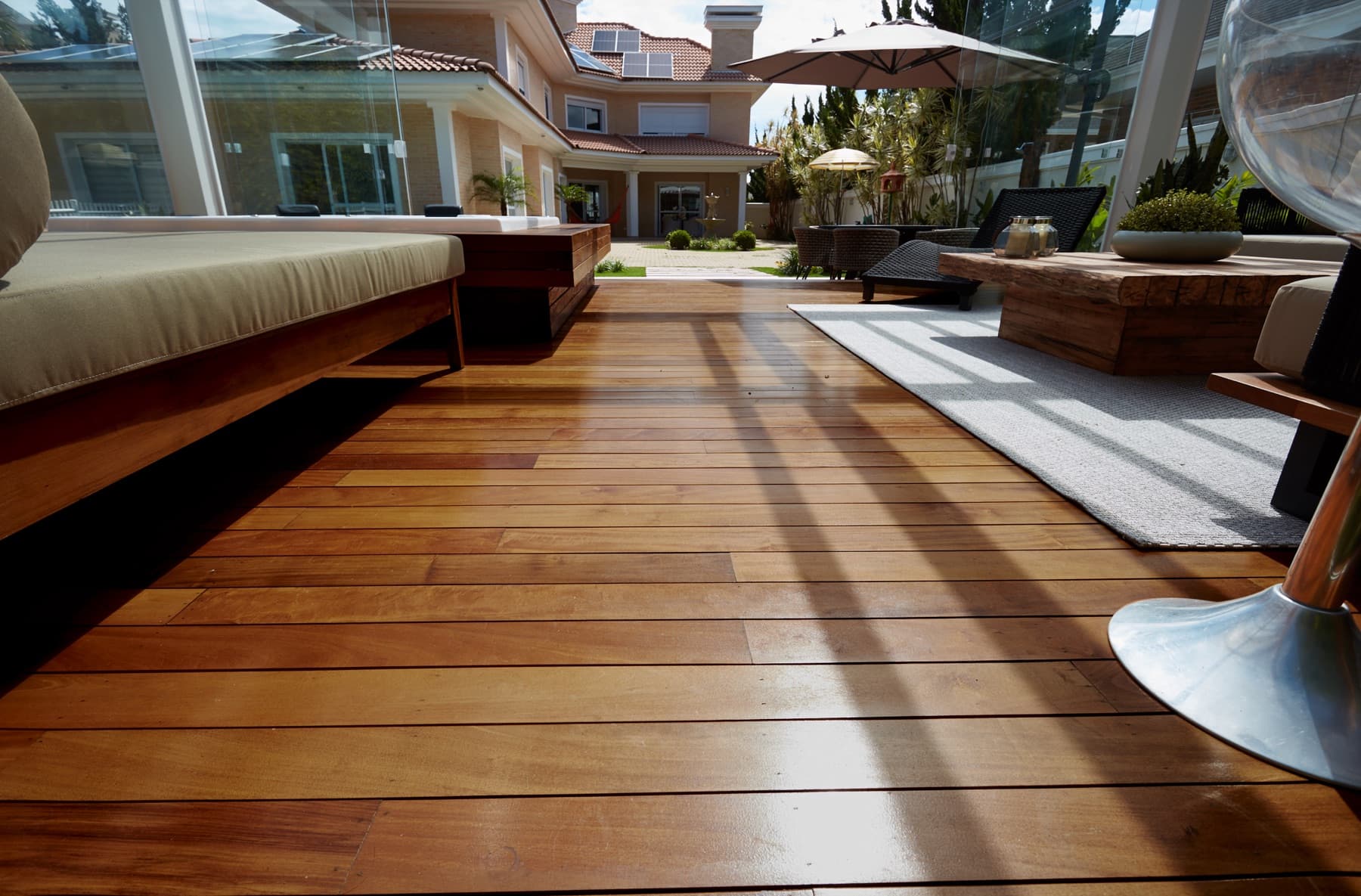
Evaluating Your Existing Deck Frame for Hardwood
Before selecting your hardwood decking, the first crucial step is to thoroughly inspect your existing deck's substructure. Hardwood decking, especially dense species like Ipe or Cumaru, is heavier than many composite or softwood alternatives. Your current joists, beams, and footings must be structurally sound and adequately spaced to support the increased weight.
Check for any signs of rot, insect damage, or excessive deflection in the joists. Measure the on-center spacing of your joists. If your existing joist spacing is wider, or if the frame shows any compromise, structural modifications or repairs will be necessary before new decking can be installed. Consulting with a qualified builder or engineer is essential for this assessment.
Comparing Hardwood Decking Species for Lansing's Climate
Lansing, MI, experiences a range of seasonal weather, from humid summers to cold, snowy winters. Choosing a hardwood species that can withstand these conditions is key to longevity. Brazilian hardwoods like Ipe and Cumaru are recognized for their natural density and resistance properties.
Ipe (Handroanthus spp.), also known as Brazilian Walnut, is a top-tier choice for its exceptional durability and resistance to rot, insects, and weather changes. Its natural oils help protect it from cracking or warping, making it suitable for varying temperatures and moisture levels. Ipe can last for decades with proper care, offering a reddish-brown to olive-brown tone that can be maintained with oil or allowed to weather to a silvery-gray patina. You can learn more at our Ipe product page.
Cumaru (Dipteryx odorata) is another robust option, offering similar resistance to termites and weather changes. Cumaru is a durable choice for demanding builds, including those exposed to varied weather. Find more details on our Cumaru product page.
Other hardwood options like Garapa and Tigerwood also offer distinct aesthetic and performance characteristics, which can be explored based on your specific project needs and budget.
Decking Profile and Fastening Systems
Hardwood decking is available in various profiles, including standard square-edge boards, grooved boards for hidden fasteners, and tongue-and-groove options for specific applications. For deck renovations, square-edge boards installed with visible face fasteners or grooved boards with hidden fastening systems are common choices.
Hidden fastening systems offer a clean, unblemished surface, which many homeowners prefer for aesthetics. However, they typically require grooved boards and may have specific installation requirements regarding board spacing and ventilation. Face fastening, while visible, can be a secure method, especially when using high-quality stainless steel screws pre-drilled to prevent splitting in dense hardwoods. Consider the look you want to achieve and the installation method your existing frame can accommodate.
Proper ventilation beneath the deck is critical for any decking material, but especially for hardwoods. Ensure adequate airflow to prevent moisture buildup, which can lead to cupping or warping. This is particularly important in Lansing's climate, where humidity and snowmelt can create damp conditions.
Worked Example: Renovating a 10'x12' Deck
Let's consider a hypothetical renovation of a 10-foot by 12-foot deck (120 square feet) in Lansing, MI, using 1x6 (nominal) Ipe decking boards.
First, calculate the actual coverage of a 1x6 board. A nominal 1x6 board typically has an actual width of 5.5 inches. To cover the 10-foot width of the deck (120 inches), you would need approximately 120 / 5.5 = 21.8 boards. For the 12-foot length, each board would be 12 feet long.
Total boards needed: 22 boards * 12 linear feet/board = 264 linear feet. Accounting for waste from cuts and potential imperfections (typically 10-15%), you might order around 300 linear feet of Ipe. If boards are typically sold in 12-foot lengths, this would mean 25 boards (300 / 12 = 25). Always round up to ensure you have enough material for cuts and any unforeseen issues. For a direct quote, provide the exact dimensions of your deck and the desired board profile.
This example assumes a straightforward installation without diagonal patterns or intricate borders. Complex designs will require more detailed calculations and additional waste factor.
Maintenance and Longevity of Hardwood Decking
One of the significant advantages of hardwood decking like Ipe and Cumaru is their inherent durability and relatively low maintenance requirements. A simple annual wash is often sufficient to keep the deck clean. If you prefer to maintain the original rich brown tones, an annual application of a UV-blocking oil or sealer is recommended. If left untreated, the wood will naturally weather to a beautiful silvery-gray patina, which does not compromise its structural integrity.
For Lansing's climate, where decks are exposed to snow and ice, ensuring proper drainage and promptly clearing snow can help extend the life and appearance of your deck. Avoid using harsh chemicals or abrasive cleaners, which can damage the wood's surface. Always refer to the manufacturer's specific maintenance guidelines for your chosen product.
With proper installation and care, hardwood decking can offer decades of service, often outlasting many synthetic alternatives. This long lifespan contributes to the overall value proposition, despite a potentially higher upfront material cost.
Before you order
- Inspect existing deck frame for structural integrity, rot, and insect damage.
- Select hardwood species (e.g., Ipe, Cumaru) based on durability, aesthetics, and climate resistance.
- Choose decking profile (square-edge, grooved) and preferred fastening system (face-fasten, hidden).
- Confirm adequate under-deck ventilation to prevent moisture buildup.
- Calculate precise material quantities, including waste factor, based on deck dimensions and board lengths.
- Plan for annual cleaning and consider UV-blocking oil for color retention, or allow natural silvering.
- Consult with a professional builder or engineer for structural assessments and installation advice.
Confirm installation details, approved uses and warranty terms in the current instructions for the exact product and profile. Your installer should verify the substrate, structure and applicable project requirements.
This is a planning guide for projects in Lansing, MI. Ask our team to confirm availability, delivery to your ZIP code and which branch can support your order.
Questions to help you decide
How do I know if my existing deck frame can support hardwood decking?
You should have a qualified builder or engineer inspect your existing frame. Hardwood decking is denser and heavier than many other materials, so the substructure must be robust enough to support it.
Will hardwood decking warp or crack in Lansing's winters?
High-density hardwoods like Ipe and Cumaru are naturally resistant to warping, cracking, and splitting due to their inherent stability and natural oils. They are known for performing well in climates with significant temperature and moisture fluctuations, including cold winters and humid summers. However, proper installation with adequate spacing and ventilation is crucial.
What is the primary maintenance for hardwood decking?
The primary maintenance is an annual cleaning with water and a mild cleaner to remove dirt and debris. To maintain the original rich brown color, you can apply a UV-blocking oil or sealer annually. If you prefer a low-maintenance approach, the wood can be left untreated and will naturally weather to an attractive silvery-gray patina without affecting its structural integrity.
Request a Material Quote for Your Lansing Deck Renovation
Ready to transform your deck with hardwood? Provide your project dimensions, desired hardwood profile, and ZIP code to request a material quote. We can help confirm current availability and service options for your Lansing, MI, project.
Request a material quote →