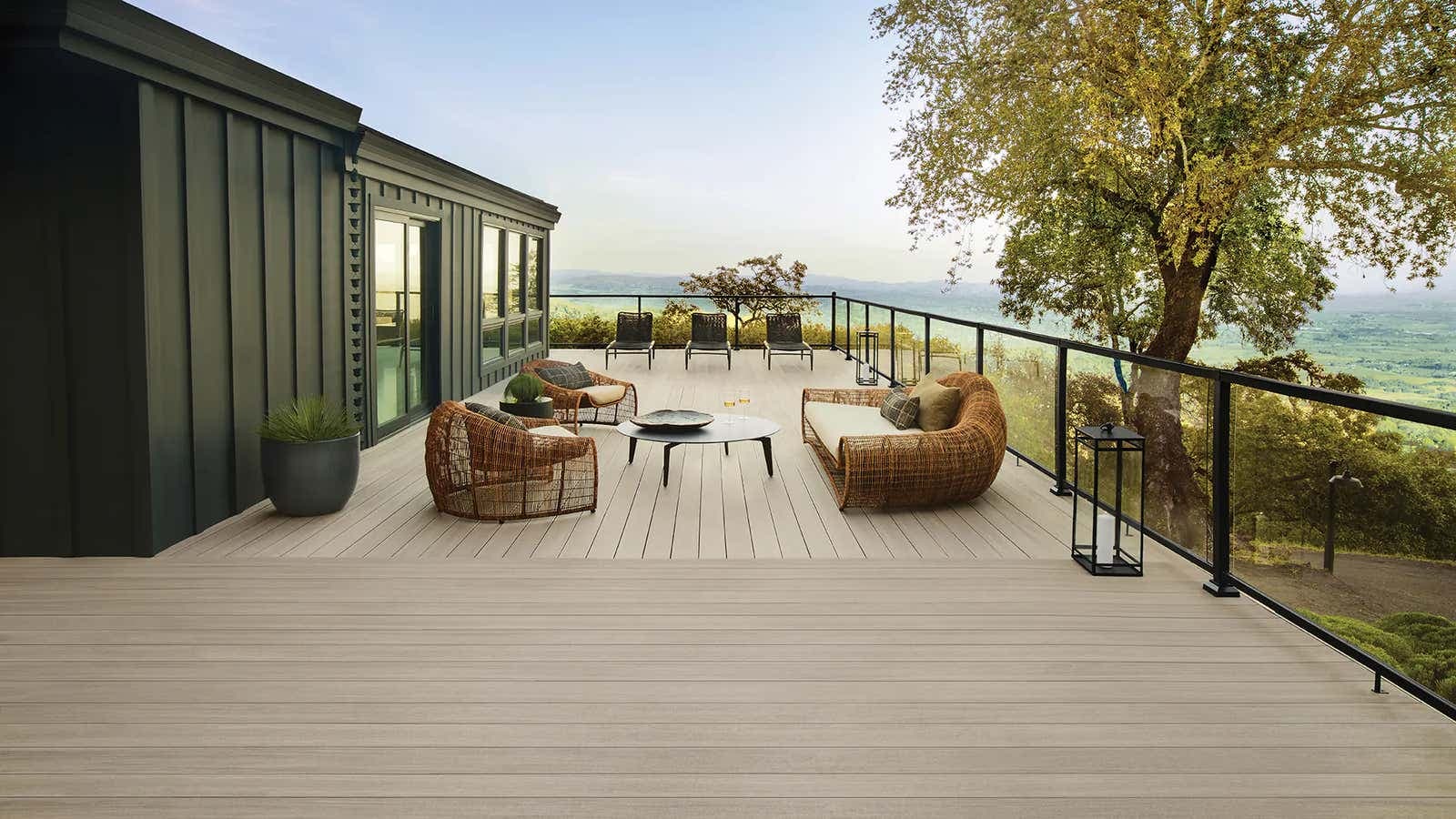
Understanding Your Compact Space: Measurements and Constraints
Before selecting any material, accurately measure your available space. A compact outdoor area might be defined by existing structures, property lines, or landscaping. Documenting these constraints, including any grade changes, existing drainage, or access points, is crucial for effective planning. Consider how the deck will connect to your home and any adjacent features.
For small spaces, precise measurements are even more critical. Sketch out the area, noting dimensions, door swings, window clearances, and the location of any utilities. This initial assessment helps determine the maximum practical footprint for your composite deck and identifies potential challenges early in the planning process.
Choosing the Right Composite Decking Profile for Small Areas
Composite decking comes in various profiles and board widths, which can significantly impact the perception and usability of a compact space. Standard width boards are common, but narrower or wider options might be available depending on the collection. For smaller decks, a standard width board often works well, creating a sense of proportion without overwhelming the area.
Consider the visual impact of the board edges and surface texture. Some composite decking collections offer capped shells for enhanced durability and consistent color, board after board. These materials are designed to resist fading and staining, which can be particularly beneficial in high-traffic, smaller areas. Look for options that complement your home's exterior and provide a comfortable, low-maintenance surface for your specific use.
Lumber Plus offers composite decking from brands like Trex, TimberTech, and Fiberon. Each brand may have distinct profiles and finishes. Reviewing these options can help you select a material that fits both your aesthetic preferences and the practical demands of your compact outdoor project.
Maximizing Usable Space with Layout and Design
In compact outdoor spaces, clever layout and design choices can make a significant difference. A straightforward, rectangular or square deck can often feel more spacious than an irregularly shaped one. Consider running deck boards parallel to the longest dimension of your space to visually extend the area.
Diagonal layouts can also be effective in small spaces, sometimes creating an illusion of depth and movement. However, diagonal cuts typically result in more material waste, which is a consideration for budget-conscious projects. Picture-frame borders can define the edge of the deck, providing a clean finish and a subtle visual boundary. When planning, ensure there's enough room for essential furniture or planters without making the space feel cramped.
Integrating the Deck with Surrounding Elements
A compact deck doesn't exist in isolation. Integrating it seamlessly with your home and landscaping can enhance its perceived size and overall appeal. Consider the transition from your interior living space to the deck. A flush transition can create a continuous flow, making the outdoor area feel like an extension of your home.
For landscaping, choose low-profile plants or vertical gardens that don't encroach on the deck surface. Built-in benches or planters can save space compared to freestanding furniture. Lighting is also key; well-placed deck lighting can extend the usability of your space into the evening hours, making a small area feel more expansive and inviting.
Worked Example: A 10' x 12' Composite Deck in Lansing
Let's consider a hypothetical compact backyard in Lansing, MI, measuring 10 feet by 12 feet, where the homeowner wants to build a simple, rectangular composite deck. The primary goal is to create a functional outdoor dining area.
1. **Dimensions and Orientation:** The deck will be 10 feet wide (extending from the house) and 12 feet long. This allows for a small dining set and circulation.
2. **Board Selection:** The homeowner chooses a standard 12-foot length, 5.5-inch wide composite board from a Trex collection (e.g., Trex Enhance Basics). These boards are designed for low maintenance and consistent appearance. The 12-foot length minimizes waste for the 12-foot dimension.
3. **Layout:** Boards will run parallel to the 12-foot length, extending away from the house. This means each board will be 12 feet long. To cover the 10-foot width, we divide 10 feet (120 inches) by the board width of 5.5 inches. 120 / 5.5 inches = approximately 21.8 boards. Since you can't buy partial boards, 22 full boards will be needed for the main deck surface. The remaining offcut from the 22nd board is not long enough to be reused in this simple layout.
4. **Fascia/Trim:** For a clean finish, the homeowner plans a fascia board along the two 10-foot sides and one 12-foot side (the side furthest from the house). This would require two 10-foot fascia boards and one 12-foot fascia board. If fascia boards are only available in 12-foot lengths, three 12-foot fascia boards would be purchased, with two cut to 10 feet and the offcuts from those two potentially used for blocking or other small sections if suitable.
5. **Total Material (Illustrative):** For the main deck, 22 boards (12 feet long each) are required. For fascia, assuming 12-foot lengths are purchased, 3 boards. This example illustrates how precise measurements and board lengths impact the quantity needed, aiming to minimize waste while ensuring full coverage. Always confirm actual board dimensions and available lengths when ordering.
Before you order
- Accurately measure your compact outdoor space, noting all dimensions and existing constraints.
- Consider how the deck will connect to your home and existing landscaping.
- Evaluate different composite decking profiles and widths for their visual impact in a small area.
- Select a composite decking collection that offers the desired aesthetic and low-maintenance properties.
- Plan your deck board layout to maximize the sense of space and minimize waste.
- Determine if a simple rectangular layout or a diagonal pattern is more suitable for your aesthetic and budget.
- Factor in fascia boards or other trim elements for a finished look.
- Consider how furniture, planters, and lighting will integrate without overcrowding the space.
- Review local building codes and permit requirements for deck construction in Lansing, MI.
Confirm installation details, approved uses and warranty terms in the current instructions for the exact product and profile. Your installer should verify the substrate, structure and applicable project requirements.
This is a planning guide for projects in Lansing, MI. Ask our team to confirm availability, delivery to your ZIP code and which branch can support your order.
Questions to help you decide
Can composite decking be installed directly on the ground in a compact space?
Composite decking generally requires a proper substructure for ventilation, drainage, and structural integrity. It should not be installed directly on the ground. A well-built frame, typically using treated lumber, is essential to support the decking and ensure its longevity. Consult the manufacturer's installation guidelines for specific substructure requirements for your chosen composite product.
How do I maintain composite decking in a small area?
One of the advantages of composite decking, especially in compact spaces, is its low maintenance. Most composite decking requires only an annual wash with soap and water to remove dirt and debris. Unlike wood, it does not require sanding, staining, or sealing. Always refer to the specific manufacturer's cleaning recommendations to ensure product compatibility and maintain your warranty.
What colors work best for compact composite decks?
Lighter colors can sometimes make a compact space feel more open and expansive, reflecting more light. However, darker colors can create a sophisticated, cozy atmosphere. The best color choice depends on your personal aesthetic, the color of your home's exterior, and the amount of sun exposure the deck receives. Some composite decking lines offer cooler-underfoot options, which might be a consideration for sunny decks.
Ready to Plan Your Compact Composite Deck in Lansing?
Request a material quote with your project dimensions, exact composite decking profile, and project ZIP code. We can help you confirm current availability and service options for your Lansing, MI project.
Request a material quote →