Understanding Cumaru as a Material
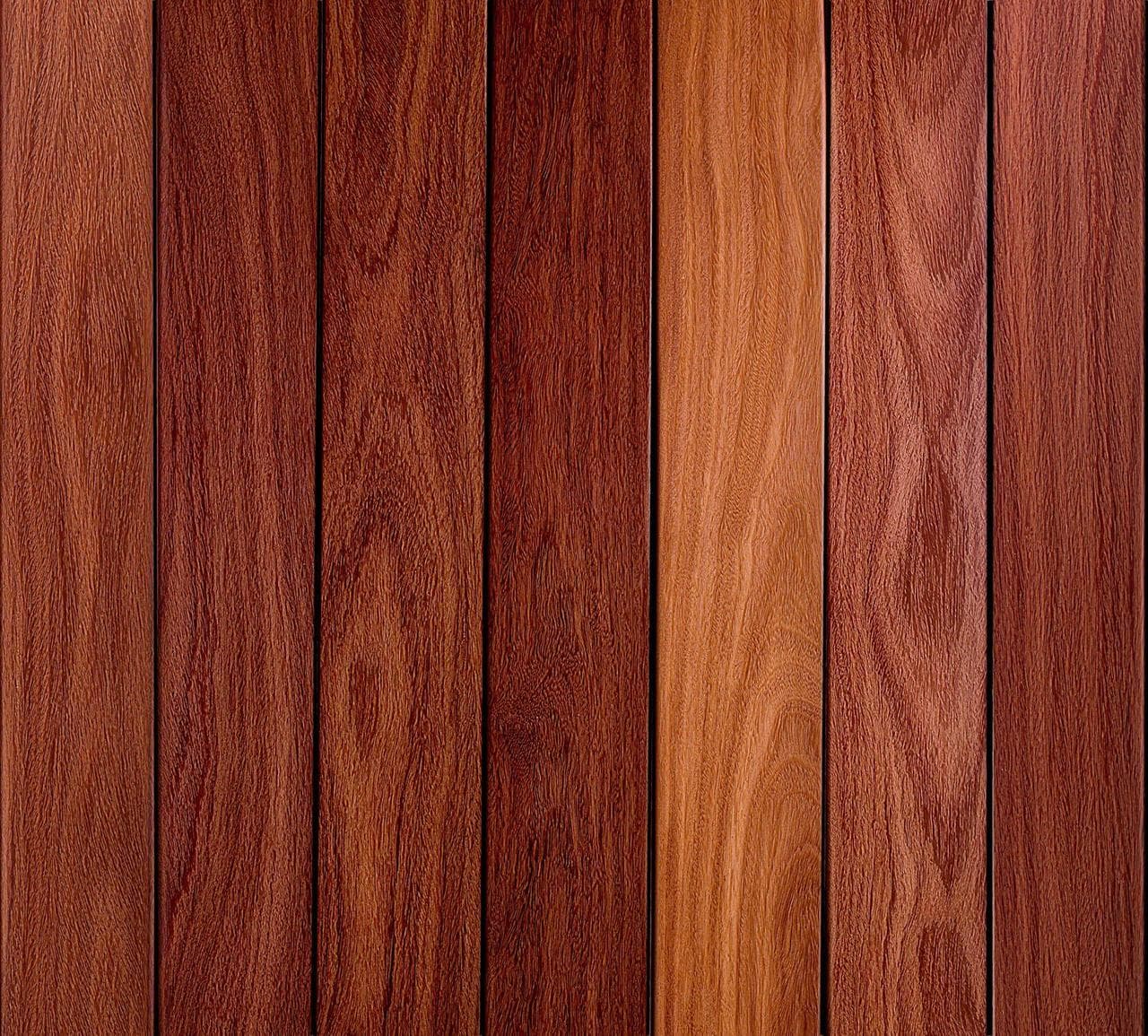
Cumaru is a dense tropical hardwood, recognized for its durability and distinctive reddish-brown color, sometimes with a subtle golden hue. Its robust nature makes it a suitable choice for exterior applications, offering a natural resistance to decay and insects. This inherent strength and character are present whether Cumaru is processed into modular deck tiles or traditional deck boards.
The species name for Cumaru is often associated with its Janka hardness rating, which indicates its resistance to indentation. This characteristic contributes to its suitability for high-traffic outdoor areas. Both Cumaru deck tiles and deck boards offer this intrinsic material benefit, but the form factor dictates how this durability is leveraged in an outdoor living space.
Cumaru's appearance can vary, with some pieces exhibiting a more pronounced grain pattern, while others appear smoother. Over time, like many tropical hardwoods, Cumaru can weather to a silver-gray patina if left untreated. Regular application of a suitable oil finish can help maintain its original color.
Cumaru Deck Tiles: Modularity and Accessibility
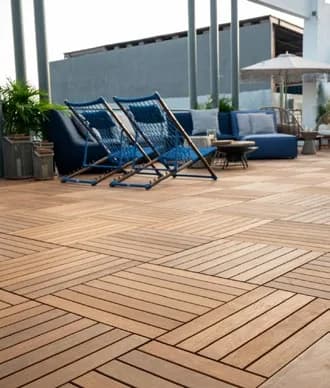
Cumaru deck tiles are pre-assembled modules, typically with multiple Cumaru slats attached to a plastic or wood grid. Lumber Plus offers Cumaru deck tiles in common dimensions such as 12 x 12 inches and 24 x 24 inches. The 12 x 12 inch format covers one square foot per tile, while the 24 x 24 inch format covers four square feet per tile. These modular units are designed for relatively straightforward installation, often without the need for specialized tools or extensive framing.
A key advantage of deck tiles is their ability to be installed over various existing substrates, including concrete patios, existing pavers, or even directly over rooftop membranes when using a compatible pedestal system. This adaptability allows for creating a finished surface without altering the underlying structure. The modular nature also facilitates access to the substrate below, which is particularly beneficial for rooftop applications where membrane inspection or repair might be necessary.
Deck tiles can be a good option for projects where a low finished height is desired, or where the existing surface is not perfectly level. Pedestal systems can be adjusted to create a level plane over an uneven substrate, while also providing space for drainage and ventilation beneath the tiles. The grid design of the tiles also ensures consistent spacing between the individual Cumaru slats, contributing to a uniform appearance.
Cumaru Deck Boards: Traditional Framing and Customization
Traditional Cumaru deck boards are individual planks of varying lengths and widths, typically installed over a framed substructure of joists and beams. This method requires a more involved construction process, including the careful planning and building of a robust supporting framework. The substructure needs to be properly designed and constructed to meet local building practices and support the intended loads.
Deck boards offer greater flexibility in design, allowing for custom patterns, curves, and cantilevered sections that might be more challenging with modular tiles. The installation process involves fastening individual boards to the joists, often using hidden fasteners for a cleaner look or visible screws for a more traditional aesthetic. This method typically results in a finished deck surface that is more integrated with the overall structure.
Choosing deck boards is generally preferred for ground-level decks, elevated decks, or any project where a permanent, custom-built structure is desired. They allow for more precise control over the spacing between boards, which can influence drainage and aesthetics. However, access to the area beneath a deck board installation is typically more limited compared to a tile system, especially if the deck is built low to the ground.
Key Differences: Support, Height, Substrate, and Access
The fundamental difference lies in the support system. Deck tiles can often be laid directly on a solid, level surface or on adjustable pedestals, requiring minimal structural work. Deck boards, however, demand a dedicated framed substructure, which involves joists, beams, and footings. This means a more significant construction effort and a potentially higher finished height for deck boards.
Substrate compatibility is another critical distinction. Deck tiles are highly adaptable for installation over existing concrete, rooftops, or even compacted gravel with proper preparation. Deck boards require a prepared substructure, meaning the ground or underlying surface must be suitable for foundations and framing. This makes tiles a strong contender for renovations over existing hardscapes or sensitive membranes.
Access to the underlying surface is a practical consideration. Deck tiles, especially those installed on pedestals, can often be lifted to inspect or service the substrate (e.g., a rooftop membrane or drainage system). Deck board installations are typically more permanent; accessing the area beneath often requires dismantling sections of the deck, which can be a more involved process.
Finished height is also a factor. Deck tiles, particularly when laid directly on a surface, can create a very low-profile deck. Pedestal systems will add height, but often less than a traditional framed deck, which requires clearance for joists and airflow. Consider door thresholds and adjacent surfaces when planning.
Worked Example: A Rooftop Terrace Project
Let's consider a hypothetical rooftop terrace project measuring 10 feet by 15 feet. The existing roof membrane needs protection and periodic inspection, and the surface has a slight slope for drainage, requiring a level finished deck. The project also needs to accommodate a door threshold that limits the maximum finished deck height to 4 inches.
For this scenario, Cumaru deck tiles on a pedestal system would likely be the more suitable choice. The modular 24 x 24 inch Cumaru deck tiles (each covering 4 square feet) could be laid out to cover the 150 square foot area. You would need 150 / 4 = 37.5 tiles, so 38 tiles would be a starting point, accounting for potential cuts. The adjustable pedestals would allow the creation of a perfectly level surface over the sloped membrane while maintaining the necessary clearance for drainage and airflow.
Furthermore, if the roof membrane ever needs servicing, individual tiles can be lifted, providing direct access without dismantling the entire deck. This preserves the integrity of the membrane and simplifies future maintenance. The installation would involve placing the pedestals, adjusting them to height, and then setting the Cumaru deck tiles into place. This approach minimizes structural impact on the roof and offers flexibility for future adjustments.
Before you order
- What is the existing substrate (concrete, soil, rooftop membrane, gravel)?
- What is the desired finished height of the deck surface?
- Do you need access to the area beneath the deck after installation?
- What is your budget for materials and labor (tiles generally have lower labor for installation, but higher material cost per square foot)?
- Do you require custom shapes, curves, or integrated features?
- What level of DIY capability do you have, or will you hire a contractor?
- Are there any specific drainage or ventilation requirements for the site?
Confirm installation details, approved uses and warranty terms in the current instructions for the exact product and profile. Your installer should verify the substrate, structure and applicable project requirements.
Questions to help you decide
Can Cumaru deck tiles be installed directly on grass?
While Cumaru deck tiles can be placed on various surfaces, installing them directly on grass is generally not recommended for a long-lasting, stable solution. Grass and soil can shift, leading to an uneven surface. For a stable tile installation over a soft ground surface, it's usually best to prepare a compacted gravel base with a weed barrier first. This provides a firmer, more stable foundation and helps with drainage.
Do Cumaru deck tiles require a substructure like traditional deck boards?
No, Cumaru deck tiles do not typically require a traditional framed substructure of joists and beams, unlike deck boards. They are designed for installation on a solid, level surface like concrete, an existing patio, or using adjustable pedestal systems over uneven or soft surfaces. This modular approach simplifies installation and reduces the need for extensive carpentry.
How do Cumaru deck tiles handle drainage compared to deck boards?
Both Cumaru deck tiles and deck boards allow for drainage between the individual wood elements. Deck tiles, especially when installed on pedestals, create an elevated surface with clear space beneath, facilitating excellent drainage and airflow, which is crucial for rooftop applications or over existing membranes. Traditional deck boards also allow water to drain between planks, but the substructure itself needs to be designed for proper water management, and access for cleaning beneath can be more limited.
Ready to Transform Your Outdoor Space with Cumaru?
Request a material quote today. Provide your project dimensions, desired Cumaru profile (tiles or boards), and your ZIP code to confirm current availability and service options. Our team can help you select the right Cumaru product for your project's specific needs.
Request a material quote →