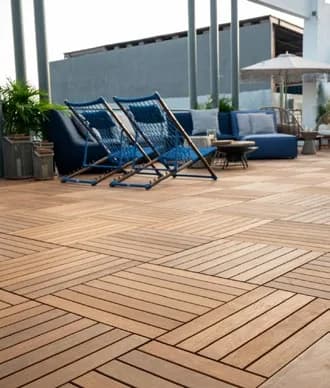
Understanding Cumaru Deck Tile Dimensions and Edge Exposure
Cumaru deck tiles are available in standard sizes, typically 12" x 12" or 24" x 24". Each tile, regardless of its length and width, has a specific thickness. This thickness, combined with any underlying support system like pedestals or sleepers, determines the overall finished height of your deck tile surface. The exposed vertical face of these tiles, or the gap beneath them, is what you will need to address at the perimeter.
The 12" x 12" format is often chosen for smaller areas or layouts with more intricate edges and transitions, while the 24" x 24" format suits larger, more open surfaces with fewer tile seams. Regardless of the size chosen, the principle of edge finishing remains consistent: you need to cover or transition from the exposed tile edge and its support structure to the adjacent surface.
Assessing the Adjacent Surface and Height Differences
Before selecting an edge treatment, evaluate the surface immediately next to your Cumaru deck tile installation. Is it a concrete slab, a lawn, another type of decking, or an interior floor? The nature of this adjacent surface dictates suitable transition methods.
Crucially, measure the height difference between the finished deck tile surface and the adjacent area. If the tile surface is significantly higher, you will need a ramp or a substantial trim piece to mitigate a tripping hazard. If it's slightly higher, a simple trim or nosing might suffice. If the tile surface is flush, the edge treatment might be primarily aesthetic.
Common Edge Finishing Options for Deck Tiles
Several approaches can be taken to finish the perimeter of a Cumaru deck tile installation:
**1. Matching Trim or Nosing:** This involves using Cumaru lumber, often milled to a specific profile, to create a border around the deck tiles. A square-edge trim can provide a clean, defined look, while a bullnose or rounded nosing can soften the edge and improve safety. This option works well when the deck tile surface is slightly elevated.
**2. Ramp Edges:** For significant height differences, especially at entrances or where accessibility is a concern, a ramp edge is often necessary. These can be custom-fabricated from Cumaru lumber or purchased as pre-manufactured ramp profiles designed for deck tiles. Ramps gradually reduce the height difference, creating a smooth transition.
**3. Fascia Boards:** If your deck tiles are installed on a raised substructure (e.g., pedestals) and there's a visible gap or void beneath them, a fascia board can be installed vertically along the perimeter. This covers the substructure and creates a solid, finished appearance. Cumaru fascia boards can be matched to the tiles for a uniform look.
**4. Gravel or Landscape Edging:** For installations bordering a garden or lawn, a border of decorative gravel or a landscape edging system can provide a soft transition. This approach is typically suitable for ground-level installations where a slight step down is acceptable, or where drainage away from the tiles is a priority.
**5. Integrated Edge Pieces:** Some deck tile systems offer proprietary edge and corner pieces that are designed to interlock or integrate seamlessly with the main tiles. These often provide a finished look and address trip hazards directly. However, Cumaru deck tiles are typically individual modules that require separate edge treatments.
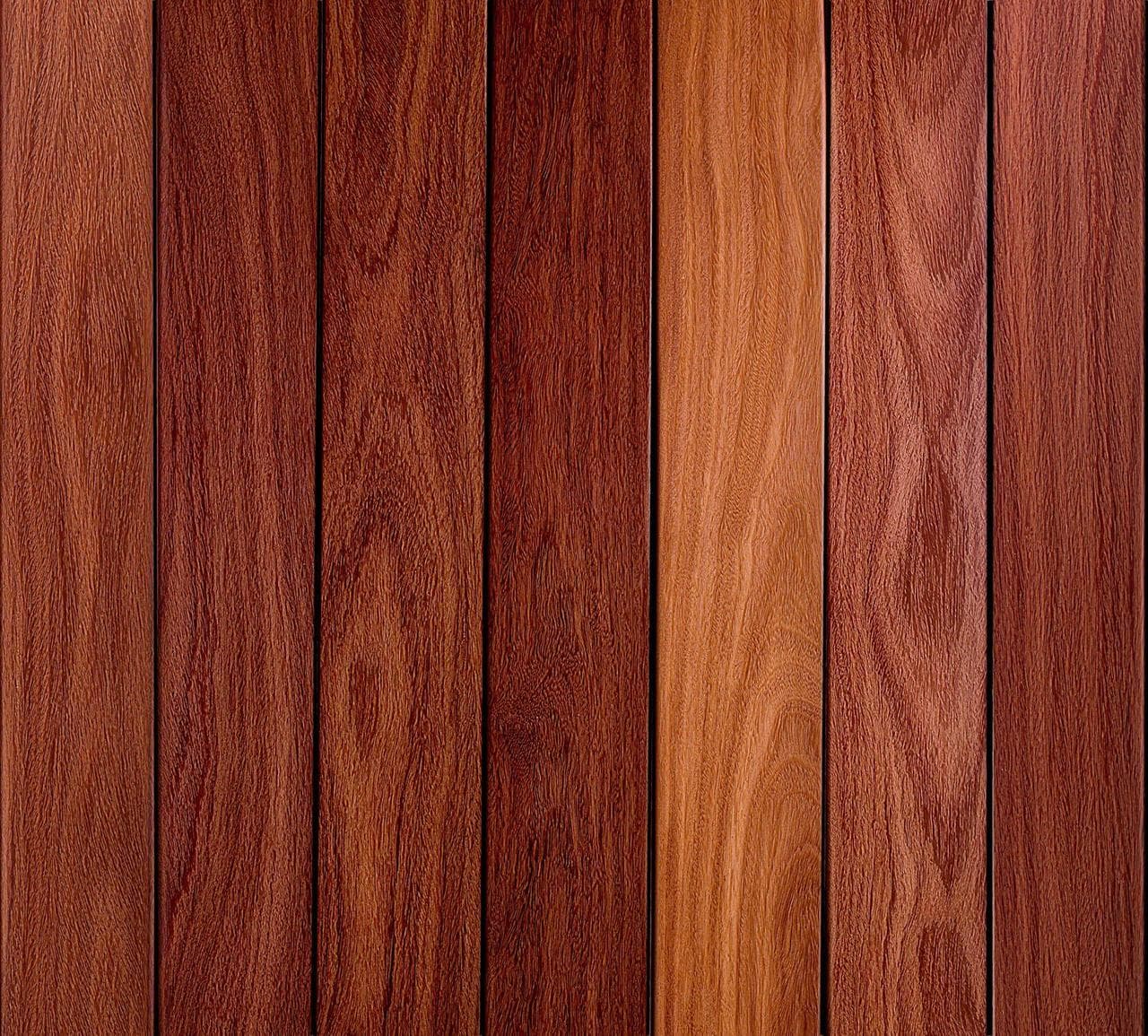
Worked Example: Finishing a 10-foot by 8-foot Cumaru Deck Tile Balcony
The balcony has a door threshold on one 8-foot side, and open edges on the other three sides.
**Step 1: Determine Tile Quantity.** A 10-foot (120-inch) side will require 5 tiles (120/24 = 5). An 8-foot (96-inch) side will require 4 tiles (96/24 = 4). Total tiles needed for the main field: 5 x 4 = 20 tiles. No cutting is needed for the main field in this hypothetical example.
**Step 2: Address the Door Threshold.** On the 8-foot side adjacent to the door, the 2-inch height difference needs careful consideration. A custom-fabricated Cumaru ramp edge would be appropriate here, starting flush with the door threshold and gradually sloping down to meet the deck tile height. This ensures a smooth, safe entry and exit. The ramp should extend the full 8-foot width of the door opening.
**Step 3: Finish the Open Edges.** For the remaining three open sides (one 10-foot, one 8-foot, and one 10-foot), a Cumaru fascia board, approximately 2 inches tall, can be installed vertically along the perimeter. This conceals the pedestal system and the edge of the concrete slab, creating a clean, architectural finish. This fascia would be secured to the substructure or the edge of the concrete, depending on the specific assembly plan. The total length of fascia needed would be 10 + 8 + 10 = 28 linear feet.
This example illustrates how different edge treatments are applied based on the specific conditions of each perimeter section, prioritizing both aesthetics and safety.
Considering Trip Hazards and Safety
Any change in elevation, no matter how small, can pose a tripping hazard. When planning your Cumaru deck tile edges, actively seek to minimize or eliminate these risks. Ramps are ideal for significant height transitions. For smaller steps, a clearly defined nosing or a contrasting edge material can help delineate the change in level.
Ensure all edge components are securely fastened and flush with the adjacent surfaces to prevent snags or loose pieces. Regular inspection of the perimeter for wear or damage is also important for ongoing safety.
Complementary Products for Your Cumaru Deck Tile Project
Beyond the Cumaru deck tiles themselves, consider these complementary products for a complete installation:
**Deck Tile Pedestals:** These adjustable supports raise the tiles, allowing for drainage and leveling on uneven surfaces. They are often a key component of the substructure that the edge treatment will conceal or transition from. (See: Deck Tiles)
**Ipe Deck Tiles:** If you are planning a multi-zone outdoor space, Ipe deck tiles offer a deep chocolate tone that can create a visual contrast or complement Cumaru in certain design schemes. They share similar durability characteristics. (See: Ipe Deck Tiles)
**Garapa Deck Tiles:** For a brighter, golden-toned alternative or accent, Garapa deck tiles provide another tropical hardwood option with excellent outdoor performance. (See: Garapa Deck Tiles)
Before you order
- Measure the finished height of your Cumaru deck tile installation.
- Identify the type of adjacent surface at each perimeter edge (e.g., concrete, lawn, interior floor).
- Measure the height difference between the deck tile surface and each adjacent surface.
- Assess potential trip hazards at each edge and plan appropriate mitigation (e.g., ramp, nosing).
- Choose specific edge treatment options for each unique perimeter section (e.g., fascia, trim, ramp).
- Calculate the linear footage needed for each selected edge component.
- Confirm compatibility of edge components with your chosen deck tile support system.
- Consider the aesthetic integration of edge finishes with the overall design.
Confirm installation details, approved uses and warranty terms in the current instructions for the exact product and profile. Your installer should verify the substrate, structure and applicable project requirements.
Questions to help you decide
Can I leave the edges of my Cumaru deck tiles unfinished?
While technically possible, leaving deck tile edges unfinished is generally not recommended. It can expose the underlying substructure, create an unfinished appearance, and, most importantly, present a tripping hazard due to the exposed vertical edge of the tiles or the gap beneath them. Finishing the edges enhances both the safety and the aesthetic appeal of your installation.
How do I ensure a smooth transition from Cumaru deck tiles to an interior space?
Transitioning from Cumaru deck tiles to an interior space, especially through a doorway, requires careful planning to manage height differences. A custom-fabricated Cumaru ramp or a specialized transition strip designed to bridge the gap and height change is usually the best approach. The goal is to eliminate any abrupt steps that could cause a trip.
Are there pre-made edge pieces available for Cumaru deck tiles?
Cumaru deck tiles, as individual hardwood modules, typically do not come with integrated, pre-made edge pieces. You will generally need to use Cumaru lumber for custom trim, fascia, or ramp components, or utilize universal transition strips that are compatible with the height and material. This allows for flexibility in design and ensures a precise fit for your specific project.
Request a Quote for Your Cumaru Deck Tile Project
Ready to plan the perfect finish for your Cumaru deck tile installation? Provide your project dimensions, desired Cumaru profile, and ZIP code to request a material quote. We can help confirm current availability and service options for your chosen materials.
Request a material quote →