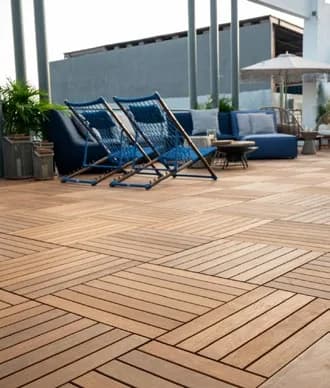
Cumaru Deck Tiles: The Foundation of Your Elevated Deck
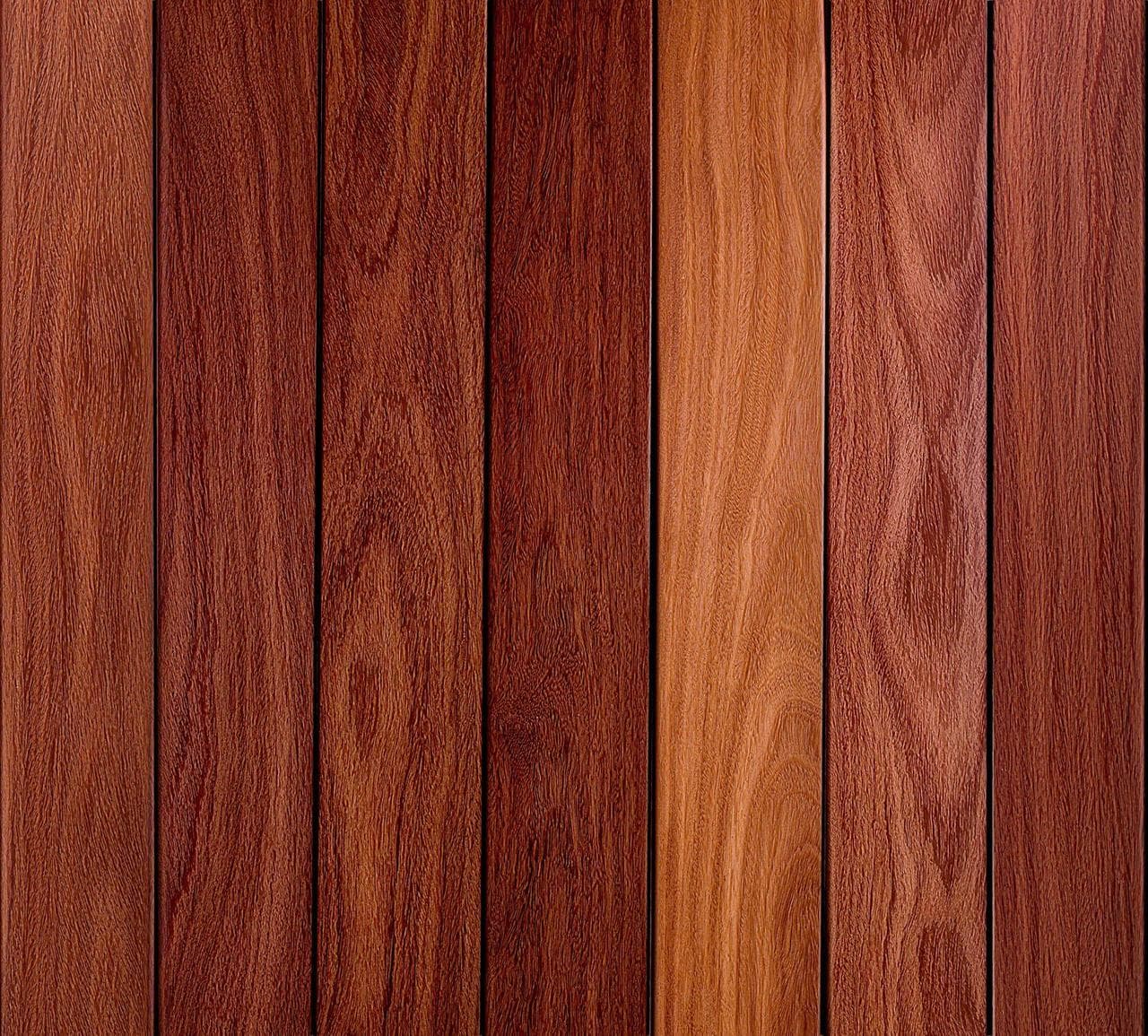
Cumaru deck tiles offer a rich reddish-brown grain, providing the strength and character of tropical hardwood for your outdoor space. They are available in two primary dimensions: 12 x 12 inches (1 square foot per tile) and 24 x 24 inches (4 square feet per tile). The choice of tile size can influence the overall appearance and the grid layout for your pedestal system.
Unlike interlocking deck tiles that feature integrated connecting mechanisms, Cumaru deck tiles are individual modules designed to rest on a support structure. This distinction is fundamental when planning a pedestal-supported deck, as the tiles themselves do not provide the interlocking stability; that comes from the pedestal system and proper layout.
Understanding Pedestal Systems for Deck Tiles
A pedestal system creates an elevated, level platform by supporting individual deck tiles at their corners. Each pedestal typically consists of a base, a threaded shaft for height adjustment, and a head that supports the tile corners. Many pedestal heads include spacer tabs that help maintain consistent gaps between tiles for drainage and a uniform appearance.
Key advantages of using a pedestal system include the ability to level surfaces over significant slopes, conceal utilities or drainage beneath the deck, and allow for easy access to the substrate below. This method also promotes airflow, which can be beneficial for the longevity of the deck tiles and the underlying surface.
Compatibility: Cumaru Tiles and Pedestal Heads
The primary point of compatibility between Cumaru deck tiles and a pedestal system is the design of the pedestal head. Most pedestal systems are designed to accommodate square or rectangular deck tiles, with the tile corners resting directly on the pedestal head's support pads.
The spacer tabs on the pedestal head should also align with your desired gap width between tiles. While Cumaru is a dense hardwood, the weight of the tiles is distributed across multiple pedestals, so the structural capacity of the pedestal itself is the main concern.
Planning for Edges and Perimeter Restraint
Because Cumaru deck tiles on a pedestal system are not mechanically fastened to each other or the substrate, edge restraint is often necessary to prevent lateral movement of the tiles, especially at the perimeter of the deck. This is a critical difference from interlocking systems.
Perimeter restraint can be achieved through various methods, such as securing a fascia board to the outer pedestals, installing a continuous edge trim, or using specialized perimeter pedestals designed to hold the tile edges. The specific method will depend on your project's aesthetic goals and structural requirements. In some cases, especially with smaller, contained areas, the weight of the tiles themselves may provide sufficient stability, but for larger or exposed areas, dedicated edge restraint is a prudent measure.
Access and Maintainability Beneath the Deck
This is particularly useful for rooftop installations where roof membranes, drains, or utilities might need periodic inspection or maintenance. With Cumaru deck tiles simply resting on the pedestals, individual tiles can often be lifted without disrupting the entire surface.
When planning your layout, consider where access might be most frequently needed. Avoid placing permanent structures or heavy planters directly over critical access points if you anticipate needing to lift tiles regularly. This modular access supports long-term maintenance of both the deck surface and the underlying structure.
Hypothetical Project Example: A 10x12 Foot Rooftop Terrace
We will use 24x24 inch Cumaru deck tiles.
First, calculate the area: 10 feet * 12 feet = 120 square feet. Each 24x24 inch tile covers 4 square feet. So, 120 square feet / 4 square feet/tile = 30 tiles. However, for a precise grid, we plan for full tiles.
For a 10-foot width (120 inches), using 24-inch tiles: 120 inches / 24 inches/tile = 5 tiles across. For a 12-foot length (144 inches), using 24-inch tiles: 144 inches / 24 inches/tile = 6 tiles long. This results in a total of 5 * 6 = 30 tiles.
For the pedestal layout, each tile corner will require support. This count accounts for all interior and perimeter supports. You would typically add a small percentage for waste or cuts.
For edge restraint, a low-profile aluminum trim could be installed around the entire perimeter, secured to the outer pedestals or directly to the substrate if permitted, to contain the tiles and prevent movement.
Before you order
- Confirm Cumaru deck tile dimensions (12x12 or 24x24 inches).
- Verify pedestal head compatibility with chosen tile size.
- Determine required pedestal height range for leveling.
- Plan for perimeter edge restraint method.
- Identify areas needing service access beneath the deck.
- Calculate the number of tiles and pedestals needed, allowing for cuts and waste.
- Consider drainage requirements and ensure pedestal system allows for water flow.
Confirm installation details, approved uses and warranty terms in the current instructions for the exact product and profile. Your installer should verify the substrate, structure and applicable project requirements.
Questions to help you decide
Can Cumaru deck tiles be installed directly on grass or dirt?
No, Cumaru deck tiles are designed for installation on a stable, level, and well-drained surface, or on a pedestal system. Installing them directly on grass or dirt would lead to unevenness, instability, and potential issues with moisture and rot due to poor drainage and contact with soil.
How do I ensure the deck surface is level with a pedestal system?
Pedestal systems typically feature threaded components that allow for individual height adjustment of each pedestal. You use a level to check the surface as you install the tiles, adjusting each pedestal until the entire deck surface is level. Some advanced systems offer self-leveling heads to compensate for minor substrate irregularities.
Are pedestal-supported Cumaru deck tiles considered permanent or removable?
Pedestal-supported Cumaru deck tiles are generally considered a removable installation. Because the tiles are not permanently attached to the pedestals or the substrate, individual tiles can be lifted and replaced, and the entire system can often be disassembled if needed. This offers flexibility for maintenance or future changes, making them suitable for applications like rental properties or commercial spaces requiring frequent access.
Plan Your Cumaru Deck Tile Project
Ready to elevate your outdoor space with Cumaru deck tiles and a pedestal system? Request a material quote by providing your project dimensions, exact tile profile, and ZIP code to confirm current availability and service options. We can help you determine the quantities needed for your specific project.
Request a material quote →