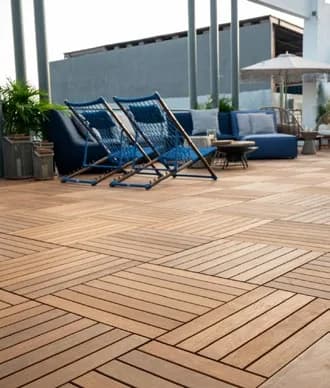
Confirming Cumaru Deck Tile Species and Characteristics
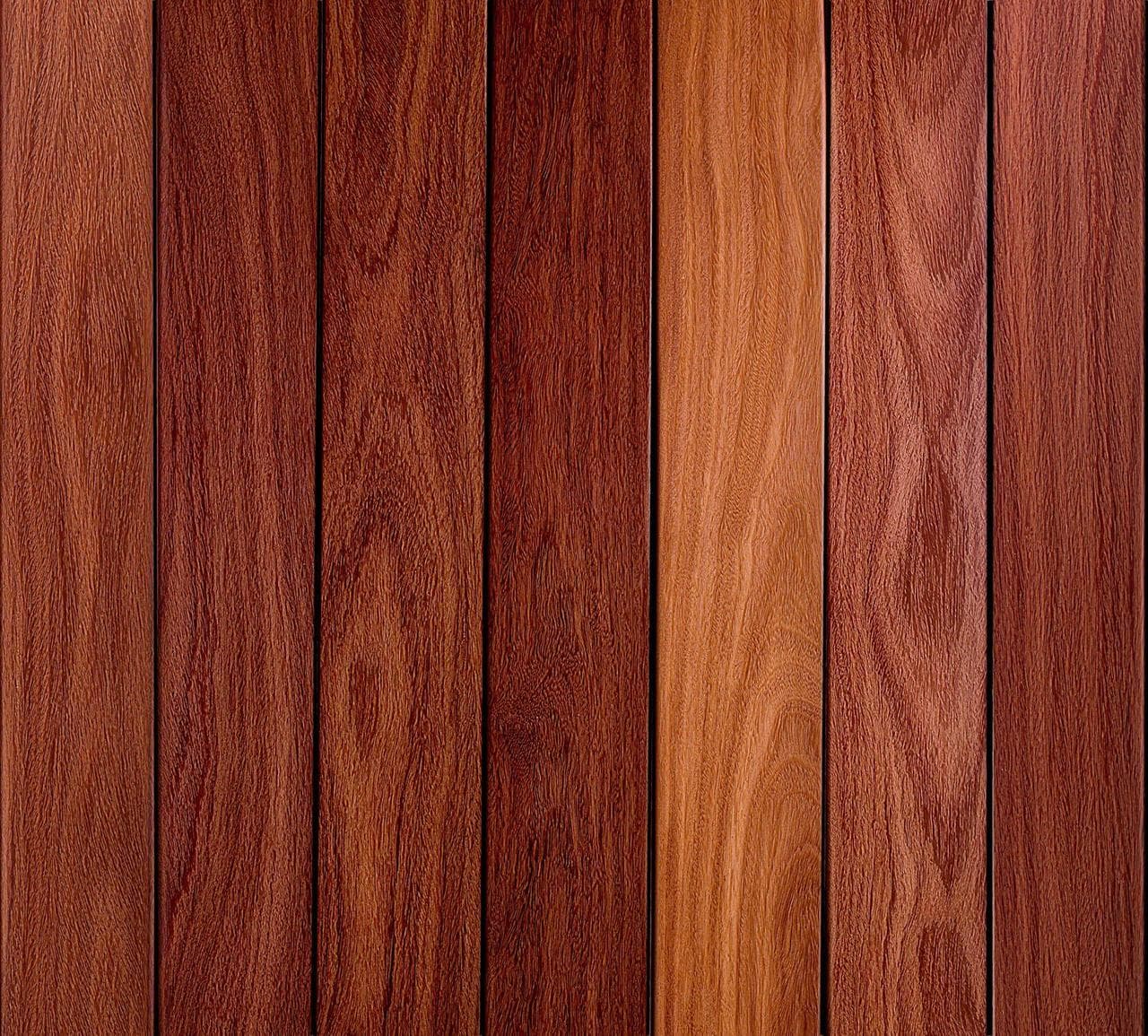
Cumaru deck tiles offer a rich reddish-brown grain, known for the strength and character often associated with tropical hardwood. This distinct appearance is a key reason many choose Cumaru for outdoor spaces.
Before ordering, confirm that Cumaru is the specific species agreed upon with your contractor. While other tropical hardwoods like Ipe (deep chocolate tones) or Garapa (warm golden tones) are available, Cumaru has its own unique color and grain patterns that contribute to the overall aesthetic of your project.
Ensure your contractor is familiar with handling and installing Cumaru, as its natural density may influence cutting and fastening methods compared to softer wood species.
Selecting the Right Tile Dimensions
Cumaru deck tiles are available in different dimensions, primarily 12 x 12 inches and 24 x 24 inches. The choice of tile size has practical implications for both the visual layout and the installation process.
The 12 x 12 inch tile provides 1 square foot of coverage per tile. This compact size can be suitable for smaller areas, intricate layouts, or spaces with numerous edges, transitions, or obstacles, where more cuts might be needed.
The 24 x 24 inch tile covers 4 square feet per tile. This larger format is often selected for more expansive terraces and open surfaces, as it results in fewer tile seams across the installed area. Consider how the tile size will align with your project's overall dimensions to minimize waste and optimize the visual flow.
Discuss with your contractor which size best suits the design and practicalities of your specific outdoor space, taking into account any desired patterns or edge treatments.
Understanding the Substrate and Support System
The type of substrate and support system beneath your Cumaru deck tiles is a critical detail. Whether your project involves installation over a concrete patio, a rooftop membrane, or an existing deck, the support structure dictates how the tiles will be laid.
Common support methods include sleepers, joists, or adjustable pedestal systems. Each system has specific requirements for spacing, leveling, and drainage. Confirm with your contractor the exact system they plan to use and verify its compatibility with the chosen Cumaru deck tile dimensions.
For pedestal systems, ensure the pedestals are rated for the anticipated loads and are designed to accept the specific corner or edge of the deck tiles without compromising stability. Proper drainage is also essential, especially for rooftop or ground-level installations, to prevent water accumulation beneath the tiles.
Planning for Edges, Transitions, and Obstacles
Every outdoor space has edges, transitions, or fixed obstacles like columns, planters, or drains. How Cumaru deck tiles are handled in these areas affects both the aesthetics and the functionality of the installation.
Discuss with your contractor the finishing details for exposed edges. This might involve using trim pieces, creating a slight overhang, or ensuring a flush finish with adjacent surfaces. For transitions to other materials, such as pavers or indoor flooring, confirm how the height difference will be managed.
Obstacles require precise cutting and fitting of tiles. Ensure your contractor has a plan for these areas, including how to maintain access to drains or other service points if necessary. The goal is a clean, integrated look that also allows for practical access when needed.
Calculating Material Quantities: A Worked Example
Accurate material quantity calculation is essential. Here's a hypothetical example: You have a rectangular terrace measuring 10 feet 6 inches by 12 feet, and you plan to use 24 x 24 inch Cumaru deck tiles.
First, convert all dimensions to inches: 10.5 feet = 126 inches; 12 feet = 144 inches. Each 24 x 24 inch tile is 24 inches by 24 inches.
For the 126-inch side, you'll need 126 / 24 = 5.25 tiles. Since you cannot purchase a quarter tile, you will need 6 full tiles along this dimension. The excess 0.75 tile (18 inches) could potentially be used as an offcut if a similar-sized piece is needed elsewhere.
For the 144-inch side, you'll need 144 / 24 = 6 tiles. This dimension fits perfectly.
Therefore, for the main area, you would need 6 tiles by 6 tiles, totaling 36 tiles. However, this calculation assumes perfect cuts and no waste. Always consult with your contractor to add a waste factor (typically 5-10%) to account for cuts, potential damage, or future replacements. For this example, ordering 38-40 tiles would be a more practical approach after contractor review.
This example highlights that area-equivalent coverage (10.5 ft x 12 ft = 126 sq ft / 4 sq ft per tile = 31.5 tiles) does not directly translate to purchased quantity when cuts and waste are considered.
Before you order
- Confirm Cumaru species and its reddish-brown characteristics.
- Verify the chosen tile dimensions (12x12 inch or 24x24 inch).
- Review the proposed substrate and support system (sleepers, joists, pedestals).
- Discuss plans for edge treatments, transitions, and obstacle integration.
- Finalize material quantities, including a waste factor, with your contractor.
- Confirm access requirements for any underlying services or drains.
- Establish a clear delivery and on-site storage plan for the tiles.
Confirm installation details, approved uses and warranty terms in the current instructions for the exact product and profile. Your installer should verify the substrate, structure and applicable project requirements.
Questions to help you decide
What are the main visual differences between Cumaru and other tropical hardwoods?
Cumaru is distinguished by its rich reddish-brown grain. In contrast, Ipe typically features deeper chocolate tones, while Garapa offers warmer golden hues. These differences in natural color and grain pattern contribute significantly to the overall aesthetic of your outdoor space.
How does tile size (12x12 vs. 24x24) impact my project?
The 12x12 inch tiles (1 square foot each) are often suitable for smaller areas or complex layouts with many cuts and transitions. The larger 24x24 inch tiles (4 square feet each) are generally preferred for expansive areas, as they create fewer seams and a more open visual effect. Your contractor can help determine which size best suits your design and installation efficiency.
Do Cumaru deck tiles require a specific type of support system?
Cumaru deck tiles require a stable and level support system. Common options include traditional sleepers or joists, or adjustable pedestal systems. The choice depends on the underlying substrate (e.g., concrete, rooftop membrane) and desired height. It is crucial to confirm the compatibility of your chosen tiles with the specific support system your contractor plans to use to ensure proper installation and long-term stability.
Ready to Plan Your Cumaru Deck Tile Order?
Provide your project dimensions, desired Cumaru deck tile profile, and ZIP code to request a material quote. Our team can help confirm current availability and service options for your project.
Request a material quote →