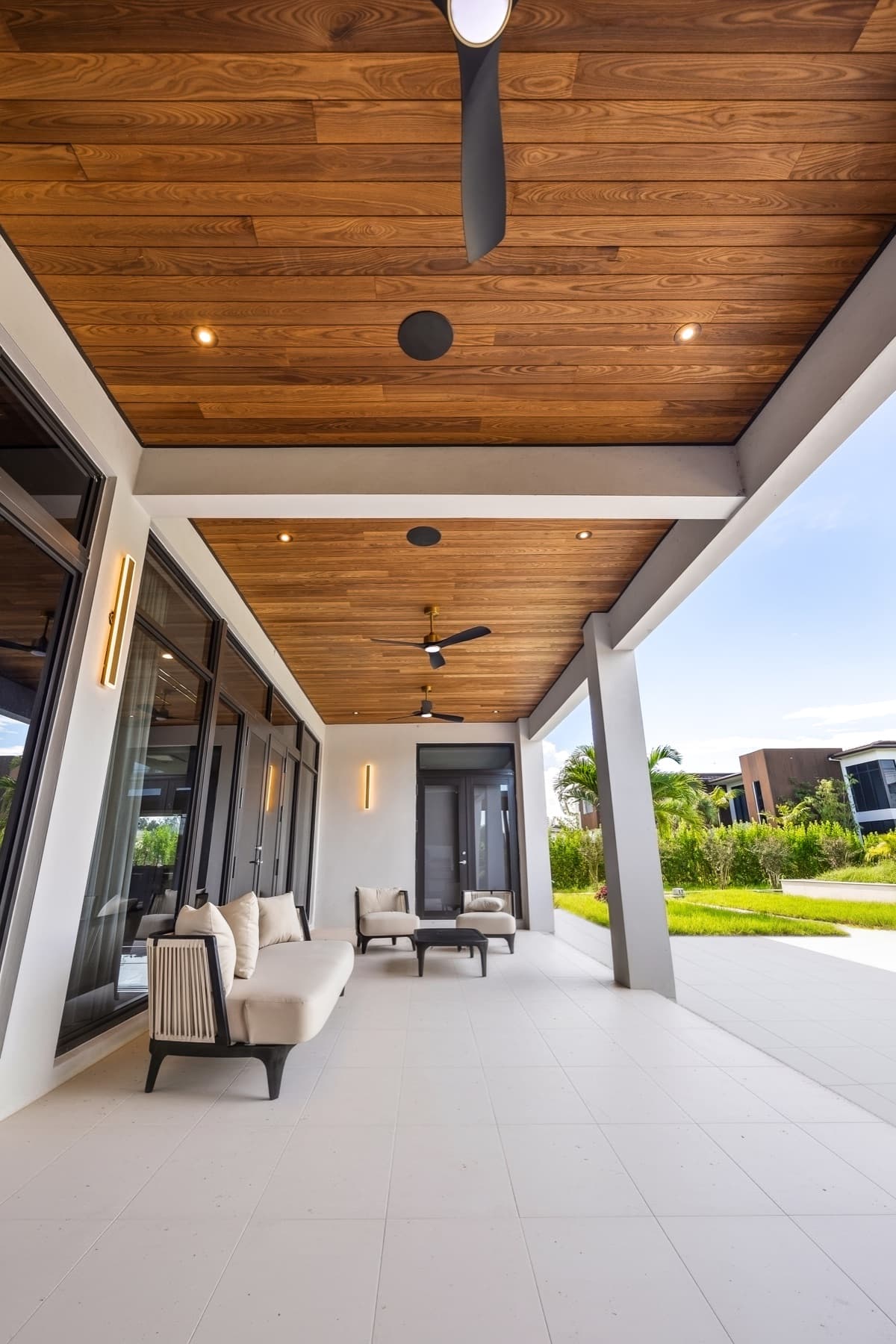
Evaluating Material Options for Naples Porches
Lumber Plus offers a range of materials suitable for porch ceilings and soffits, each with distinct characteristics. Thermally modified wood, such as Ayous or Ash, provides a natural wood aesthetic while offering enhanced stability. These woods undergo a heat treatment process that can improve their resistance to environmental factors, making them a suitable choice for covered outdoor applications. They can be finished to achieve various looks, from light and airy to deep and rich.
Brazilian hardwoods like Ipe, Cumaru, and Garapa offer exceptional density and natural resistance, often chosen for their durability and distinct grain patterns. These materials can be left to weather naturally to a silver-gray patina or maintained with appropriate finishes to preserve their original color. Angelim, Jatoba, and Tigerwood are also available, providing a spectrum of natural tones and textures.
For those seeking engineered solutions, Maximo Accoya is an acetylated wood product known for its dimensional stability and resistance to decay. Norx composite materials offer another alternative, providing a consistent appearance and minimal maintenance requirements. Each material type presents a balance of aesthetics, performance, and long-term care.
The choice between natural wood and engineered options often comes down to desired aesthetic, maintenance preferences, and budget. Natural woods provide unique character and can evolve over time, while composites and modified woods offer uniformity and predictable performance.
Balancing Aesthetics and Proportions
The visual impact of your porch ceiling is heavily influenced by the material's color, texture, and the way it integrates with the overall architecture. For a spacious lanai, a lighter-toned thermally modified Ayous ceiling can enhance brightness and make the space feel more expansive. The clean grain of thermally modified Ash can contribute to a contemporary aesthetic.
If you desire a deeper, richer look, Brazilian hardwoods like Ipe or Cumaru can provide a striking contrast, especially when paired with lighter exterior finishes. Norx composite materials, available in various finishes such as Oxford Gray, can offer a consistent, modern appearance that complements contemporary designs.
Consider the scale of your porch. A small entry porch might benefit from a material with a strong visual presence, while a large, expansive porch might call for a more subtle, uniform material to avoid overwhelming the space. The direction of the ceiling boards can also influence the perception of depth and length, guiding the eye toward an entry or a view.
Integrating Lighting and Fans
Porch ceilings are key locations for integrating lighting and ceiling fans. Proper planning ensures that these fixtures are seamlessly incorporated and provide adequate illumination and air circulation. When selecting ceiling boards, consider how recessed lighting fixtures will be accommodated. The thickness and stability of the material are important for secure mounting.
For ceiling fans, ensure that the chosen ceiling material and its underlying support structure can safely bear the weight and vibration of the fan. Consult with an electrician and your contractor to confirm wiring pathways and suitable mounting points. Wood ceiling boards can be cut precisely to accommodate light fixtures and fan housings, creating a clean, finished look.
Understanding Soffit Ventilation in a Coastal Climate
Soffits are critical components of your roof system, facilitating proper attic ventilation. In a warm, humid climate like Naples, FL, effective ventilation helps manage heat and moisture buildup in the attic, contributing to the longevity of your roof and potentially impacting energy efficiency. While some ceiling and soffit materials are designed for solid applications, others can be specified with ventilation features or used in conjunction with discrete vents.
When planning your porch soffit, ensure that your material choice allows for adequate airflow as specified by your roof design and local building codes. This often involves using vented soffit panels or incorporating separate vents within a solid soffit system. Consult with your builder or a roofing specialist to ensure your material selection supports the overall roof ventilation strategy and meets all necessary requirements for your specific project.
Worked Example: Lanai Ceiling Material Calculation
Let's consider a hypothetical lanai in Naples, FL, measuring 20 feet by 15 feet, with a flat ceiling. We'll use thermally modified Ayous ceiling boards, which are typically available in 1x6 (nominal) profiles, translating to approximately 5.5 inches actual width. For simplicity, we'll assume standard lengths are available and plan for minimal waste.
First, calculate the total area: 20 feet * 15 feet = 300 square feet. Each 1x6 board covers 0.4583 square feet per linear foot (5.5 inches / 12 inches per foot). To cover 300 square feet, you would need 300 / 0.4583 = 654.59 linear feet of material.
Assuming boards are available in 10-foot lengths, you would need 654.59 / 10 = 65.459 boards. Rounding up to the nearest whole board, you'd purchase 66 boards. It is also recommended to add a waste factor, typically 5-10%, for cuts, imperfections, or installation adjustments. For a 10% waste factor, you would add 66 * 0.10 = 6.6 boards, bringing the total to approximately 73 boards. This would translate to 730 linear feet of material.
This example simplifies the process. Actual projects require precise measurements, a detailed cut plan, and consideration for specific board lengths, end-matching, and any necessary framing for lighting or fans. Always confirm actual board dimensions and coverage with your supplier.
Before you order
- Determine the primary function of the porch (entry, lanai, covered patio).
- Evaluate desired aesthetic: natural wood character, uniform composite, light, or dark finish.
- Consider maintenance preferences: low-maintenance composite vs. natural wood requiring periodic finishing.
- Verify compatibility with existing architectural style and exterior finishes.
- Plan for integrated lighting and ceiling fans, ensuring adequate support.
- Confirm roof ventilation requirements and how soffit materials will contribute.
- Review local building codes and hurricane zone requirements for fasteners and installation.
- Measure project dimensions accurately and calculate material quantities, including waste factor.
- Request material samples to assess color and texture in natural light.
- Consult with your contractor on installation specifics and material handling.
Confirm installation details, approved uses and warranty terms in the current instructions for the exact product and profile. Your installer should verify the substrate, structure and applicable project requirements.
This is a planning guide for projects in Naples, FL. Ask our team to confirm availability, delivery to your ZIP code and which branch can support your order.
Questions to help you decide
What is the best material for a porch ceiling in Naples, FL?
The 'best' material depends on your specific project goals. Thermally modified woods like Ayous and Ash offer stability and natural beauty, suitable for covered outdoor areas. Brazilian hardwoods such as Ipe and Cumaru provide exceptional durability and rich aesthetics. Norx composites offer a consistent, low-maintenance option. All these materials are suitable for the Naples climate, but your choice will depend on desired appearance, maintenance commitment, and budget.
Do I need to ventilate my porch soffit?
Yes, proper soffit ventilation is crucial, especially in a warm, humid climate like Naples, FL. Soffits are part of your roof's ventilation system, allowing air to enter the attic space. This helps prevent heat and moisture buildup, which can impact your roof's lifespan and potentially your home's energy efficiency. Always ensure your chosen soffit material allows for adequate airflow and meets local building codes. Consult with a professional to confirm your specific ventilation needs.
How do I choose a color or finish for my porch ceiling?
Consider the overall color palette of your home's exterior and the desired mood for your porch. Lighter finishes, such as a natural Ayous or light-stained Ash, can brighten the space and make it feel more open. Deeper tones, like those found in Ipe or Cumaru, can add warmth and sophistication. Some materials, like Brazilian hardwoods, can also be left to weather naturally to a silver-gray patina. Request samples to see how colors appear in your specific outdoor lighting conditions.
Plan Your Naples Porch Ceiling Project
Ready to select the perfect ceiling and soffit materials for your Naples, FL porch? Request a material quote today by providing your project dimensions, exact profile preferences, and ZIP code. We can confirm current availability and service options for your area. Explore our full selection of ceiling and soffit products and related materials like Versatex trim and thermally modified wood.
Request a material quote →