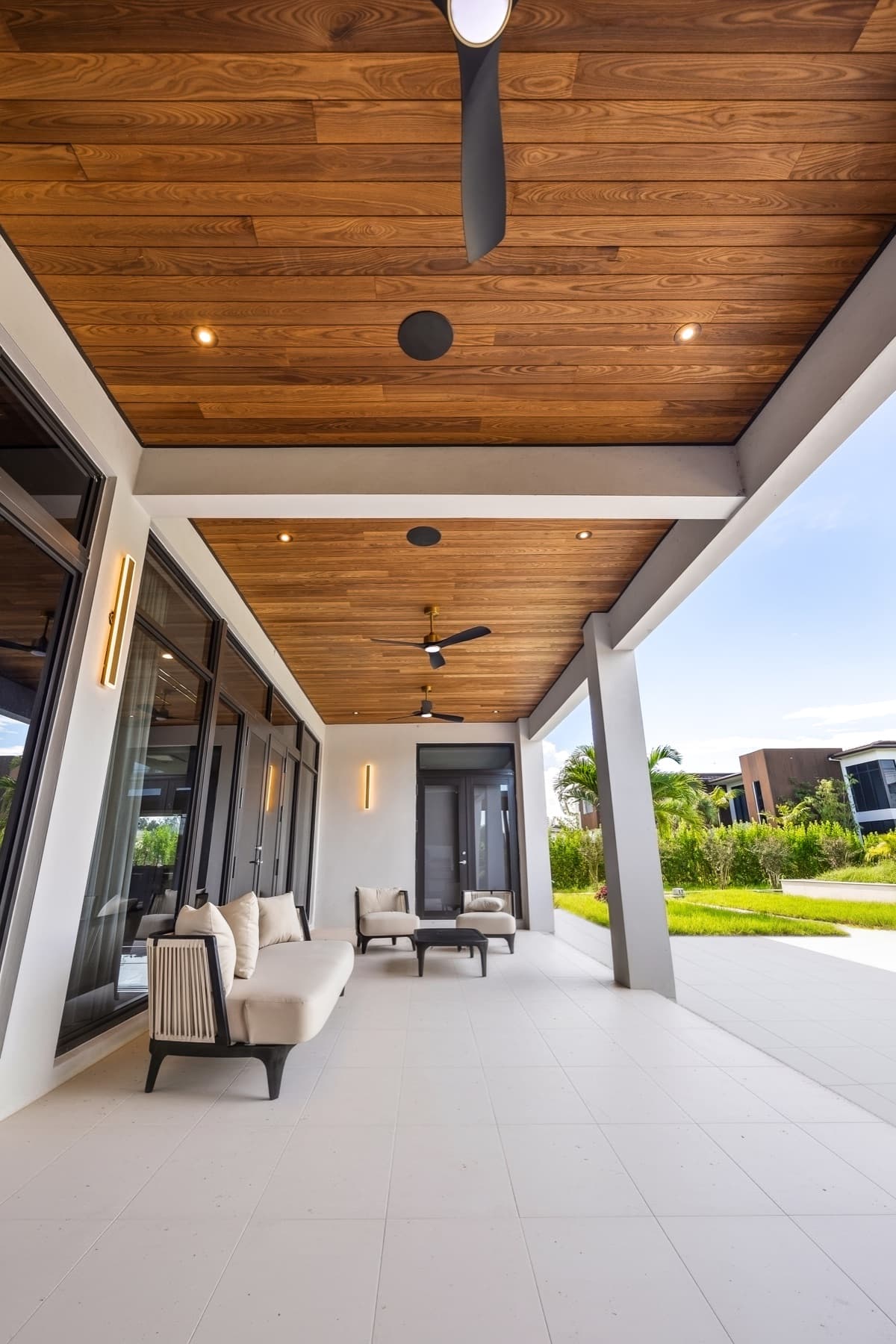
Understanding Your Porch and Soffit Needs
Before selecting materials, consider the specific characteristics of your porch. Is it fully covered or partially exposed to the elements? What is the existing architectural style of your home? For properties in Jackson, MS, where humidity and seasonal temperature fluctuations are common, material durability and moisture resistance are important. The primary function of the soffit is to protect the underside of the roof eaves and often houses vents for attic airflow, which is critical for roof health in warm climates.
A porch ceiling, while protected from direct rain, will still experience ambient humidity and temperature changes. It needs to be stable and resistant to warping or degradation over time. Ventilation within the porch ceiling itself is generally not required unless it's part of a larger enclosed structure. However, proper attic ventilation via the soffit is essential. Ensure any ceiling material chosen for the soffit area allows for or integrates with the necessary ventilation openings.
Material Options: Wood and Composite
Lumber Plus offers a range of materials suitable for porch ceilings and soffits, each with distinct characteristics:
Thermally Modified Wood: This wood undergoes a heat treatment process that enhances its stability and resistance to moisture and decay. Options like thermally modified Ayous or Ash offer a clean grain and can be left natural or finished. This material is a good choice for those seeking the authentic look and feel of wood with improved performance against environmental factors. It is generally lighter than some hardwoods, which can be an advantage for overhead applications. For example, Scandinavian thermally modified wood offers a Nordic character.
Hardwoods: Species such as Ipe, Cumaru, Garapa, Angelim, Jatoba, and Tigerwood are known for their natural density, durability, and rich appearance. Brazilian hardwoods can provide deep brown tones or golden hues, depending on the species. While naturally robust, some hardwoods may require more specific installation considerations due to their density and weight. These materials can be an excellent choice for a premium, long-lasting finish.
Norx Composite: This composite material offers a low-maintenance alternative to natural wood. Norx composite boards are engineered for consistent performance and appearance, making them suitable for applications where minimal upkeep is desired. They come in various finishes, such as Oxford Gray, and can mimic the look of wood without the need for regular sealing or staining. Norx is a brand partner product.
Accoya: Accoya is acetylated wood, distinct from thermally modified wood. It is known for its dimensional stability and durability, making it suitable for demanding exterior applications, including ceilings and soffits. Accoya can be painted or stained and holds finishes well. Accoya is a brand partner product. For specific product details, refer to the Accoya collection on our website.
Each material presents a different balance of aesthetics, maintenance requirements, and initial cost. Consider samples to see how the natural color and grain interact with your home's existing palette and the available light on your porch.
Design Considerations for Jackson Porches
Proportion and Scale: The size of your porch ceiling and soffit should be proportionate to your home's architecture. For smaller porches, lighter colors and narrower board profiles can make the space feel more open. Larger porches can accommodate wider boards and deeper tones.
Lighting Integration: Plan for lighting fixtures early in the design process. Recessed lighting is a popular choice for porch ceilings, providing ambient light without visual clutter. Ensure that the chosen ceiling material is compatible with the specified lighting fixtures and allows for proper installation and electrical wiring access. Consider how lighting will highlight the texture and color of your chosen material.
Ventilation: For soffits, proper ventilation is critical for roof health, especially in the humid Jackson climate. If your roof system requires continuous soffit ventilation, ensure that your chosen material can be installed with appropriate vents or is perforated. Do not obstruct existing attic ventilation with solid ceiling panels. Consult your roofing contractor or local building codes for specific ventilation requirements.
Finish and Color: The finish of your porch ceiling and soffit can significantly impact the overall curb appeal. Lighter finishes can brighten a shaded porch, while darker tones can create a more dramatic or cozy feel. Natural wood finishes, whether clear-sealed or stained, can add warmth and organic texture. For composites, consider how the color will complement your home's exterior paint and trim.
Worked Example: A Covered Porch Ceiling in Jackson
Let's consider a hypothetical covered porch in Jackson, MS, with dimensions of 16 feet wide by 8 feet deep. The homeowner desires a classic, warm aesthetic and wants to incorporate two recessed light fixtures. They are considering thermally modified Ayous for its stability and natural wood appearance.
Ceiling Area Calculation: The total ceiling area is 16 ft * 8 ft = 128 square feet.
Material Selection: Thermally modified Ayous boards are typically available in various widths, for example, a common nominal width might be 5.5 inches (actual 5.125 inches coverage) and lengths up to 16 feet. To minimize seams, the homeowner plans to run the boards perpendicular to the 8-foot depth, using full 8-foot lengths. This means they will need approximately 16 feet / (5.125 inches / 12 inches/foot) = 37.4 boards. Rounding up for cuts and waste, they would need 38 pieces of 8-foot Ayous boards. This translates to 38 boards * 8 feet/board = 304 linear feet.
The contractor will cut precise holes for these fixtures during installation, ensuring the thermal modified wood can accommodate the fixture housing and any required clearances. The stability of the thermally modified wood supports clean cuts.
Ventilation: Since this is a fully covered porch ceiling (not a soffit area for roof ventilation), dedicated ventilation within the porch ceiling itself is not required. However, the existing roof soffits (beyond the porch ceiling) will retain their current ventilation system to ensure proper attic airflow.
This example illustrates how material choice, dimensions, and practical integrations like lighting are coordinated for a successful porch ceiling project.
Installation and Maintenance Considerations
Installation: Proper installation is crucial for the longevity of your porch ceiling and soffit. Ensure that the substrate is sound, level, and dry before installation. For wood products, allow materials to acclimatize to the local climate for several days before installation to minimize movement after fitting. Use appropriate fasteners recommended for your chosen material and local building codes. Consult specific product documentation for recommended support spacing and fastening schedules.
Maintenance: The maintenance requirements vary significantly by material. Thermally modified wood and hardwoods, if left unfinished, will naturally weather to a silver-gray patina over time. To maintain their original color, they will require periodic cleaning and reapplication of a UV-protective finish. Norx composite materials are designed for low maintenance, typically requiring only occasional cleaning with soap and water to remove dirt and mildew. Accoya, while highly durable, will also benefit from periodic cleaning and re-finishing if a specific aesthetic is to be maintained.
Before you order
- Determine the primary function: Is it a covered porch ceiling or an exposed soffit requiring roof ventilation?
- Assess local climate factors: Humidity, temperature swings, and sun exposure in Jackson, MS.
- Choose material type: Thermally modified wood (Ayous, Ash), hardwoods (Ipe, Cumaru, Garapa), or Norx composite, Accoya.
- Consider desired aesthetic: Natural wood grain, specific color, or low-maintenance finish.
- Plan for lighting and other fixtures: Recessed lights, fans, speakers.
- Verify ventilation requirements: Especially for soffits supporting attic airflow.
- Measure accurately: Calculate total square footage and account for waste and cuts.
- Review installation guidelines: Fasteners, support spacing, acclimatization.
- Understand maintenance commitments: Regular cleaning, refinishing, or low-upkeep.
- Request samples: To visualize material appearance in your porch's light.
Confirm installation details, approved uses and warranty terms in the current instructions for the exact product and profile. Your installer should verify the substrate, structure and applicable project requirements.
This is a planning guide for projects in Jackson, MS. Ask our team to confirm availability, delivery to your ZIP code and which branch can support your order.
Questions to help you decide
What is the best material for a porch ceiling in Jackson, MS?
The 'best' material depends on your priorities. For natural beauty and enhanced stability against humidity, thermally modified wood like Ayous or Ash is an excellent choice. If you prefer a very durable, low-maintenance option that resists weathering, Norx composite or Accoya might be more suitable. Hardwoods like Ipe offer exceptional durability and rich aesthetics. All options provide good performance in the Jackson climate when properly installed.
Do I need to ventilate my porch ceiling?
A fully covered porch ceiling, separate from the main roof structure, generally does not require its own ventilation. However, if the ceiling material is being used for the soffit (the underside of the roof overhang), then it is crucial to ensure that adequate ventilation for the attic space is maintained or integrated. Consult local building codes and your roofing contractor to confirm specific requirements for your project.
How do thermally modified wood and traditional hardwoods compare for porch ceilings?
Thermally modified wood undergoes a heat treatment that improves its dimensional stability, making it less prone to warping and shrinking in humid climates. It also enhances resistance to decay. Traditional hardwoods like Ipe or Cumaru are naturally dense and highly durable, offering a rich, exotic appearance. Both are excellent choices, but thermally modified wood often provides a more consistent, lighter product with reduced movement, while hardwoods offer inherent strength and unique grain patterns.
Ready to Plan Your Porch Ceiling or Soffit Project?
Request a material quote today! Provide your project dimensions, desired profile, and ZIP code to confirm current availability and service options for your Jackson, MS property. Explore our full range of <a href="/ceiling-and-soffit">ceiling and soffit products</a>, including <a href="/brands/versatex">VERSATEX PVC Trimboard</a> (for trim and accent applications) and <a href="/thermally-modified-wood">Thermally Modified Wood</a> options.
Request a material quote →