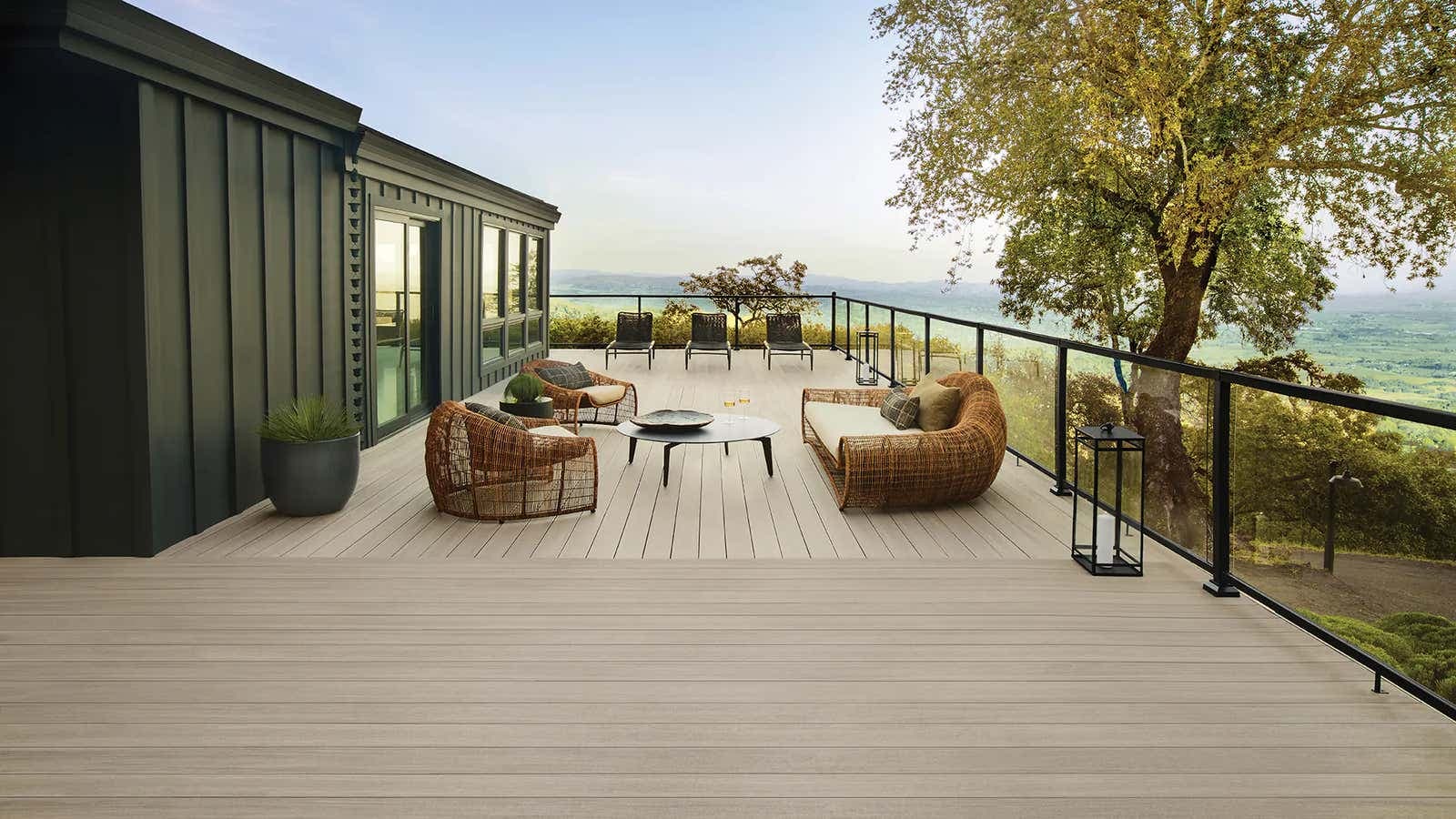
Understanding the Constraints of Compact Spaces
When planning a deck for a compact outdoor area, such as a small urban patio, a balcony, or a narrow side yard, several factors become more critical than in larger projects. These include the overall footprint, access for material delivery and construction, and the impact on natural light and air circulation.
Smaller spaces often mean closer proximity to neighboring properties or existing structures, which can influence choices regarding board length, fastening methods, and the need for precision cuts. Ventilation beneath the deck is also a key consideration, especially in the humid climate of Jackson, MS, to prevent moisture buildup. The consistent dimensions and ease of cutting composite boards can be advantageous in these situations, allowing for more efficient use of material and less waste.
Choosing the Right Composite Decking Profile for Small Areas
Composite decking comes in various profiles and board widths. For compact spaces, selecting the right profile can significantly impact both the visual appeal and the structural integrity of your deck.
Standard board widths are common, but narrower boards can sometimes create the illusion of a larger space by increasing the number of visible lines, drawing the eye along the length of the deck. Consider the overall scale of your space when making this choice. Additionally, different collections offer varying degrees of board stiffness and support requirements. For smaller, potentially unsupported edges or areas with specific load requirements, understanding the manufacturer's recommended span for joists is crucial. Brands like Trex, TimberTech, and Fiberon offer a range of profiles, some with enhanced rigidity suitable for various support structures. Always refer to the specific product's installation guide for joist spacing and support details.
Many composite decking options feature capped shells, which provide a protective layer that helps resist moisture and fading. This can be particularly beneficial in Jackson's climate, protecting the deck from humidity and sun exposure over time. These properties contribute to the material's low-maintenance appeal, a significant advantage for any outdoor space, especially one that might be challenging to access for regular upkeep.
View available composite decking profiles and colors here: /decking/composite
Planning Your Layout and Board Direction
The direction in which you lay your composite decking boards can dramatically influence the perception of space. For a compact area, consider running boards diagonally or perpendicular to the longest dimension of the space to create a sense of width or depth.
Diagonal layouts, while potentially requiring more cuts and material, can add visual interest and make a small deck feel more expansive. Perpendicular layouts can emphasize width, which might be desirable in a long, narrow space. Regardless of the direction, accurate measurements and a detailed cut plan are essential to minimize waste and ensure a clean finish. Remember that composite decking requires specific gapping between boards and at abutments to allow for thermal expansion and contraction, which is important to account for in your layout planning.
Considerations for Substructure and Ventilation
Even in compact spaces, a robust and properly ventilated substructure is non-negotiable for composite decking. The substructure, typically made of pressure-treated lumber, provides the necessary support and ensures the longevity of your deck.
Adequate ventilation beneath the deck is critical, especially in humid environments like Jackson, MS. Without proper airflow, moisture can accumulate, potentially leading to issues with the substructure. Ensure there is sufficient clearance between the deck surface and the ground, and design the perimeter to allow for air movement. For ground-level decks, a gravel base and weed barrier can help manage moisture. Consult local building codes for specific requirements regarding ground clearance and ventilation in your area.
For a complete decking system, consider complementary materials such as flashing tape for joists or specialized fasteners. Explore our range of decking accessories here: /decking
Worked Example: A Compact 8'x10' Balcony Deck
Let's consider a hypothetical 8-foot by 10-foot balcony in Jackson, MS, where a homeowner wants to install composite decking. The primary goal is to create a durable, low-maintenance surface that maximizes the feeling of space.
Assumptions:
1. Decking board dimensions: 12 feet long, 5.5 inches wide (standard composite board).
2. Desired layout: Boards running parallel to the 10-foot dimension to emphasize length.
3.
4. No picture frame border for simplicity in this example.
Calculation:
To cover the 8-foot width (96 inches) with 5.5-inch wide boards, we need 96 / 5.5 = approximately 17.45 boards. Since we can't use partial boards across the width, we'll need 18 boards.
Each board is 12 feet long. Since our deck length is 10 feet, each 12-foot board will yield one 10-foot section with 2 feet of offcut. These offcuts could potentially be used for smaller sections or waste.
Total boards needed: 18 boards. Given these are 12-foot lengths, this provides enough material for the 10-foot length. The total area is 80 square feet. The purchase quantity is 18 x 12-foot boards, which is 216 linear feet.
Bearer beams and posts would be calculated based on the specific balcony structure.
This example illustrates the importance of precise measurements and understanding board dimensions to calculate material needs accurately for compact spaces. Always confirm manufacturer-specific installation guidelines for gapping and fastening.
Maintenance and Longevity in Jackson's Climate
One of the primary benefits of composite decking, especially for compact outdoor spaces, is its low maintenance. Unlike traditional wood, composite materials do not require sanding, staining, or sealing. This is a significant advantage in Jackson, MS, where the humid climate can accelerate wear on natural wood.
Composite decking typically only requires an annual wash with soap and water to keep it clean and free from mildew or debris. Some manufacturers offer cooler-underfoot options and capped shells that are designed to shrug off humidity and resist fading and staining. These features contribute to a longer lifespan and consistent appearance, reducing the effort and cost associated with maintaining an outdoor living space.
Many composite decking products, such as those from Trex, feature a high percentage of recycled content, making them an environmentally conscious choice. These materials are engineered for durability, often backed by fade and stain warranties, offering peace of mind for homeowners. This long-term durability and minimal upkeep make composite decking a practical investment for any sized deck.
Find more details on composite decking maintenance here: /decking/composite
Before you order
- Measure your compact space precisely, noting all dimensions and any obstructions.
- Determine the desired board layout (parallel, perpendicular, diagonal) and its impact on material needs.
- Verify manufacturer's joist spacing and support requirements for your chosen composite decking profile.
- Plan for adequate ventilation beneath the deck, especially important in humid climates.
- Consider board width and color choices to visually enhance the feeling of space.
- Account for expansion gaps as specified by the manufacturer.
- Confirm access for material delivery and construction in your compact area.
- Request a material quote with exact dimensions, desired profile, and your project ZIP code.
Confirm installation details, approved uses and warranty terms in the current instructions for the exact product and profile. Your installer should verify the substrate, structure and applicable project requirements.
This is a planning guide for projects in Jackson, MS. Ask our team to confirm availability, delivery to your ZIP code and which branch can support your order.
Questions to help you decide
Can composite decking be installed directly over an existing concrete patio in a compact space?
Installing composite decking directly over concrete is possible, but it requires careful planning to ensure proper drainage and ventilation. You'll likely need to install a sleeper system or a pedestal system to elevate the decking boards, allowing for airflow and preventing moisture entrapment. This also ensures a level surface. Always consult the specific manufacturer's installation guidelines for approved methods over concrete, as requirements can vary by product.
How do I choose a composite decking color for a small area?
For compact outdoor spaces, lighter colors can often make the area feel larger and more open, reflecting light and creating a brighter ambiance. However, darker colors can create a cozy, intimate feel. Consider the overall aesthetic of your home and landscaping. Some composite decking lines offer 'cooler-underfoot' options, which might be a practical consideration in the Jackson, MS heat, regardless of space size. Obtaining physical samples is recommended to see how colors appear in your specific lighting conditions.
What are the key advantages of composite decking for a small balcony or patio?
Composite decking offers several advantages for compact outdoor spaces. Its consistent dimensions and ease of cutting allow for precise installations, minimizing waste. The low-maintenance nature means less time spent on upkeep, which is especially beneficial for areas that might be harder to access for maintenance tasks. Additionally, composite materials are durable, resisting rot, insects, and fading, ensuring your small deck remains attractive and functional for many years with minimal effort. Its consistent appearance also contributes to a polished, finished look in a limited area.
Ready to Transform Your Compact Outdoor Space?
Request a material quote today. Provide your project dimensions, the exact composite decking profile you're considering, and your project ZIP code to get started. We'll help you confirm current availability and service options for your Jackson, MS project.
Request a material quote →