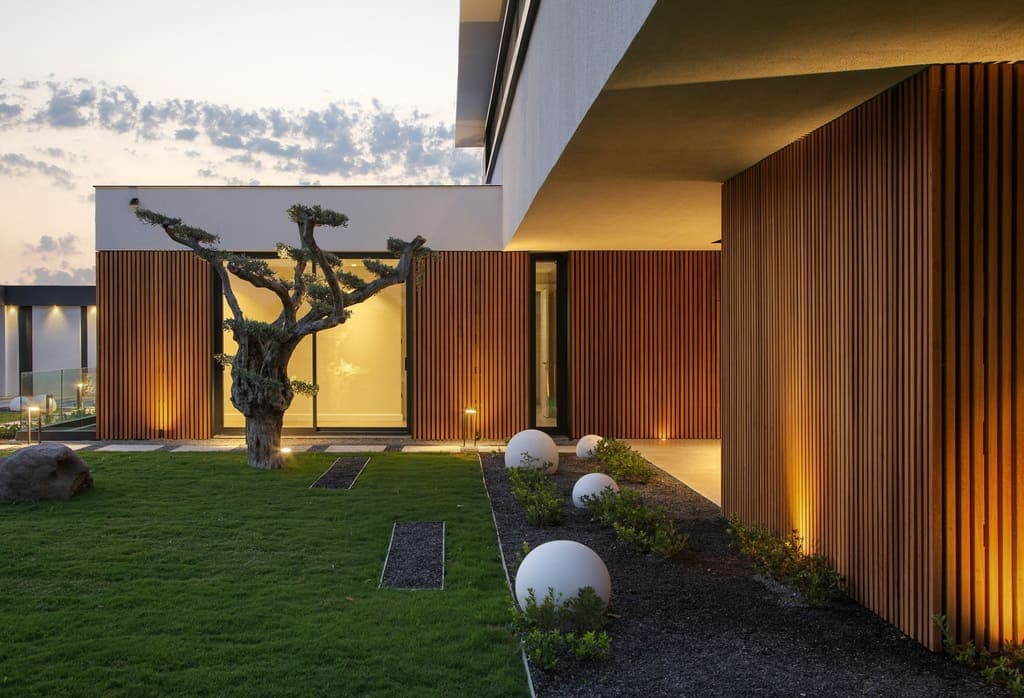
Understanding Thermally Modified Wood for Wall Applications
Thermally modified wood is created by heating wood to high temperatures in an oxygen-controlled environment. This process removes moisture and extractives, resulting in a material with reduced hygroscopy (tendency to absorb water) and improved dimensional stability. These characteristics make it a suitable candidate for exterior wall applications, particularly in covered areas where direct exposure to rain and sun is limited but humidity and temperature fluctuations still occur.
For covered patio walls, the enhanced stability of thermally modified wood helps minimize warping, cupping, and checking, which can be common issues with untreated wood in fluctuating climates. Its inherent resistance to decay also contributes to a longer service life, making it a lower-maintenance choice compared to some other wood options.
Selecting the Right Profile and Species
The aesthetic impact of your covered patio walls largely depends on the chosen profile and species of thermally modified wood. Lumber Plus offers various profiles suitable for walls, including tongue-and-groove, shiplap, and square-edge. Each profile creates a different visual effect:
Tongue-and-groove: Provides a tight, interlocking fit, often used for a smooth, continuous surface. This profile can create a traditional or modern look depending on the board width and finish.
Shiplap: Features an overlapping joint that creates distinctive shadow lines, adding depth and texture to the wall. It offers a clean, contemporary aesthetic.
Square-edge: Allows for precise spacing between boards, creating a more open, slatted appearance. This can be particularly effective for modern designs or to allow for air circulation behind the wall.
While specific species are thermally modified, common options include Ash and Pine. Thermally modified Ash often presents a rich, dark brown hue, while thermally modified Pine typically has a lighter, honey-toned appearance. The choice of species will influence the natural color and grain pattern, which can then be further enhanced or altered with finishes.
Finishing Options for Durability and Aesthetics
Thermally modified wood can be left unfinished to weather naturally to a silver-gray patina over time, or it can be finished to maintain or enhance its initial color. For covered patio walls, applying a finish can offer additional protection and allow for a specific aesthetic outcome.
Oil-based finishes: These penetrate the wood, enhancing its natural color and providing some UV protection. They typically require reapplication every few years, depending on exposure to indirect elements and desired appearance. Oils can deepen the wood's tone.
Water-based finishes: These form a protective layer on the surface. They are available in various opacities, from transparent stains that highlight the wood grain to solid stains that provide a uniform color. Water-based finishes can offer good UV resistance and color retention. Always confirm the finish is compatible with thermally modified wood and suitable for exterior use.
Even in a covered patio, some UV exposure and humidity are inevitable. A quality finish can help mitigate these effects, preserving the wood's appearance and contributing to its longevity. Consider the level of maintenance you are willing to commit to when selecting a finish.
Planning for Installation and Substructure
Proper installation is crucial for the performance and appearance of thermally modified wood on covered patio walls. The substructure needs to be sound, level, and capable of supporting the cladding. For wall applications, vertical furring strips are commonly used to create a rainscreen gap, even in covered areas. This gap allows for air circulation and drainage, preventing moisture buildup behind the cladding.
Fastening: Hidden fasteners are often preferred for a clean, uninterrupted look, especially with tongue-and-groove or shiplap profiles. Face fastening with stainless steel screws or nails can also be used, but the fasteners will be visible. Ensure all fasteners are corrosion-resistant to prevent staining and degradation over time. Pre-drilling may be necessary to prevent splitting, particularly near board ends.
Ventilation: While covered, ensuring adequate ventilation behind the wall cladding is important to manage humidity and temperature fluctuations. The rainscreen gap created by furring strips serves this purpose.
Clearance: Maintain appropriate clearance from the ground and any adjacent surfaces to prevent moisture wicking and allow for air movement. Even on a covered patio, the base of the wall can be exposed to splashing or ground moisture.
Project Example: Covered Patio Wall in Nashville
Imagine a covered patio in a Nashville home, measuring 12 feet wide by 8 feet high, where the homeowner desires a modern, warm aesthetic. They choose NORX thermally modified Ash shiplap boards, which are 5.5 inches wide (nominal, with 5-inch exposed face) and 12 feet long. The goal is a horizontal application.
First, calculate the wall area: 12 feet x 8 feet = 96 square feet. Since each board has a 5-inch (0.4167 feet) exposed face and is 12 feet long, one board covers 0.4167 feet x 12 feet = 5 square feet.
To cover 96 square feet, you would theoretically need 96 sq ft / 5 sq ft per board = 19.2 boards. Accounting for cuts, waste, and ensuring full coverage, it is prudent to round up and add a buffer, perhaps 10-15%. Let's assume 22 boards are purchased. This provides enough material for potential miscuts and allows for a more efficient installation plan.
The NORX thermally modified Ash shiplap would then be attached horizontally to these furring strips using hidden fasteners to maintain a clean appearance. A clear, UV-resistant oil finish would be applied to enhance the natural dark tones of the Ash and offer protection.
Before you order
- Determine the desired aesthetic: modern, rustic, traditional.
- Choose a profile: tongue-and-groove, shiplap, or square-edge.
- Select a thermally modified wood species (e.g., Ash, Pine) for natural color and grain.
- Decide on a finish: natural weathering, oil, or stain.
- Plan the substructure: vertical furring strips for a rainscreen gap.
- Select appropriate corrosion-resistant fasteners (hidden or face-fastened).
- Calculate material quantities with a waste factor.
- Consider maintenance requirements for the chosen finish.
Confirm installation details, approved uses and warranty terms in the current instructions for the exact product and profile. Your installer should verify the substrate, structure and applicable project requirements.
This is a planning guide for projects in Nashville, TN. Ask our team to confirm availability, delivery to your ZIP code and which branch can support your order.
Questions to help you decide
Can thermally modified wood be used in fully exposed outdoor areas?
While thermally modified wood offers enhanced durability and stability, its suitability for fully exposed outdoor areas depends on the specific product, profile, and expected exposure. For covered patio walls, it performs well due to reduced direct exposure to harsh elements. For fully exposed applications like decking or open siding, specific product lines designed for such use and appropriate finishing and installation methods are critical. Always consult manufacturer guidelines for the intended application.
How does the Nashville climate impact the choice of thermally modified wood?
Nashville's climate, characterized by hot, humid summers and mild winters, presents challenges for exterior wood products due to significant temperature and humidity fluctuations. Thermally modified wood's improved dimensional stability and resistance to decay make it a good choice for these conditions, especially in covered applications where it is shielded from the most extreme weather. Its reduced tendency to absorb moisture helps it perform consistently in humid environments.
What maintenance is required for thermally modified wood on covered patio walls?
The maintenance needed for thermally modified wood largely depends on whether it is left unfinished or treated with a protective coating. Unfinished wood will weather to a silver-gray patina and requires minimal maintenance beyond occasional cleaning. If a finish is applied, periodic reapplication (typically every 1-3 years for oils, or longer for some stains) will be necessary to maintain its appearance and protective qualities. Regular cleaning to remove dirt and debris is recommended for both finished and unfinished surfaces.
Ready to Transform Your Nashville Patio Walls?
Request a material quote with your project dimensions, desired profile, and ZIP code to confirm current availability and service options for thermally modified wood.
Request a material quote →