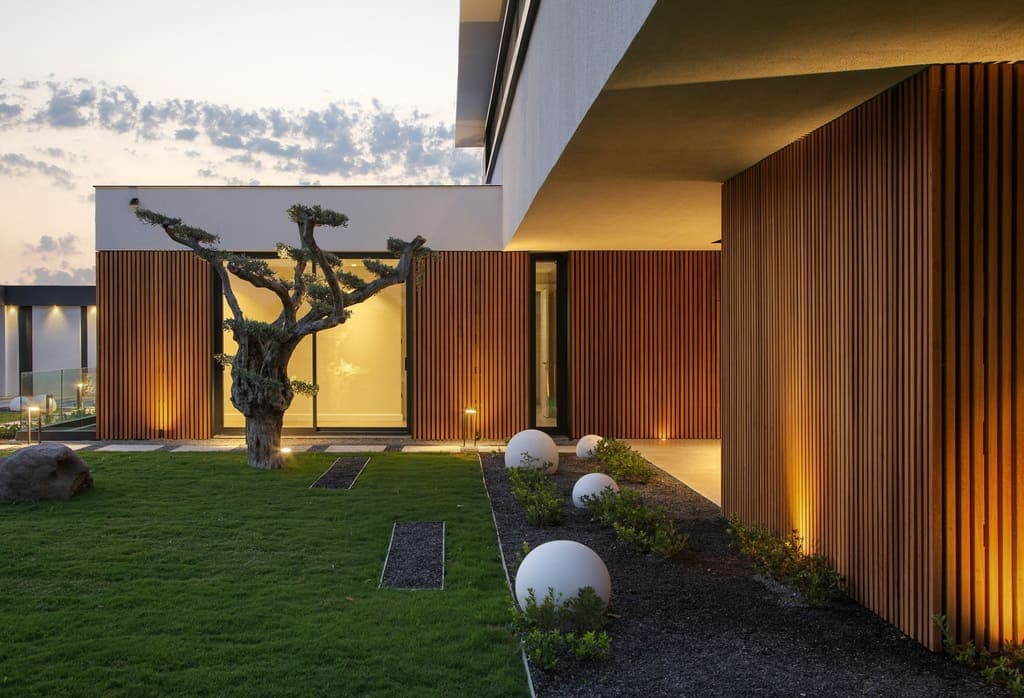
Understanding Thermally Modified Wood for Wall Applications
Thermally modified wood undergoes a high-heat process that alters its cellular structure. This process typically enhances dimensional stability and reduces the wood's susceptibility to moisture absorption and decay. For covered patio walls, this means a material that is less prone to warping, cupping, or swelling compared to untreated wood, even with Montgomery's humidity.
While often used for siding and decking, thermally modified wood is also suitable for vertical applications like covered patio walls. Its consistent color throughout the wood profile can be an advantage, especially if minor surface wear occurs over time or if cuts are visible. The modification process typically results in a rich, darker tone that can be further enhanced with finishes.
Selecting Profiles and Species for Covered Patio Walls
The aesthetic of your covered patio wall largely depends on the chosen wood profile. Common profiles suitable for vertical applications include tongue-and-groove, shiplap, and various board-and-batten styles. Tongue-and-groove profiles offer a tight, interlocking fit that can create a smooth, continuous surface, while shiplap provides distinct shadow lines. Board-and-batten offers a more rustic or traditional look.
When selecting a profile, consider the desired visual effect and how it integrates with the overall design of your patio and home. For instance, a wider shiplap can create a modern, clean look, while narrower tongue-and-groove panels might evoke a cozier feel. The available thermally modified wood species, such as Ash or Pine, typically offer different grain patterns and natural characteristics that influence the final appearance.
Considering Finishes and Appearance Retention
Thermally modified wood can be left unfinished to weather naturally, developing a silver-gray patina over time. However, for covered patio walls, applying a finish can help maintain its original color longer and provide additional protection against UV exposure and moisture, even if indirect. Clear or semi-transparent penetrating oils are popular choices as they enhance the wood's natural tones while allowing the grain to show through.
If you desire a specific color, opaque stains or paints can also be used. Regular maintenance, such as reapplication of oil or stain, will be necessary to preserve the finish and color. The frequency of maintenance depends on the product chosen, exposure to elements, and desired aesthetic. Always consult the finish manufacturer's recommendations for application and recoating schedules.
Attachment and Substructure Considerations
Proper attachment is crucial for any wall cladding. For covered patio walls, fasteners should be corrosion-resistant, such as stainless steel screws or nails, to prevent staining and ensure long-term stability. Hidden fastening systems can create a cleaner, more contemporary look, while visible fasteners can be part of the design aesthetic.
The substructure behind the thermally modified wood panels must be sound and provide adequate ventilation. Even in covered applications, ensuring air circulation behind the cladding can help manage moisture and promote drying. This typically involves installing furring strips or a rainscreen system, which creates a gap between the wall sheathing and the wood cladding. This practice is beneficial in humid climates like Montgomery, AL, to prevent moisture buildup.
Project Example: Covered Patio Wall in Montgomery, AL
Consider a hypothetical covered patio in Montgomery, AL, measuring 12 feet wide by 8 feet high. The homeowner desires a modern look with minimal visible fasteners. They choose a thermally modified Ash shiplap profile, 5.5 inches wide with a 0.5-inch overlap, requiring 5 inches of exposed face per board. The boards are 12 feet long.
To calculate the number of boards needed: The wall height is 8 feet (96 inches). Each board has an exposed face of 5 inches. Therefore, 96 inches / 5 inches per board = 19.2 boards. Since boards must be purchased in full lengths, 20 boards are required for the height. Given the wall is 12 feet wide and the boards are 12 feet long, no horizontal cuts are needed for the length. Thus, 20 boards of 12-foot length are needed. This calculation assumes minimal waste and a straightforward installation. It is always recommended to add 10-15% for cuts, waste, and potential future repairs. For this project, approximately 22-23 boards would be a safer estimate.
The homeowner also plans for a semi-transparent UV-protective oil finish to maintain the wood's warm tone. The wall will be installed over furring strips to ensure proper ventilation behind the cladding, a key detail for managing moisture in the local climate. This project would also require stainless steel fasteners and appropriate trim pieces for corners and edges.
Before you order
- Confirm the specific thermally modified wood species and profile suitable for vertical, covered outdoor applications.
- Decide on a finish (unfinished, oil, stain, paint) based on desired appearance and maintenance commitment.
- Verify the required substructure and ventilation strategy (e.g., furring strips, rainscreen gap).
- Select appropriate corrosion-resistant fasteners (hidden or visible).
- Calculate material quantities, including a waste factor for cuts and potential future repairs.
- Consider trim and corner details for a finished appearance.
- Review manufacturer installation guidelines for your chosen product.
Confirm installation details, approved uses and warranty terms in the current instructions for the exact product and profile. Your installer should verify the substrate, structure and applicable project requirements.
This is a planning guide for projects in Montgomery, AL. Ask our team to confirm availability, delivery to your ZIP code and which branch can support your order.
Questions to help you decide
Can thermally modified wood be painted?
Yes, thermally modified wood can be painted or stained. While many prefer clear or semi-transparent finishes to highlight the wood's natural beauty, opaque paints or stains can be applied for a specific color aesthetic. Always follow the paint or stain manufacturer's recommendations for surface preparation and application on wood.
Does thermally modified wood require maintenance?
The level of maintenance depends on whether the wood is finished or left to weather naturally. If left unfinished, it will develop a silver-gray patina over time, requiring minimal maintenance beyond occasional cleaning. If a finish (like an oil or stain) is applied, periodic reapplication will be necessary to maintain the color and protective qualities, typically every few years depending on exposure and product.
Is thermally modified wood suitable for humid climates like Montgomery, AL?
Yes, thermally modified wood is well-suited for humid climates. The thermal modification process enhances the wood's dimensional stability and reduces its ability to absorb moisture, making it less prone to swelling, shrinking, or warping in fluctuating humidity. Proper installation with ventilation behind the cladding is still recommended to ensure optimal performance.
Ready to Plan Your Covered Patio Walls?
Request a material quote for your project. Provide your project dimensions, desired profile, and ZIP code to confirm current availability and service options for thermally modified wood. Explore our selection of <a href="/thermally-modified-wood">thermally modified wood</a>, <a href="/siding-and-cladding">siding and cladding</a>, and specific brands like <a href="/brands/norx">NORX</a> and <a href="/products/maximo-accoya">Maximo Accoya</a> to find the perfect fit for your Montgomery, AL home.
Request a material quote →