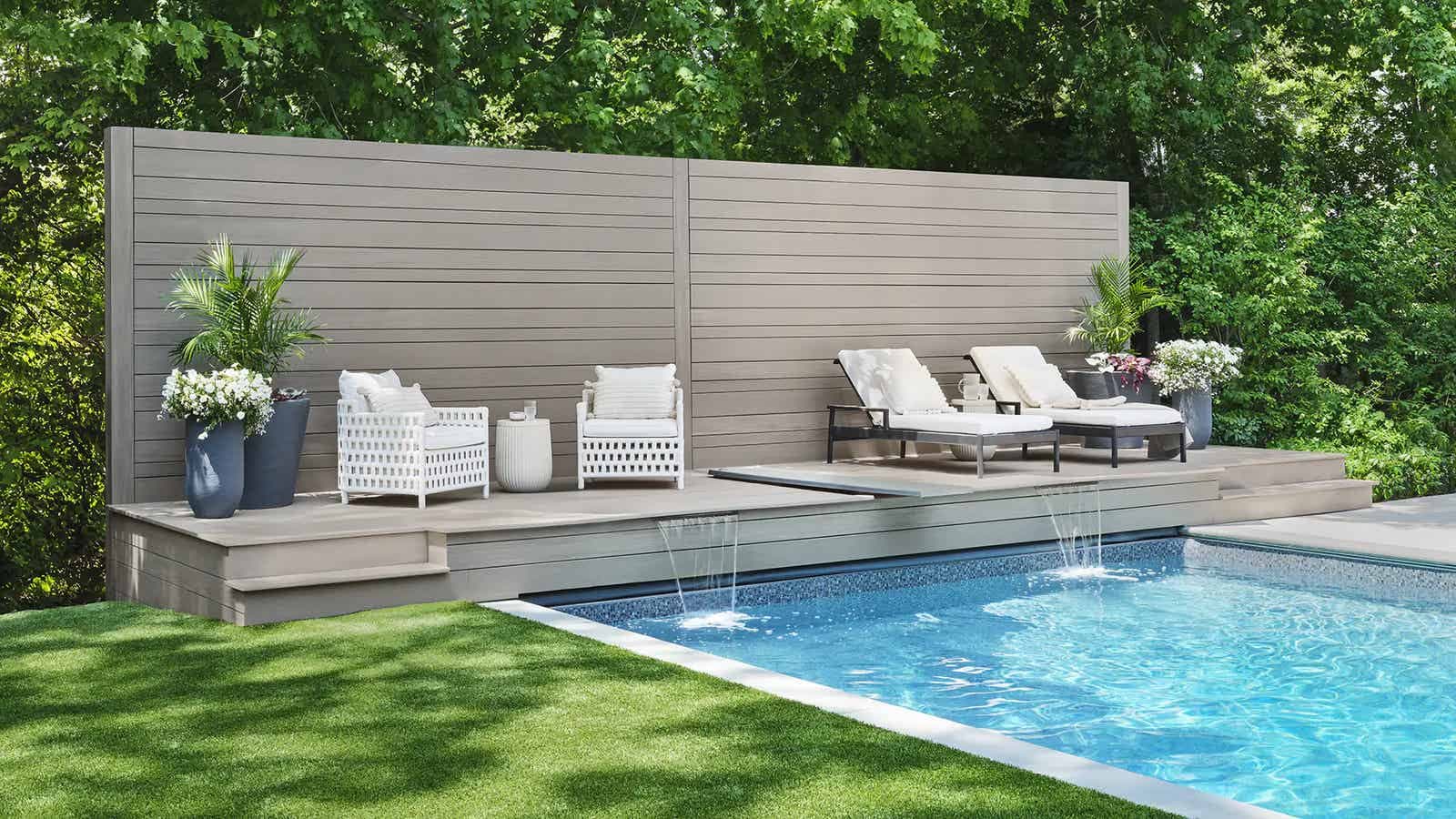
Why PVC Decking for Pool Terraces?
PVC (polyvinyl chloride) decking is a 100% synthetic material, meaning it contains no wood fiber. This composition makes it inherently waterproof to the core, a critical feature for areas like pool surrounds where boards are frequently exposed to water. Unlike wood or composite materials that may absorb moisture, PVC decking resists swelling, staining, or rot, even in standing water or splash zones. This characteristic is particularly valuable for pool terraces.
The advanced capping on some PVC decking lines, such as TimberTech Azek, provides an additional layer of protection. This capping helps shed water, grease, and wine, making cleanup simpler. The synthetic nature also contributes to a lighter board weight compared to hardwood or even some composite options, which can facilitate easier handling during installation.
While durability is a factor, the primary advantage for pool areas is PVC's resistance to water absorption and its ability to withstand constant wetting and drying cycles without degrading. This helps maintain the deck's appearance and structural integrity over time, reducing the need for frequent repairs or replacements due to moisture damage. Some lines also offer heat-mitigating color options, which can be a consideration for surfaces exposed to direct sunlight.
Understanding Poolside Exposure in Duluth, MN
Duluth's climate, with its distinct seasons, means a pool terrace will experience a range of conditions. Summers can bring intense sunlight and humidity, while winters introduce freezing temperatures, snow, and ice. A decking material for a pool area must be able to withstand these extremes without significant performance issues.
PVC decking's resistance to moisture absorption makes it less susceptible to the freeze-thaw cycles that can impact other materials. Water trapped within materials can expand when frozen, potentially leading to cracking or warping. Since PVC is waterproof to the core, it is less prone to these types of issues. However, proper drainage and ventilation underneath the deck remain essential to prevent water accumulation and ensure the longevity of the entire structure.
Selecting the Right PVC Profile and Finish
PVC decking is available in various collections, offering different aesthetics and textures. For pool terraces, consider finishes that provide some texture, which can offer better footing when wet.
Color choice is also important. Lighter colors may absorb less heat from the sun, potentially making the deck surface more comfortable to walk on barefoot during hot summer days. Some manufacturers specifically offer heat-mitigating color options within their PVC lines. Reviewing samples in different lighting conditions can help in making an informed decision about the visual appearance and potential surface temperature.
For edge detailing, PVC fascia and trim boards are available to create a cohesive look around the perimeter of the pool terrace and any stairs. These components are designed to match the decking boards, providing a finished appearance and protecting the deck's edges.
Planning for Installation and Substructure
Even though PVC decking is waterproof, the substructure beneath it must be designed to manage moisture effectively. Proper spacing between boards is crucial to allow for drainage and air circulation. Always refer to the manufacturer's specific installation guidelines for board spacing, as these can vary by product line and expected temperature fluctuations.
The deck frame itself should be constructed from materials suitable for outdoor, wet environments. Treated lumber or steel framing are common choices. Ensure that the frame provides adequate support for the decking and any anticipated loads, such as furniture, planters, or a group of people.
Consider the use of hidden fasteners for a clean, uninterrupted surface, which can be desirable around a pool. If face-fastening is chosen, ensure that the fasteners are corrosion-resistant and installed according to manufacturer specifications to avoid damage to the boards or an unsightly finish.
Maintenance and Cleaning for Poolside PVC
One of the key benefits of PVC decking for pool terraces is its low-maintenance requirement. The capped polymer surface resists stains from common poolside spills like sunscreen, chlorine, or food and drink. Most routine cleaning can be accomplished with soap and water.
For more stubborn stains or general upkeep, it is essential to use cleaning products specifically approved for PVC decking by the manufacturer. Harsh chemicals or abrasive cleaners can damage the surface. Regular sweeping or rinsing with a hose can help remove dirt and debris, preventing buildup and maintaining the deck's appearance.
While PVC is highly resistant to moisture, it is still advisable to address any standing water promptly and ensure the area around the pool is kept clean to prevent the growth of mold or mildew, especially in shaded areas or during humid periods. Proper ventilation beneath the deck also aids in keeping the underside dry.
Worked Example: Designing a PVC Pool Terrace in Duluth
Imagine a rectangular pool terrace project in Duluth, measuring 20 feet by 15 feet, with a 3-foot wide walkway around three sides of a 10-foot by 5-foot inground spa.
First, calculate the total decking area: 20 ft x 15 ft = 300 square feet. The spa area that needs to be cut out is 10 ft x 5 ft = 50 square feet. So, the actual decking area is 300 - 50 = 250 square feet. However, this is just the area; we need to account for board lengths and cuts.
For the 20-foot length, using 16-foot boards means each run will require one full 16-foot board and a 4-foot cut. Over 15 feet (180 inches), this means 180 / 5.6875 31.6 boards. Rounding up, we'll need 32 board runs across the 15-foot width. Therefore, for the 20-foot length, we need 32 runs x (1 full 16-foot board + 1 cut 4-foot piece).
For the 15-foot length, we will have 32 runs of 16-foot boards, and 32 runs of 4-foot boards. The 4-foot offcuts from one side can often be used for shorter sections or the other side of the deck. However, for a clean calculation and to allow for waste, we would typically purchase full boards. If we assume a straight run, we would need 32 boards that are 16 feet long. The remaining 4 feet of each 20-foot run will generate 4-foot offcuts. These offcuts can be used for shorter sections or the 15-foot width if the layout permits.
For the 10-foot by 5-foot spa cutout, the material removed is not reusable for the main deck. The edges around the spa will require careful cutting and possibly additional framing for support. Consider ordering an additional 10-15% for waste, cuts, and potential future repairs. For this example, 32 x 16-foot boards provides 512 linear feet. At 5.5 inches wide, this covers approximately 234.6 square feet. Adding 15% for waste, we might consider 37 boards for the primary decking area. This example highlights the need to plan board layout carefully to minimize waste and ensure sufficient material.
Before you order
- Assess specific pool area exposure: sun, shade, splash zones.
- Verify manufacturer's recommendations for poolside applications and wet environments.
- Choose PVC decking with appropriate texture for improved footing when wet.
- Consider lighter, heat-mitigating color options for comfort.
- Plan for proper drainage and ventilation under the deck structure.
- Select a substructure material suitable for continuous moisture exposure.
- Confirm board spacing requirements with the manufacturer's installation guide.
- Identify compatible fasteners (hidden or face-fastened) for the chosen PVC product.
- Research manufacturer-approved cleaning products for ongoing maintenance.
- Account for waste factor (typically 10-15%) when calculating material quantities.
Confirm installation details, approved uses and warranty terms in the current instructions for the exact product and profile. Your installer should verify the substrate, structure and applicable project requirements.
This is a planning guide for projects in Duluth, MN. Ask our team to confirm availability, delivery to your ZIP code and which branch can support your order.
Questions to help you decide
Is PVC decking slippery around a pool?
Choosing a board with a pronounced grain or embossed pattern can contribute to a safer walking surface around a pool. Always check product specifications for any slip-resistance ratings, though these are not universally provided or standardized for all conditions.
How does PVC decking withstand chlorine and pool chemicals?
PVC decking is generally highly resistant to common pool chemicals like chlorine, thanks to its synthetic composition. Unlike wood, it will not bleach or degrade from chemical exposure. However, it's always recommended to rinse off any chemical spills promptly with water and to refer to the decking manufacturer's specific cleaning and chemical exposure guidelines to ensure long-term performance and maintain warranty validity.
Can PVC decking get hot in the sun?
Like many outdoor surfaces, PVC decking can warm up when exposed to direct sunlight. The degree of heat retention can vary significantly by color, with darker colors generally absorbing more heat than lighter ones. Some PVC decking lines offer 'heat-mitigating' or 'cooler-to-the-touch' color options, which are formulated to reflect more sunlight. If surface temperature is a major concern, opting for lighter colors and checking manufacturer claims regarding heat performance is advisable. Consider also adding shade elements to the pool terrace if possible.
Ready to Plan Your PVC Pool Terrace?
Request a material quote today. Provide your project dimensions, desired PVC decking profile, and your ZIP code to confirm current availability and service options for your Duluth, MN project. Our team can help you select the right materials for your poolside application.
Request a material quote →