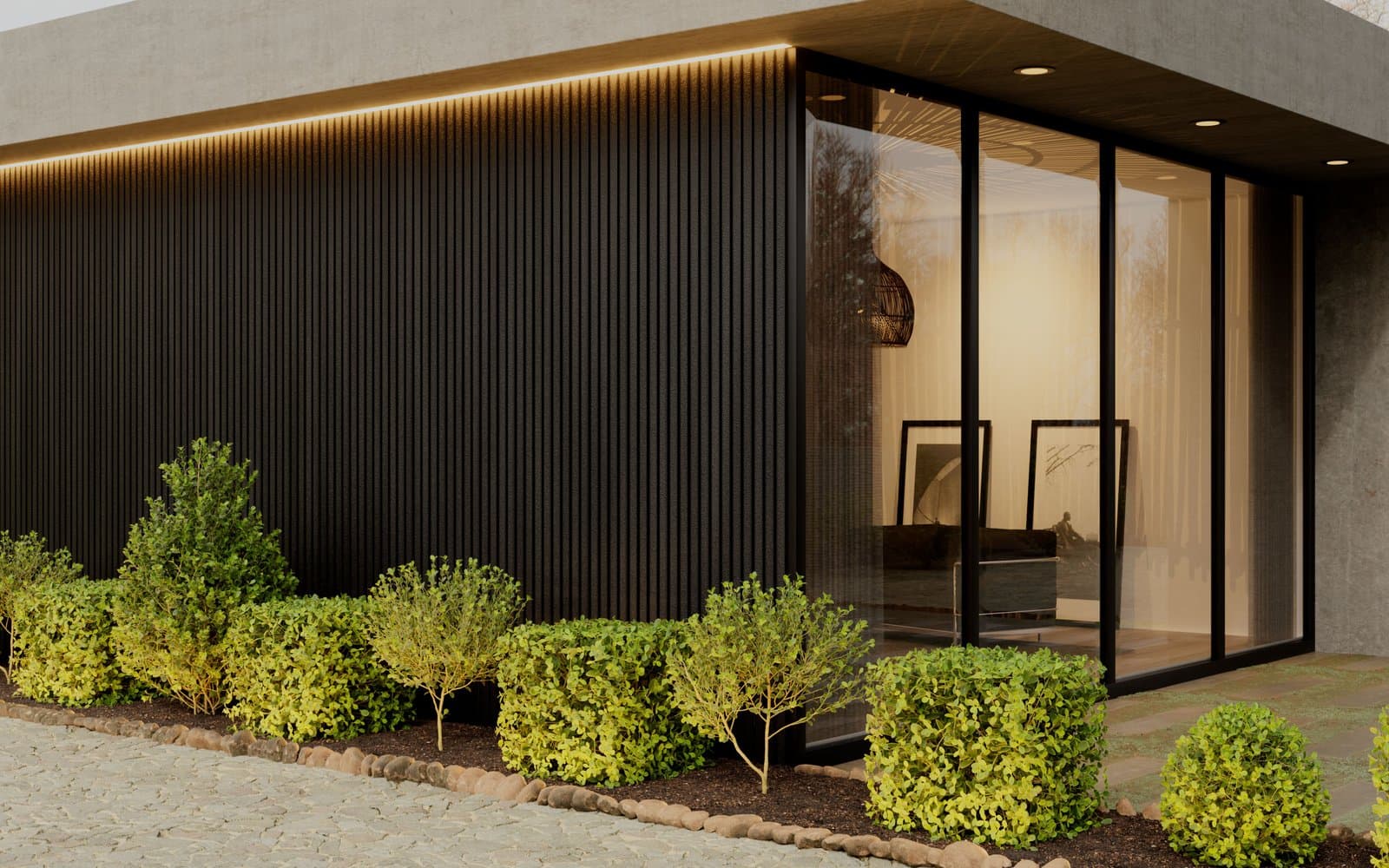
NORX Cladding: A Unified System for Walls, Ceilings, and Soffits
NORX composite and PVC boards are designed for versatility, offering a consistent aesthetic across various applications. The same boards and concealed clip system can be used for exterior cladding, interior feature walls, ceilings, and soffits. This allows for a cohesive design language, seamlessly extending the look from an outdoor facade to a covered patio ceiling or an indoor accent.
The unified system simplifies material selection and installation planning, as you work with a single product family and fastening method across different surfaces. This consistency is a significant advantage when aiming for a harmonious visual flow in your architectural design.
Exploring NORX Collection Profiles
NORX cladding is available in several collections, each featuring a set of board profiles and color palettes. While all collections utilize a hidden clip system for installation, the specific dimensions of the boards vary, influencing the final look and shadow lines.
Some collections, like Rome, are noted for their narrow panels, which can create a finely textured surface with more frequent, yet potentially less deep, shadow lines. In contrast, collections such as London feature wide slat panels, leading to broader, more impactful shadow lines and a bolder visual statement. The Barcelona Collection, made from PVC, also offers distinct profiles that contribute to its unique appearance and performance characteristics.
The choice between narrow and wide panels, and their associated depths, is a primary driver of the visual rhythm and scale of your clad surface. Consider the overall size of your wall or ceiling and the desired visual impact when selecting a collection.
Understanding Board Dimensions and Shadow Lines
The visual depth of a shadow line is primarily influenced by the thickness of the board and the design of its edge profile, in conjunction with the spacing created by the hidden clip system. A thicker board with a more pronounced relief on its edge will naturally cast a deeper shadow than a thinner, flatter board.
For example, a board with a profile that steps back significantly from the face will create a distinct recess, enhancing the three-dimensional quality of the wall. Conversely, a profile that is relatively flush will offer a smoother, more contemporary appearance with softer shadow lines. The specific dimensions of each collection's profiles are detailed in their respective product documentation and should be reviewed carefully during the design phase.
Worked Example: Visualizing Shadow Line Impact
Imagine cladding a 10-foot-wide by 8-foot-high exterior wall section. If you choose a NORX profile with a relatively narrow board and a subtle edge, you might have many narrow, fine shadow lines across the surface. This can create a delicate, uniform texture suitable for smaller accent areas or where a less dominant pattern is desired.
Now, consider using a NORX profile from a collection with wide slat panels and a more pronounced edge profile. On the same 10x8-foot wall, you would have fewer, but significantly deeper and wider, shadow lines. This would result in a bolder, more architectural appearance, often preferred for larger facades or to create a strong visual statement. The choice directly impacts how light interacts with the surface throughout the day, altering the perceived texture and depth.
Factors Influencing Your Profile Choice
Several factors should guide your selection of NORX cladding profiles:
Architectural Style: Modern, minimalist designs often benefit from profiles that create subtle, clean shadow lines. More traditional or textured aesthetics might be enhanced by deeper, more pronounced profiles.
Project Scale: For large, expansive surfaces, wider boards and deeper shadow lines can help break up the monotony and add visual interest. For smaller areas or intricate details, narrower profiles might be more appropriate.
Light Conditions: The direction and intensity of natural light will significantly affect how shadow lines appear. On a sun-exposed elevation, deeper profiles will cast more dramatic shadows, which will shift throughout the day. On a shaded wall or interior application, the effect will be more subdued.
Desired Texture and Rhythm: Consider if you want a busy, finely textured surface or a more open, rhythmic pattern. Narrower boards generally create more visual 'busyness,' while wider boards provide a calmer, more expansive feel.
Complementary Materials: Think about how the chosen NORX profile will interact with other materials on your project, such as stone, stucco, or glass. The profile should complement, rather than compete with, adjacent finishes.
Before you order
- Review NORX collection profiles: Compare narrow vs. wide panels and their visual impact.
- Examine board dimensions: Understand how thickness and edge design contribute to shadow line depth.
- Consider project scale: Match profile width and shadow depth to the size of the surface.
- Assess lighting conditions: Visualize how natural light will interact with the chosen profile throughout the day.
- Evaluate desired aesthetic: Determine if a subtle, streamlined look or a bold, textured appearance is preferred.
- Request physical samples: View actual profiles to understand their texture, color, and shadow effect.
- Consult product documentation: Confirm exact dimensions and installation requirements for chosen profiles.
Confirm installation details, approved uses and warranty terms in the current instructions for the exact product and profile. Your installer should verify the substrate, structure and applicable project requirements.
Questions to help you decide
Can NORX cladding profiles be mixed on a single project?
While NORX cladding is designed for a consistent look, mixing different profiles on a single project is generally not recommended within the same plane, as it could disrupt the visual continuity and potentially complicate installation with the hidden clip system. However, different profiles could be used effectively on distinct architectural elements or separate walls to create varied zones, provided the transitions are carefully planned and detailed. Always consult the manufacturer's guidelines for such applications.
How do I ensure the shadow lines are consistent across my installation?
Consistent shadow lines are achieved through precise installation practices. This includes ensuring that the furring strips or substructure are plumb and level, and that the hidden clip system is installed according to the manufacturer's specifications. Proper board spacing, facilitated by the clip system, is crucial for uniform shadow lines. Any variations in the substructure or clip placement can lead to uneven gaps and inconsistent shadow effects.
Does the color of the NORX cladding affect the appearance of shadow lines?
Yes, the color of the NORX cladding can significantly influence how shadow lines are perceived. Lighter colors tend to soften shadows, making them appear less distinct, while darker colors will absorb more light, making the shadow lines appear deeper and more pronounced. This interaction between color and shadow is an important design consideration, as it contributes to the overall visual weight and texture of the clad surface.
Ready to Select Your NORX Cladding Profile?
Contact Lumber Plus to request a material quote for your project. Please provide your project dimensions, desired NORX collection and profile, and your ZIP code to confirm current availability and service options. Our team can help you review the specific profiles and colors to achieve your design vision.
Request a material quote →