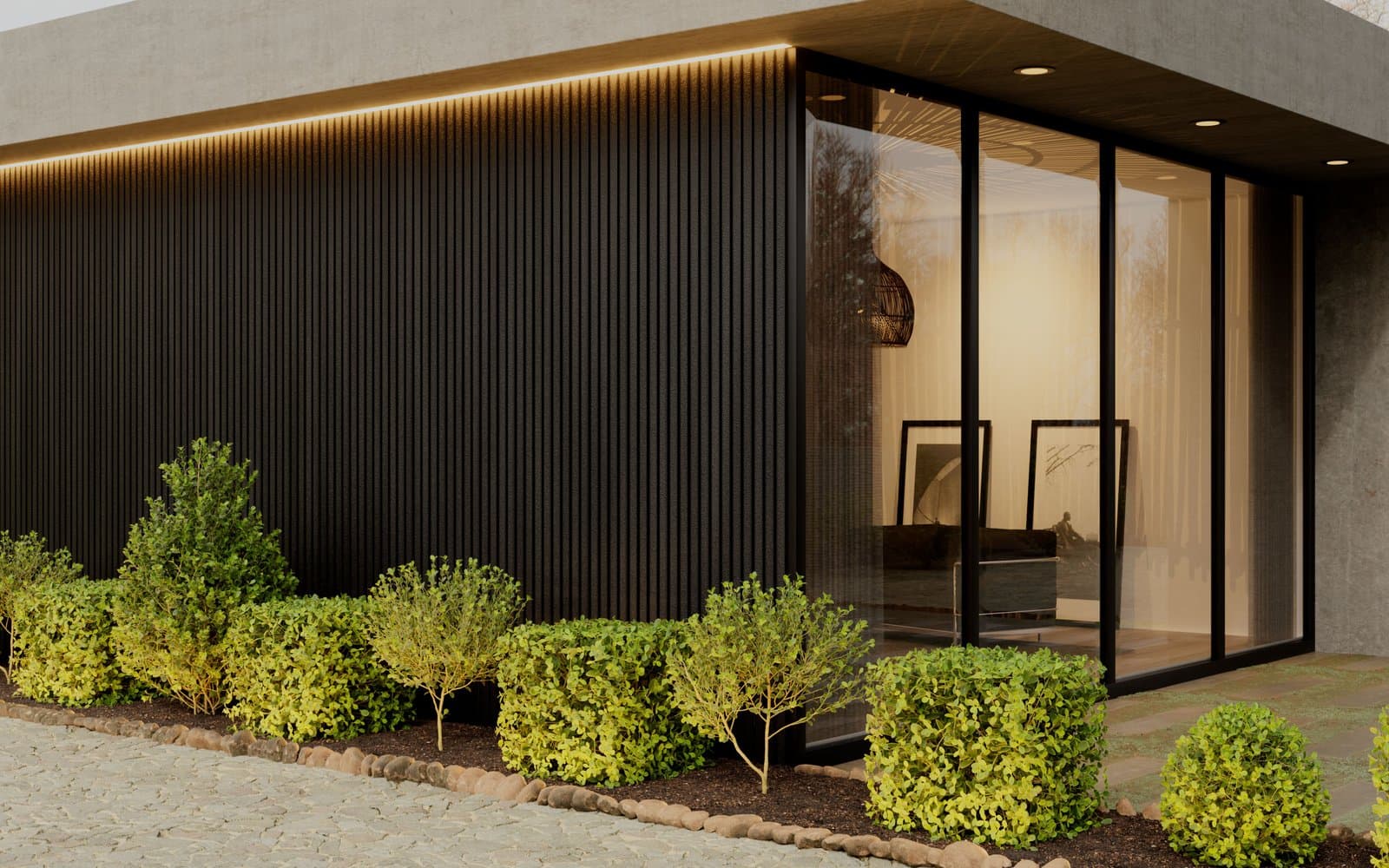
Understanding NORX Cladding Fastening Systems
NORX cladding is designed for installation with a hidden clip system. This means the fasteners themselves are not visible on the face of the boards once installed, contributing to a clean, modern aesthetic. The hidden clip system is integral to how NORX boards are mounted, allowing for consistent spacing and facilitating potential movement of the material. Each NORX collection, whether composite or PVC, is intended to work with a specific type of clip that secures the board to the furring strips or other substructure.
The clips typically engage a groove on the edge of the NORX board and are then screwed into the substructure. This method provides a strong mechanical connection while maintaining the desired shadow lines and uniform appearance of the cladding.
NORX Composite vs. PVC: Material Considerations
NORX offers two primary material types: wood-plastic composite and PVC. The Barcelona Collection specifically features PVC boards, while other collections like Paris, Rio, Rome, London, Los Angeles, and New York are made from wood-plastic composite.
Both composite and PVC boards are designed for exterior applications, but their material properties can subtly influence fastener choice, particularly regarding thermal expansion. While the hidden clip system is designed to accommodate some movement, selecting fasteners that are compatible with the material's long-term behavior and the intended clip system is essential. Always refer to the specific installation guidelines for the NORX collection you choose.
These material differences highlight the importance of verifying fastener compatibility directly with the product's documentation.
Substructure Compatibility: Furring Strips and Sheathing
NORX cladding is typically installed on furring strips, which create a rainscreen gap behind the cladding. These furring strips are then attached to the structural sheathing or framing of the building. The type of material used for these furring strips and the underlying structure is a primary determinant for fastener selection.
Common furring materials include treated lumber, untreated lumber, or metal channels. The fastener chosen must be appropriate for penetrating and securely holding within these materials. For instance, screws designed for wood will differ from those required for metal studs or furring.
Consider the thickness of your furring strips and the depth of penetration required into the structural substrate. Fasteners must be long enough to pass through the cladding clip, the furring strip, and achieve adequate embedment into the sheathing or framing, without being excessively long to cause issues on the interior side of the wall.
Environmental Exposure: Coastal and Winter Climates
The environmental conditions of your project site significantly impact the corrosion resistance requirements of your fasteners. For projects in coastal areas, where salt spray and high humidity are prevalent, fasteners with superior corrosion resistance are crucial.
In cold climates, while corrosion might be less of a primary concern compared to coastal areas, fasteners must still withstand temperature fluctuations without becoming brittle or losing their holding power. The freeze-thaw cycle can stress materials, so robust fasteners are always a good choice. Generally, for all exterior applications, using fasteners rated for outdoor use is a baseline requirement.
Always confirm the specific recommendations from NORX for fasteners in extreme or specific environmental conditions to ensure compliance with any warranty requirements.
Worked Example: Fastener Selection for a NORX London Collection Facade
Let's consider a hypothetical project: a 10-foot by 20-foot exterior wall being clad with NORX London Collection wide slat panels (composite material) over 1x3 (nominal 0.75-inch thick) treated furring strips, which are then attached to OSB sheathing over wood studs. The project is located in a typical suburban environment, not coastal or extreme winter.
1. **Cladding Material:** NORX London Collection is a composite material, requiring a hidden clip system. The specific clip type for the London Collection must be identified from NORX documentation.
2. **Substructure:** 0.75-inch thick treated furring strips over OSB sheathing and wood studs.
Given the wood furring and OSB/wood stud substrate, a wood screw is appropriate.
If the budget allows, stainless steel would offer even greater long-term assurance against corrosion and staining, though it might be considered overkill for this specific environment based on typical practice.
This example illustrates how product specifics, substructure, and environment guide fastener selection. Always consult the latest NORX installation guides and local building codes for precise requirements.
Before you order
- Identify the specific NORX Collection (e.g., Paris, Barcelona) and its material (composite or PVC).
- Confirm the required NORX hidden clip system for your chosen collection.
- Determine the material of your furring strips (e.g., treated wood, untreated wood, metal).
- Identify the underlying structural substrate (e.g., OSB, plywood, wood studs, metal studs, concrete).
- Measure the thickness of your furring strips.
- Verify the minimum required embedment depth for fasteners into your structural substrate (consult local codes or engineering guidance).
- Assess environmental exposure: Is the project in a coastal, high-humidity, or extreme-weather area?
- Select fastener material (e.g., stainless steel, coated exterior-grade) based on corrosion resistance needs.
- Choose fastener length to pass through clip + furring + achieve adequate embedment.
- Confirm fastener head type is compatible with the NORX clip design.
- Review NORX official installation guides for any specific fastener recommendations or restrictions.
- Consider local building codes and professional advice for final fastener selection.
Confirm installation details, approved uses and warranty terms in the current instructions for the exact product and profile. Your installer should verify the substrate, structure and applicable project requirements.
Questions to help you decide
Can I use standard deck screws for NORX cladding?
While some deck screws are rated for exterior use, they may not be suitable for NORX cladding. NORX systems typically require a specific hidden clip, and the screws must be compatible with that clip's design and recess. Additionally, deck screws might not offer the specific corrosion resistance or length needed for the combined thickness of the clip, furring, and substrate. Always use fasteners that are explicitly recommended or approved for the NORX system and your specific installation.
Are stainless steel fasteners always necessary for NORX cladding?
Stainless steel fasteners offer superior corrosion resistance and are highly recommended for projects in coastal areas, regions with high humidity, or where there's a risk of corrosion staining. For less aggressive environments, high-quality exterior-grade coated screws may be acceptable. However, stainless steel often provides the best long-term performance and peace of mind, especially when considering the lifespan of the cladding itself. Always consult NORX installation guidelines and local building codes.
How do I determine the correct screw length for NORX cladding?
The correct screw length depends on the thickness of the NORX hidden clip, the thickness of your furring strips, and the required embedment depth into your structural substrate. For other substrates, consult specific fastening schedules or engineering recommendations. Measure these components accurately to select an appropriate screw length.
Ready to Plan Your NORX Cladding Project?
Request a material quote with your project dimensions, exact NORX profile, and ZIP code. Our team can confirm current availability and service options for your chosen NORX cladding and guide you on compatible fasteners.
Request a material quote →