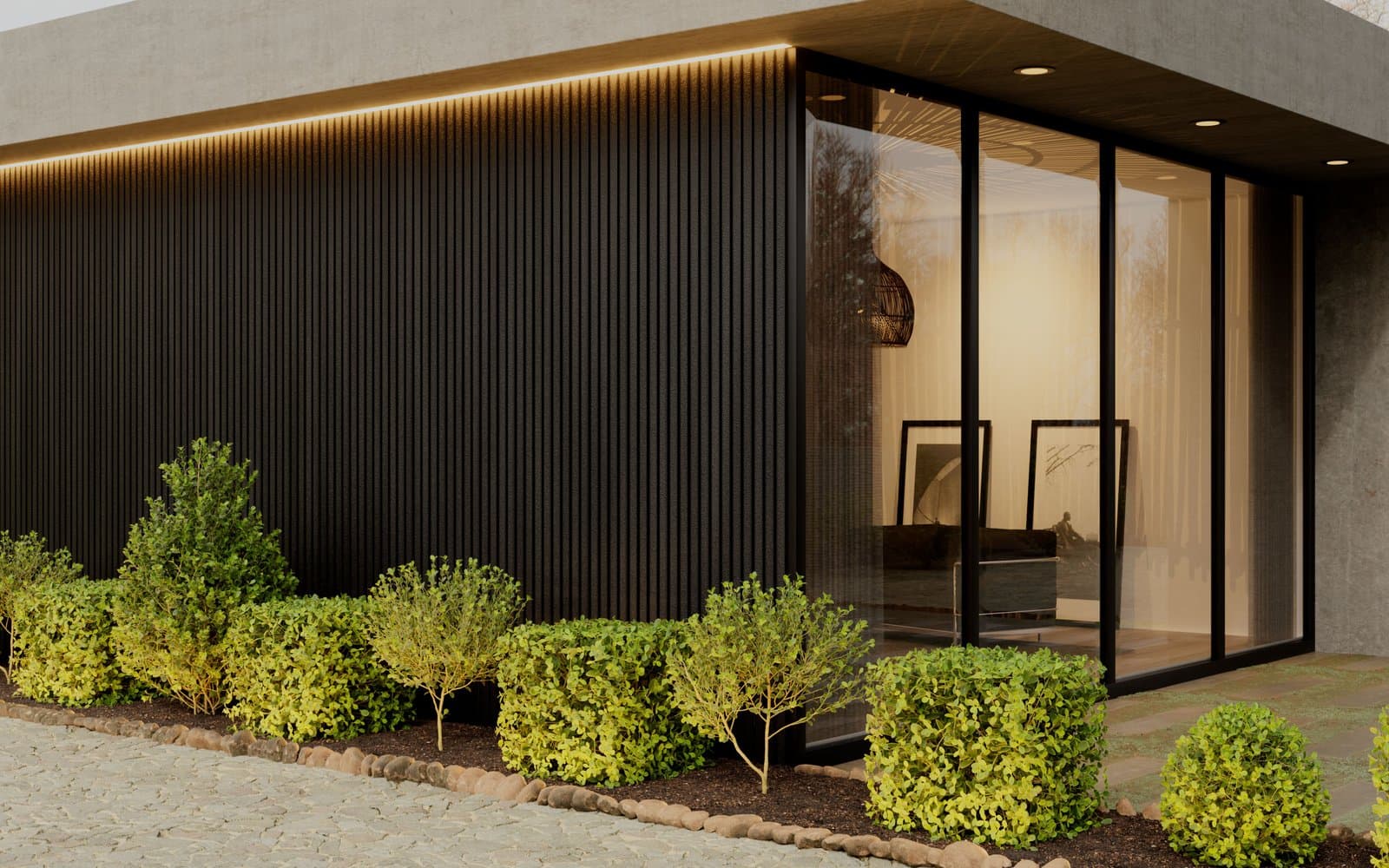
Understanding Cold Climate Challenges for Cladding
Cold climates are characterized by significant temperature fluctuations, often leading to freeze-thaw cycles. These cycles can stress building materials, especially if moisture becomes trapped within the wall assembly. Exterior cladding must withstand these conditions without compromising the building's thermal performance or structural integrity.
Moisture is a primary concern. Cold air holds less moisture, and warm, moist interior air can migrate outwards through the wall, condensing upon contact with colder surfaces. This condensation can lead to rot, mold, and reduced insulation effectiveness. Proper ventilation and drainage behind the cladding are essential to manage this moisture.
NORX Cladding Material Properties for Cold Climates
NORX cladding is available in wood-plastic composite and PVC (Barcelona Collection) options, each offering distinct advantages for cold climates. Both materials are engineered to be resistant to rot and termites, which is a significant benefit where moisture might otherwise compromise traditional wood products. The composite collections contain 95% recycled content and are capped on 3-4 sides, depending on the collection, providing an additional layer of protection.
The Barcelona Collection, made from PVC, offers particular resilience with its formulation designed for precision and resiliency. NORX cladding is designed for both interior and exterior applications, including walls, ceilings, and soffits, using a hidden clip fastening system (S1).
The Importance of a Ventilated Rainscreen Assembly
For cold climates, a ventilated rainscreen assembly is often the preferred method for installing exterior cladding, including NORX. This system creates a continuous air gap behind the cladding, allowing for drainage of incidental moisture and promoting airflow to dry out the wall assembly. This air gap is critical for managing condensation and preventing moisture accumulation.
The hidden clip system used for NORX cladding naturally supports the creation of a ventilated cavity when installed on furring strips. These furring strips create the necessary space between the sheathing and the back of the cladding. Proper detailing at the top and bottom of the wall, as well as around openings, is essential to ensure continuous airflow and prevent insect or rodent entry while maintaining ventilation.
Managing Thermal Movement with NORX Cladding
All building materials expand and contract with temperature changes. In cold climates, the range of temperatures experienced throughout the year can be substantial, leading to noticeable movement in cladding materials. NORX composite and PVC cladding are designed with this in mind, and the hidden clip fastening system allows for some degree of movement.
It is crucial to follow manufacturer guidelines for spacing and clearances to accommodate this movement. Over-tightening fasteners or failing to leave adequate gaps can lead to buckling or warping. Planning movement joints at appropriate intervals, especially on long runs of cladding, helps to prevent stress on the material and maintain a clean, consistent appearance over time. Always refer to the specific installation instructions for your chosen NORX collection.
Worked Example: Planning a Cold-Climate Wall Section
Consider a hypothetical 10-foot by 8-foot (width by height) exterior wall section on a cold-climate home, clad with NORX London Collection boards in 'Big Ben' (black). The wall is part of a larger elevation and experiences significant temperature swings from -10°F to 80°F.
1. **Substructure and Weather Barrier:** The wall will have standard structural sheathing covered by a continuous weather-resistive barrier (WRB). All seams of the WRB are properly lapped and sealed.
These strips are securely fastened into the wall studs.
3. **Insect Screen/Ventilation:** An insect screen is installed at the bottom and top of the furring strip cavity to allow airflow while preventing pest intrusion. This ensures continuous ventilation behind the cladding.
4. **NORX Cladding Installation:** The London Collection boards are installed horizontally using the NORX hidden clip system, fastened to the furring strips. For a 10-foot width, careful planning for thermal expansion and contraction is necessary. While individual boards are typically 12 feet in length, this example uses 10-foot sections. For longer runs that exceed the board length, movement joints are incorporated by leaving a specified gap between board ends and using a compatible trim or flashing detail.
At window and door openings, flashings are integrated with the WRB and furring strips to manage water, and the cladding is detailed to maintain the ventilation gap around the opening perimeter.
This example highlights the systematic approach needed to address moisture and movement, relying on the rainscreen principle and specific NORX installation guidance.
Complementary Products for a Robust Wall Assembly
Beyond the NORX cladding itself, several other products are essential for a robust cold-climate wall assembly:
**Weather-Resistive Barrier (WRB):** A high-quality WRB is the primary defense against bulk water intrusion and air leakage. It must be continuous and properly integrated with flashing around all penetrations.
**Furring Strips:** Treated lumber or composite furring strips create the necessary ventilation cavity and provide a secure attachment point for the cladding clips.
**Flashing and Sealants:** Proper flashing around windows, doors, and other penetrations is critical to prevent water entry. Compatible sealants should be used where necessary to maintain the integrity of the weather barrier.
**Insect Screens/Vents:** These are installed at the top and bottom of the rainscreen cavity to allow airflow while keeping insects and rodents out.
Consider exploring other Lumber Plus offerings such as general siding and cladding options at our Siding & Cladding page, thermally modified wood products for alternative natural material options, or the Maximo Accoya products for high-performance wood solutions.
Before you order
- Have you confirmed the specific NORX collection and its capping details (3-sided vs. 4-sided)?
- Is the wall assembly designed with a continuous weather-resistive barrier (WRB)?
- Are details for insect/rodent screens at the top and bottom of the ventilation cavity included?
- Have you accounted for thermal expansion and contraction by specifying appropriate gaps at board ends and movement joints?
- Are flashing details around all windows, doors, and penetrations integrated with the WRB and furring system?
- Have you reviewed the specific NORX installation instructions for your chosen profile and anticipated cold-climate conditions?
- Are all fasteners specified to be compatible with the NORX hidden clip system and suitable for exterior use in cold temperatures?
Confirm installation details, approved uses and warranty terms in the current instructions for the exact product and profile. Your installer should verify the substrate, structure and applicable project requirements.
Questions to help you decide
Does NORX cladding require special maintenance in cold climates?
NORX composite and PVC cladding are designed for low maintenance, typically requiring only rinsing to clean. Unlike traditional wood, they do not require painting or staining. In cold climates, it's advisable to ensure that the rainscreen system remains clear of debris to maintain proper ventilation and drainage, especially before winter sets in.
Can NORX cladding be installed directly over insulation in cold climates?
No, NORX cladding should not be installed directly over insulation. A ventilated rainscreen assembly is crucial, especially in cold climates, to manage moisture and allow for proper air circulation. This typically involves installing furring strips over the weather-resistive barrier and sheathing, creating an air gap before the cladding is attached.
What is the difference between NORX composite and NORX PVC (Barcelona) for cold climates?
Both NORX composite and PVC (Barcelona Collection) are suitable for cold climates. NORX composite is made with 95% recycled content and offers excellent durability. Both are resistant to rot and termites. The choice may depend on specific project requirements, aesthetic preferences, and warranty considerations.
Request a Quote for Your Cold-Climate Cladding Project
Ready to plan your NORX cladding project for a cold climate? Provide your project dimensions, desired NORX profile, and ZIP code to request a material quote. Our team can help confirm current availability and service options for your location.
Request a material quote →